
Monday, November 16, 2026Nov 16

Judge says Hernandez fiancee, mother may attend murder trial

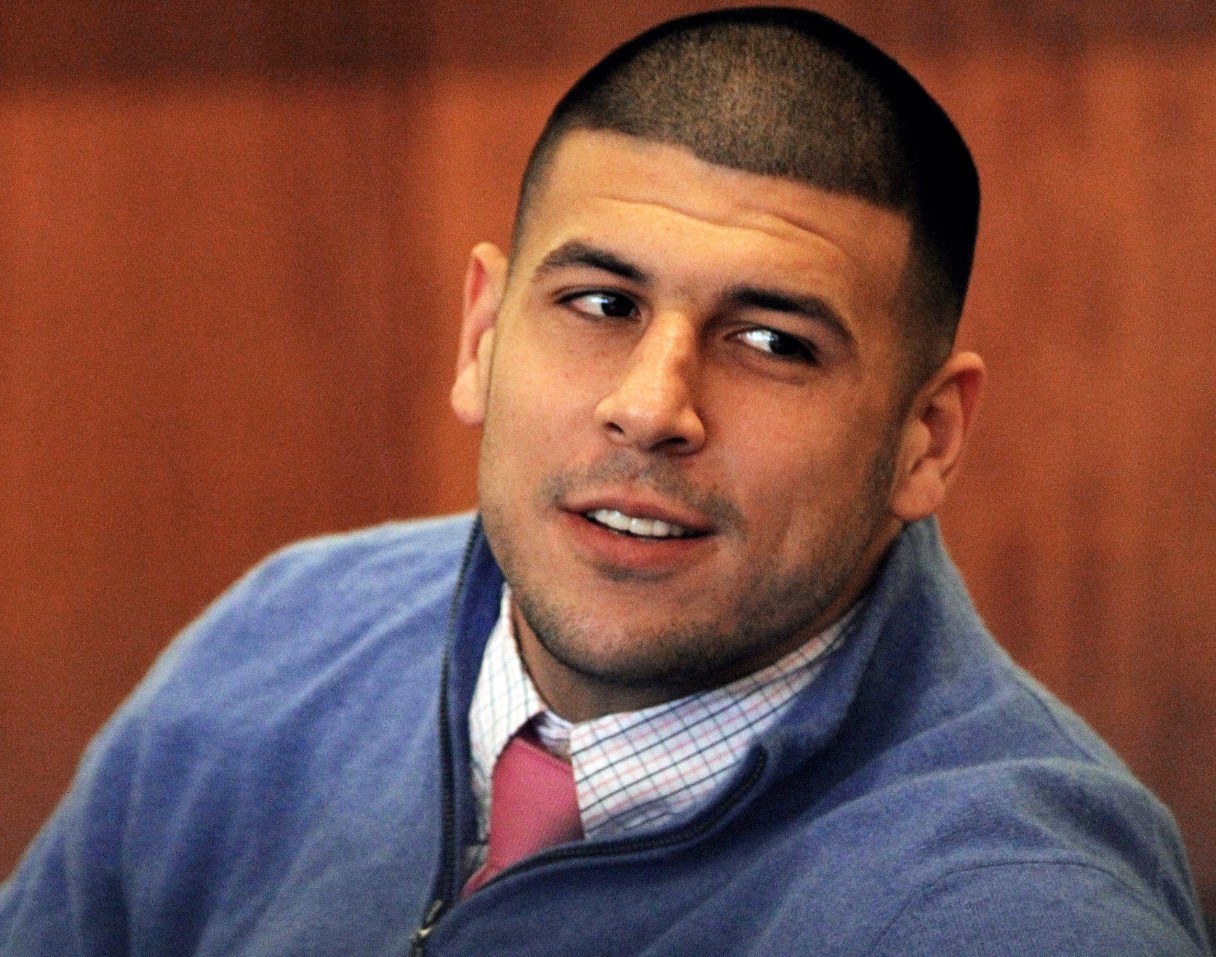
FILE - In this Oct. 1, 2014, file photo, former New England Patriots football player Aaron Hernandez looks back during an evidentiary hearing at Fall River Superior Court in Fall River, Mass. Hernandez is expected in court for the final pre-trial hearing in the first of two murder cases against him. Prosecutors and Hernandez’s lawyers on Tuesday, Jan. 6, 2015, are expected to take up remaining issues before jury selection begins on Friday in Bristol County Superior Court. Hernandez is charged with murder in the killing of semi-pro football player Odin Lloyd in 2013. (AP Photo/The Boston Globe, Wendy Maeda, Pool)

FALL RIVER, Mass. (AP) – The judge overseeing the murder case against former New England Patriots star Aaron Hernandez says his fiancee and mother may attend the trial, even though they could be called as witnesses.

Hernandez is in Bristol County Superior Court for a pretrial hearing ahead of his trial, which starts Friday with jury selection. He is charged in the 2013 shooting death of semi-professional football player Odin Lloyd.

Hernandez’s fiancee, Shayanna Jenkins, has pleaded not guilty to charges of perjury.

Superior Court Justice Susan Garsh on Tuesday also approved a prosecution request to bring jurors to several cellphone towers over the objections of Hernandez’s lawyers, who said they were trying to re-enact their theory of the case. Prosecutors argued it is routine to show jurors the locations from which calls were placed.