
Thursday, November 12, 2026Nov 12

‘Entopreneurs’ feed growing appetite for edible insects

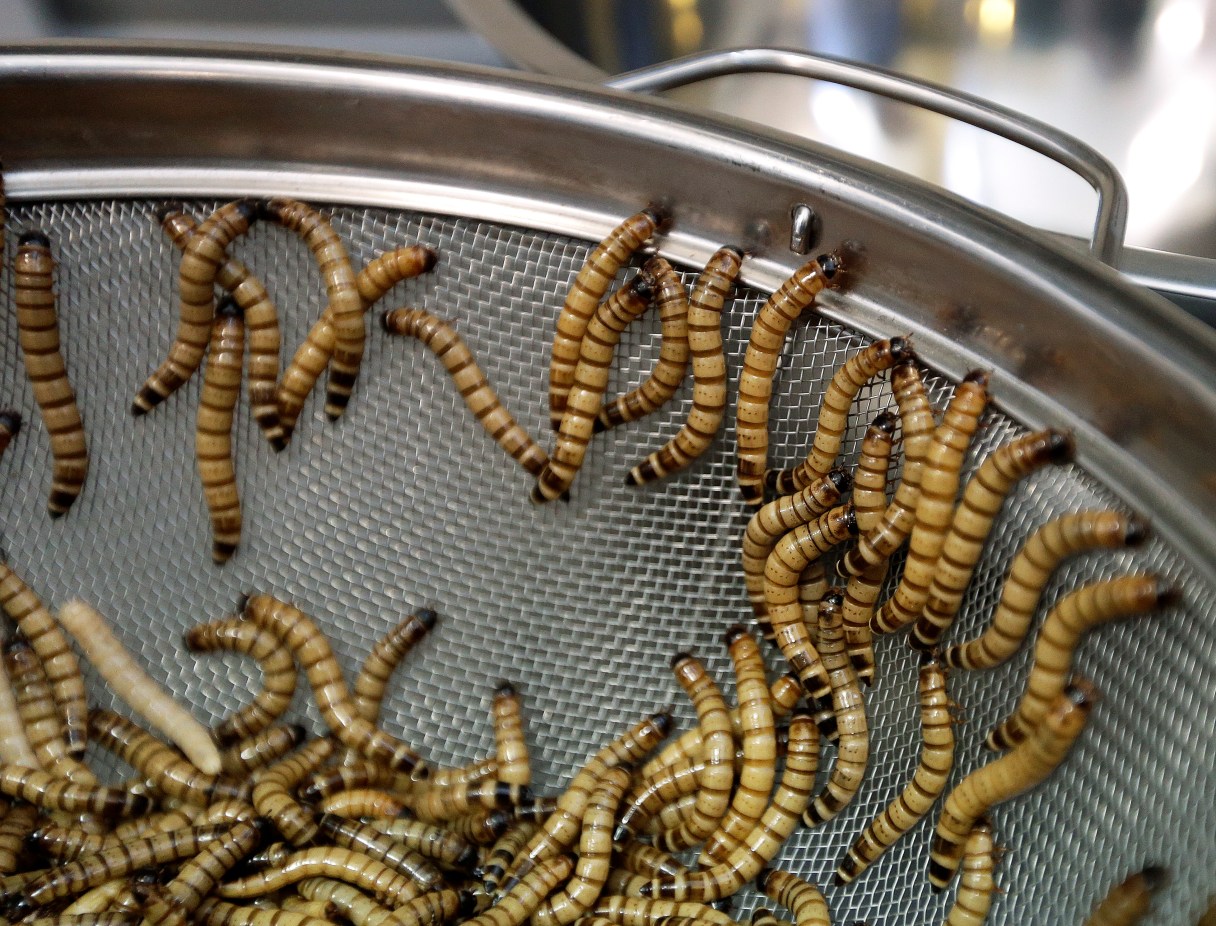
Meal worms try to escape from a straining bowl in a kitchen before being cooked Wednesday, Feb. 18, 2015, in San Francisco. A growing number of "entopreneurs" are trying to persuade consumers that insects are the next super food, a nutritious, low-cost, environmentally friendly source of protein that can help feed a hungry world. But they face a tough job convincing Westerners that crickets, meal worms and caterpillars can be tasty treats. (AP Photo/Ben Margot)
Meal worms try to escape from a straining bowl in a kitchen before being cooked Wednesday, Feb. 18, 2015, in San Francisco. A growing number of "entopreneurs" are trying to persuade consumers that insects are the next super food, a nutritious, low-cost, environmentally friendly source of protein that can help feed a hungry world. But they face a tough job convincing Westerners that crickets, meal worms and caterpillars can be tasty treats. (AP Photo/Ben Margot) Meal worms try to escape from a straining bowl in a kitchen before being cooked Wednesday, Feb. 18, 2015, in San Francisco. A growing number of "entopreneurs" are trying to persuade consumers that insects are the next super food, a nutritious, low-cost, environmentally friendly source of protein that can help feed a hungry world. But they face a tough job convincing Westerners that crickets, meal worms and caterpillars can be tasty treats. (AP Photo/Ben Margot)

SAN FRANCISCO (AP) – They hop. They crawl. They squirm. And they could be coming to a dinner plate near you.

An increasing number of “entopreneurs” are launching businesses to feed a growing appetite for crickets, mealworms and other edible insects.

These upstarts are trying to persuade more Americans to eat bugs, which can be produced with less land, food and water than other sources of animal protein.

The United Nations has been promoting edible insects as a way to improve nutrition, reduce greenhouse-gas emissions and create jobs in insect production. At least 2 billion people worldwide already eat insects as part of their diet, according to the 2013 report by the UN Food and Agriculture Organization.

But it could be a tough sell for Westerners who are more likely to squash bugs than savor them.