
Monday, November 16, 2026Nov 16

OPEC deal shows cartel’s resolve _ and desperation

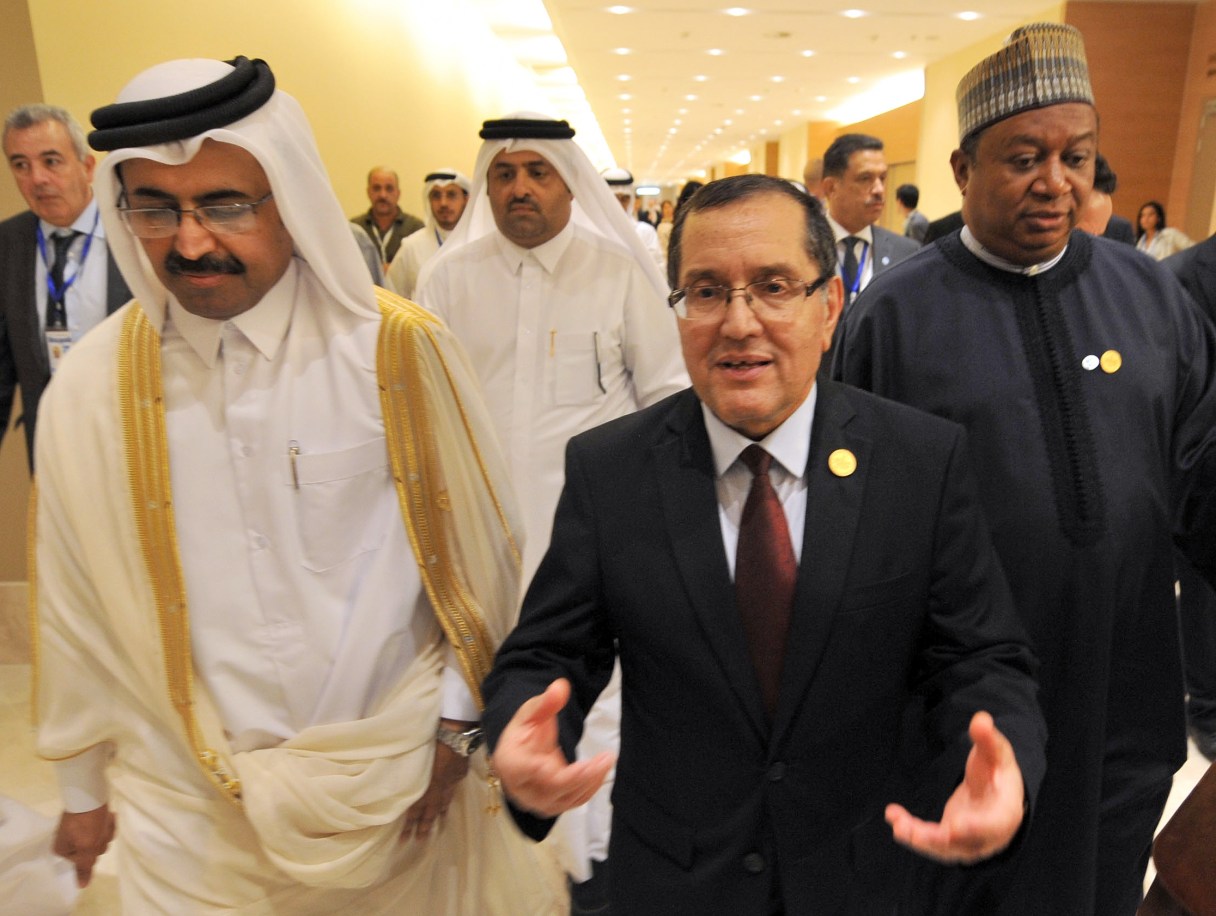
In this photo dated Wednesday, Sept. 28, 2016, Algerian Energy Minister Noureddine Boutarfa, center, gestures as he leaves the International Conference Center in Algiers, Algeria, with Minister of Energy and Industry of Qatar, Bin Saleh Al-Sada, left, and acting Secretary General of OPEC Mohammed Barkindo, after a meeting of oil ministers of the Organization of the Petroleum Exporting countries, OPEC, in Algiers, Algeria. OPEC nations reached a preliminary agreement Wednesday to curb oil production for the first time since the global financial crisis eight years ago, in an effort to reduce a global glut of crude that has depressed oil prices for more than two years and weakened the economies of oil-producing nations. (AP Photo/Sidali Djarboub)

ALGIERS, Algeria (AP) – OPEC’s unexpected understanding to trim production shows the cartel still has the resolve – and even desperation – to try to guide energy markets higher. But don’t expect triple-digit oil prices anytime soon.

Ministers from the oil cartel reached a preliminary deal Wednesday in Algeria to cut production for the first time since the global financial crisis eight years ago. The size of the cut was modest – to between 32.5 million and 33 million barrels per day from just below current levels of around 33.2 million barrels per day.

Though limited, the decision came as something of a surprise – expectations were that once again the regional rivalry between Saudi Arabia and Iran would create a stalemate. Oil prices shot up by around 5 percent in the wake of the cut.

On Thursday, markets stabilized, with the benchmark New York rate 23 cents lower at $46.82 a barrel and the international standard, Brent, 34 cents lower at $48.87.

Any failure to enact the agreement could lead to a renewed drop. And that risk remains – the deal, after all, is not done yet.