
Monday, November 16, 2026Nov 16

After upset Iraqi vote, US prepares to embrace a former foe

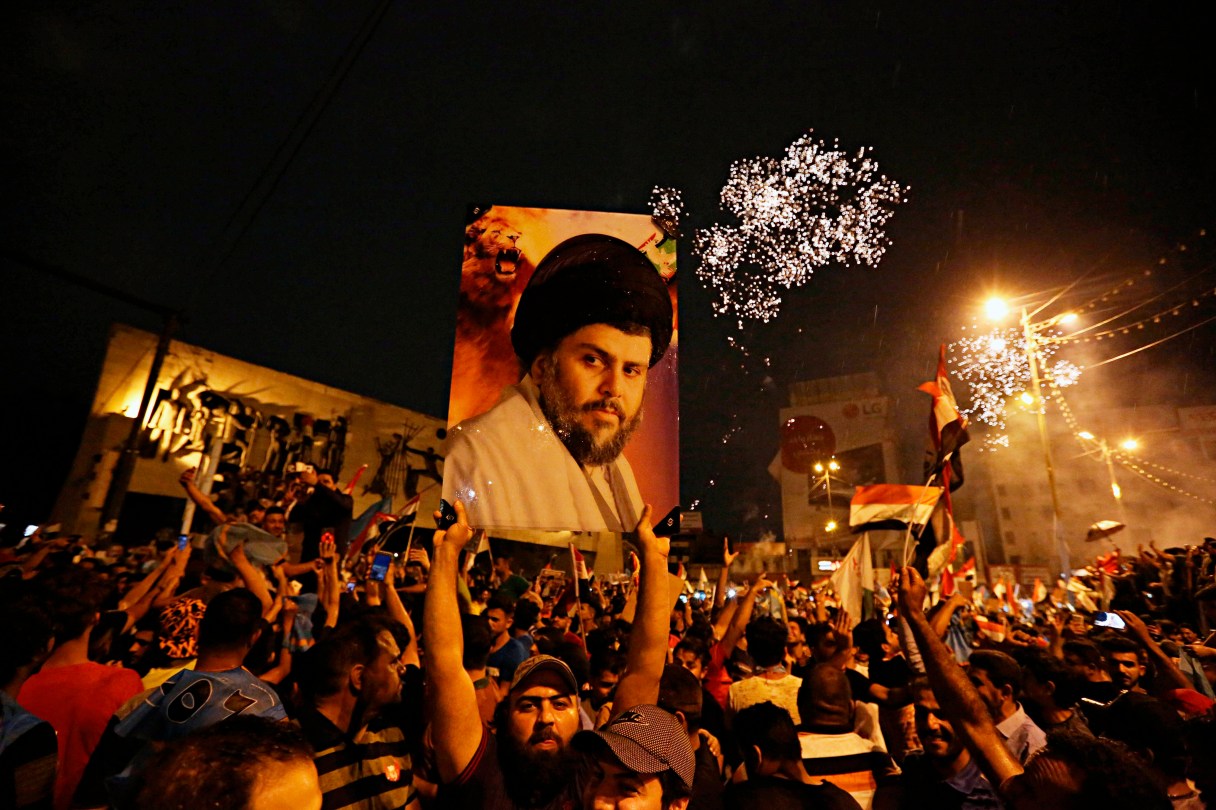
FILE - In this May 14, 2018, file photo, followers of Shiite cleric Muqtada al-Sadr, seen in the poster, celebrate in Tahrir Square, Baghdad, Iraq. Fourteen years after Muqtada al-Sadr’s militias fought and killed American troops who had invaded Iraq, the United States is preparing to work hand in hand with the charismatic Shiite cleric and his movement. Following an upset Iraqi election, the U.S. is hoping to find common cause with al-Sadr in curtailing Iran’s influence. (AP Photo/Hadi Mizban, File)

WASHINGTON (AP) – After an upset election in Iraq, the U.S. is preparing to work hand in hand with the Shiite cleric Muqtada al-Sadr (mook-TAH’-duh ahl-SAH’-dur) and his movement. That’s despite the fact that his militias fought and killed American troops who invaded Iraq 14 years ago.

Like many Iraqis, Washington was caught off guard when a coalition organized by al-Sadr took the largest share of the recent parliamentary vote. Although al-Sadr won’t become prime minister, his movement will have an outsize role in building the next government.

Al-Sadr has evolved over the years and now portrays himself as a populist corruption-fighter. U.S. officials involved in Iraq policy say the Trump administration is cautiously optimistic he can herald the formation of a broad-based government that tolerates a continuing American presence and curtails Iran’s influence.