
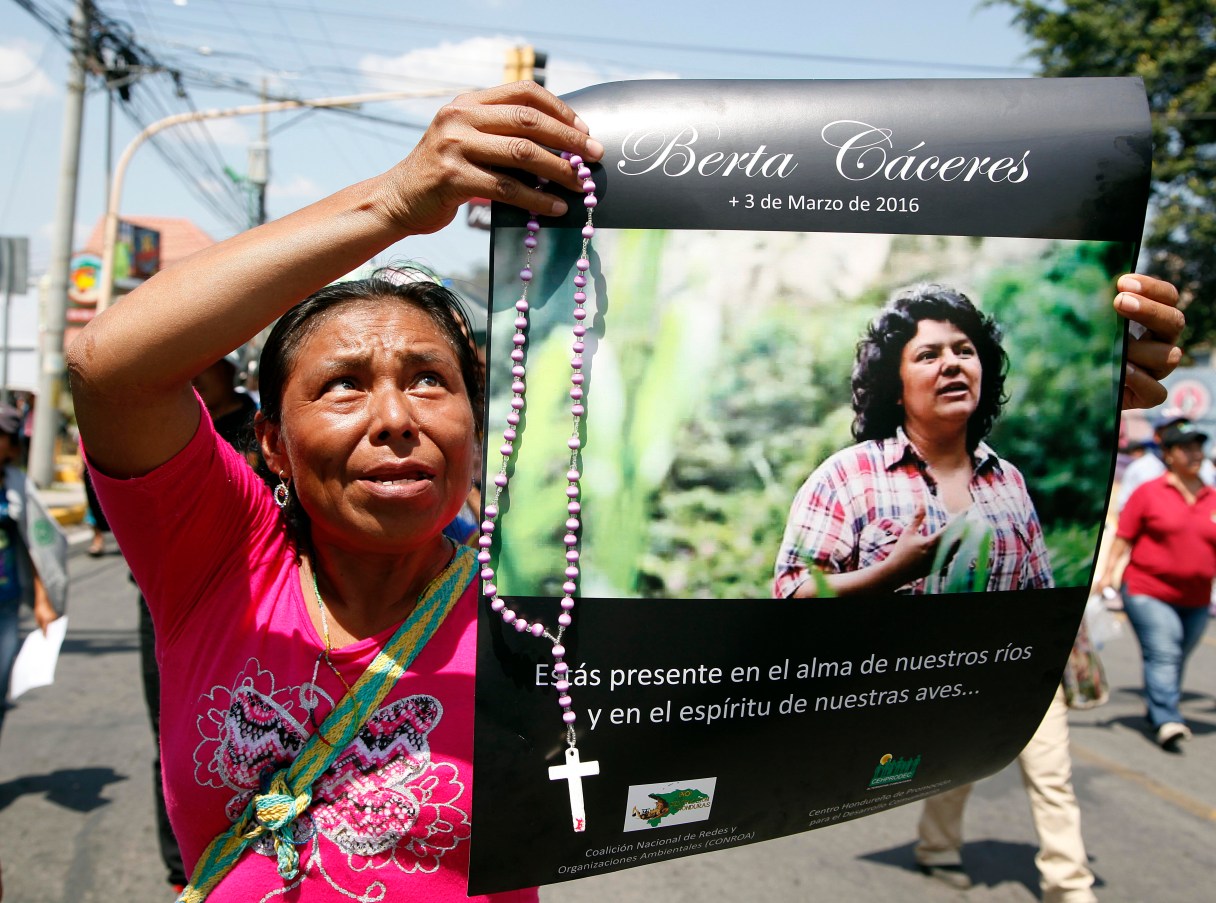
TEGUCIGALPA, Honduras (AP) – For months before her death, environmental activist Berta Caceres complained of repeated threats warning her to stop leading protests opposing a hydroelectric project on her Lenca people’s ancestral lands.
Then, on March 3, armed men forced their way into Caceres’ home in the middle of the night, shot her four times and wounded a visiting Mexican activist, who survived by playing dead. The killing prompted widespread condemnation and calls for an independent investigation, in part due to Caceres’ international prominence as the winner of the prestigious Goldman Environmental Prize.
Caceres’ slaying remained officially shrouded in mystery until Monday, when authorities arrested four people in the case, including a security employee working on behalf of Desarrollos Energeticos SA, or DESA, the company carrying out the Agua Zarca hydroelectric project.
The fact that those arrested have DESA and army ties was no surprise to Caceres’ allies and relatives, who have long suspected the company and elements of Honduras’ government and military of being behind her killing.
Previously unpublicized court records from 2014 show that the government and DESA repeatedly sought to tar Caceres and her colleagues as violent anarchists bent on terrorizing the population through their protests at the project site. In filings seeking an injunction against the demonstrations, Caceres and two leaders of her organization were accused of “usurpation, coercion and continued damage” and even attempting to undermine the democratic order.