
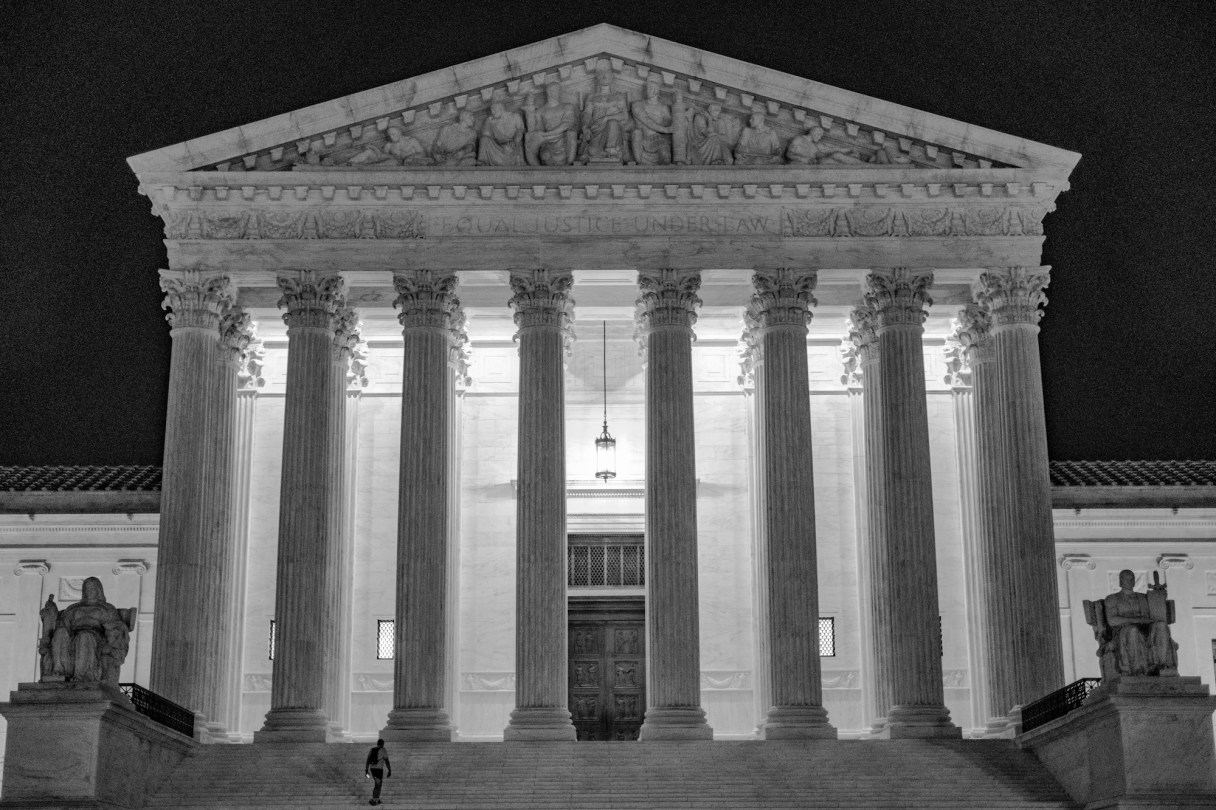
The Supreme Court on Monday took a significant step toward allowing prayer back in public schools. As with a decision last week that required the state of Maine to subsidize religious schools, the court rejected any notion of a wall separating church and state. Indeed, the conservative justices have again overruled a half-century-old precedent in moving constitutional law radically to the right.
In the early 1960s, the Supreme Court ruled that prayer in public schools, even voluntary prayer, violates the 1st Amendment’s prohibition against the establishment of religion. The court said that when teachers lead prayers, there is inherent coercion. Students of different faiths and of no faith feel pressure to participate. The core of the Establishment Clause is that the government, especially in its public schools, should be secular; the place for prayer is in people’s homes and places of worship.
The court strictly adhered to this principle for 60 years. In 1985, the court declared unconstitutional an Alabama law that required that public schools begin each day with a moment of silent prayer. In 1992, it found that clergy-delivered prayers at public school graduations are unconstitutional. In 2000, it ruled that student-led prayers at high school football games violate the 1st Amendment. All of these cases limited the speech and religious practices of the teachers and students who wanted to engage in prayer.
Monday’s decision, Kennedy v. Bremerton School District, involved Joseph Kennedy, a football coach at a public school in Bremerton, Wash. After games, Kennedy, a self-described devout Christian, would kneel at the 50-yard line to engage in a brief prayer, with students, parents and community members looking on. A majority of the players began to join him in this prayer. A parent complained to the principal that his son “felt compelled to participate” in Kennedy’s religious activity, even though he was an atheist, because “he felt he wouldn’t get to play as much if he didn’t participate.”
Over time, Kennedy began giving short motivational speeches at midfield after the games. Students, coaches and other attendees from both teams were invited to participate. During the speeches, the participants kneeled around Kennedy, and he delivered a message containing some religious content, including prayers. The school district ordered Kennedy to stop his religious activities. He initially complied and then defied the order and was suspended.