
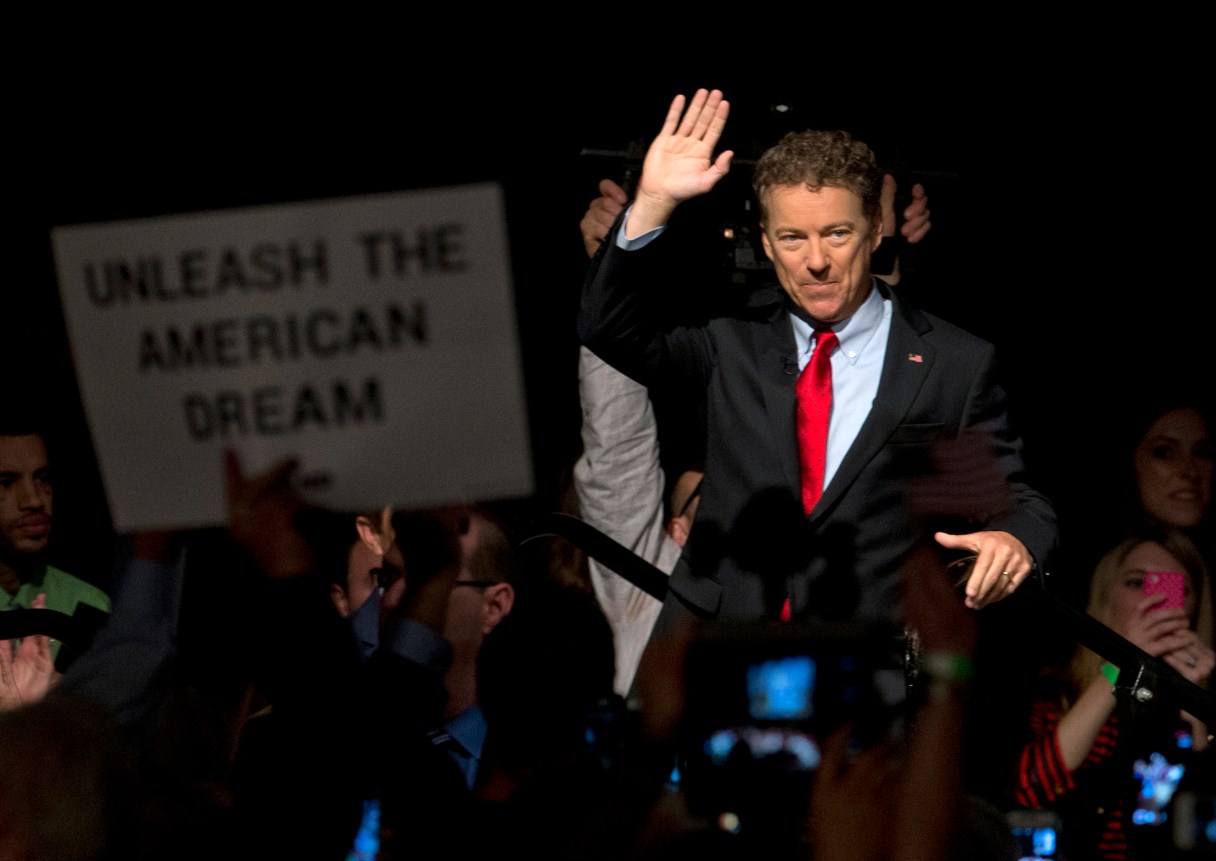
WASHINGTON (AP) – Sen. Rand Paul is campaigning for the 2016 Republican presidential nomination as a man who wants to upend the ways of Washington. In one way, though, he’s a creature of the capital: He carries on a long tradition of promising the implausible, if not the impossible, on the budget.
The Kentucky senator opened his campaign this week with the “extraordinary” thought that the federal government be forced to spend no more than it takes in. This, while cutting taxes, increasing military spending and asking people to imagine “what a billion-dollar stimulus could do for Detroit or for Appalachia” from his plan to establish “economic freedom zones.”
He is neither the first, nor certainly the last, to hold out the hope for a balanced budget – while at the same time glossing over what happens if the government is truly made to live within its means.
Some combination of Social Security, Medicare, the armed forces, domestic security, roads, medical research and much more wouldn’t look the same if that happened.
Paul told his campaign-kickoff crowd Tuesday: “Currently some $3 trillion comes into the U.S. Treasury. Couldn’t the country just survive on $3 trillion? I propose we do something extraordinary. Let’s just spend what comes in.”