
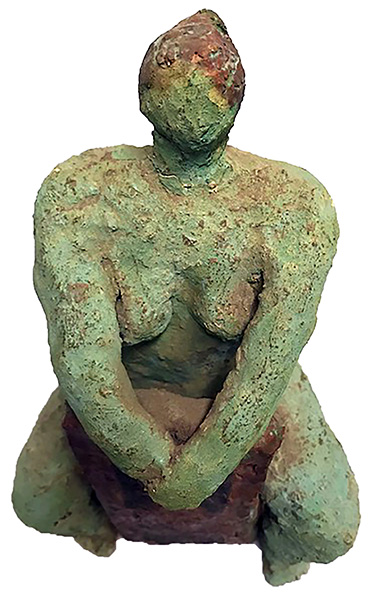
 Shavin’s Suzanne Longo sculpture
Curious about the artworks others hold dear, I talked to a select group of local collectors, some seasoned, some early in the process of investing in art, about their favorite pieces. I wanted to know, of all the pieces they own, which holds a special place in their heart, and why? Was it bought for a particular occasion? From a sentimental place, or from an artist they’d been following? Does the piece simply resonate with them on that profound and wordless level where true art appreciation resides? And if they could own any artwork in the world, regardless of cost or availability, what would they own?
 James McKissic
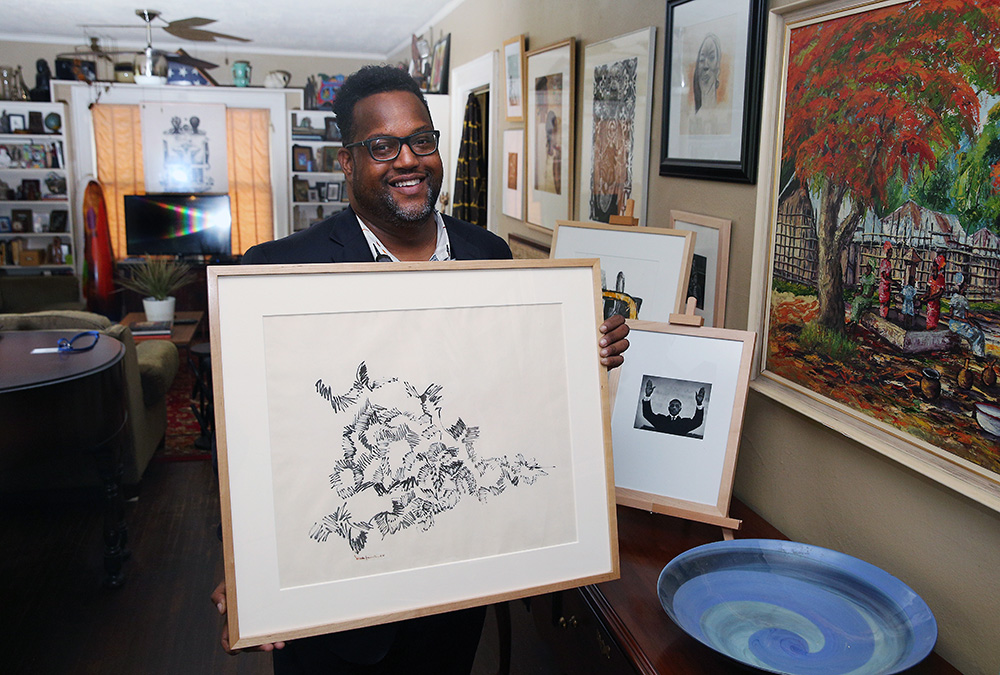
Forty-six-year-old James McKissic, senior adviser and director of multicultural affairs for the city of Chattanooga, started collecting art in the mid-1990s, shortly after college. Of his extensive collection, almost all of which is art by African-Americans, his favorite piece is a 1953 untitled ink on paper by abstract expressionist Norman Lewis.
“Norman Lewis’ artistic gifts gave him opportunities to enter segregated arts spaces, and once inside, he worked to open doors for others, which is what I try to do, too,” McKissic says. “His life and his work reminds me of the saying often heard in black communities, that we must always ‘lift as we rise.’ This is probably the piece of art in my collection that I would run back in and save if the house was on fire.”
McKissic is intentional in his approach to art collecting. “I don’t collect for investment or for decorative purposes,” he says. “I collect what I like and what speaks to me. It is a means to connect to my history, and a way for me to preserve African-American art for the future.” To this end, he says he often seeks out opportunities to share pieces in his collection with young people ” to talk about the art, the artists and how they influenced history and culture.”
If he could, he would own paintings by African-American expressionists Alma Woodsey Thomas and Beauford Delaney.