
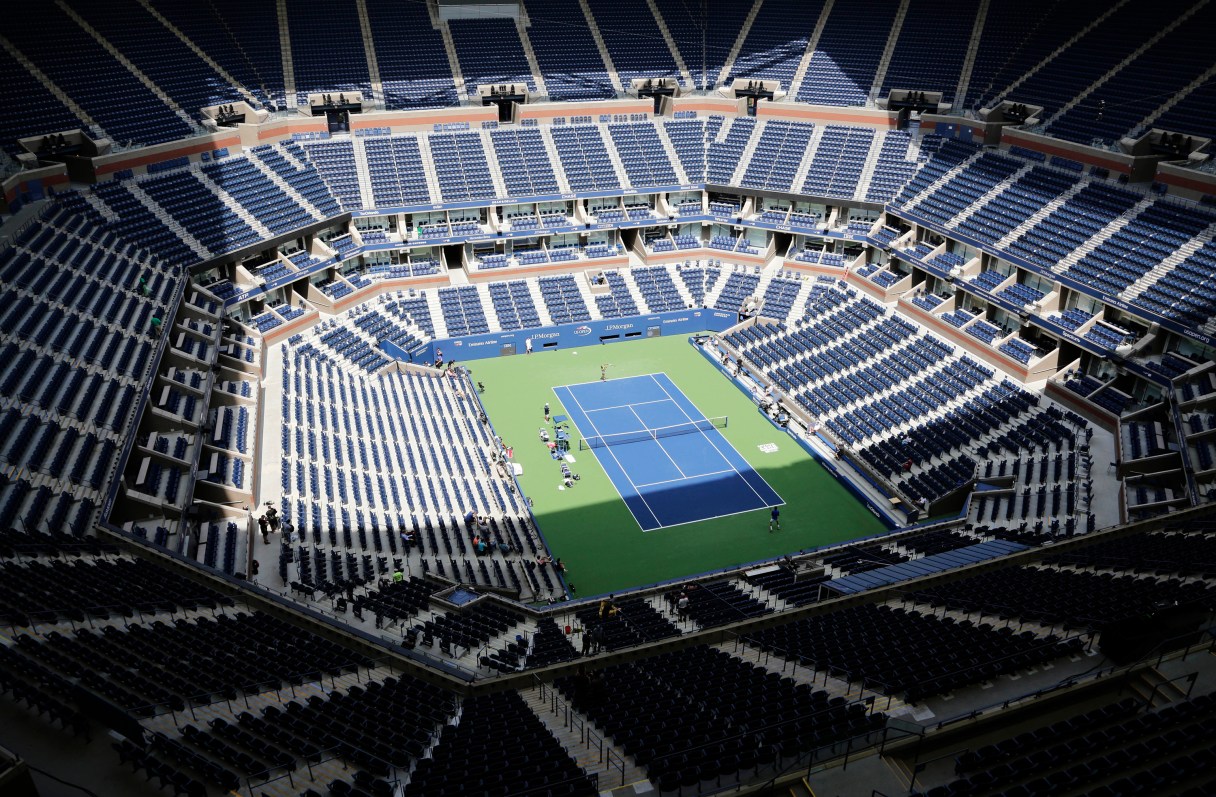
When he first contemplated the prospect of a U.S. Open without fans because of the coronavirus pandemic, the U.S. Tennis Association’s chief revenue officer figured there was no way it could work.
Lew Sherr eventually came around to embracing the idea of a closed-door Grand Slam tournament – if it’s held at all; a decision is expected as soon as next week – because it still could make money even if millions were forfeited with zero on-site receipts from tickets, hospitality, food and beverage or merchandise sales.
“Certainly better than not playing. It still makes sense financially and as a way to keep the sport vibrant and engage fans,” Sherr said. “As you get to lower-level tournaments, it becomes a much harder conversation.”
The PGA Tour, which resumed Thursday with the Charles Schwab Challenge at Colonial Country Club in Fort Worth, Texas, also could take a real hit because of the virus and the recession.
Week in, week out events in tennis, where the pro tours are suspended at least until late July, do not bring in TV rights fees like the U.S. Open, which averages $70 million per year in the host country alone. Some of the smallest tour stops even need to buy air time.