
Sunday, November 1, 2026Nov 1

This story is free to read.

Pilots, air traffic controllers shifting to text messaging

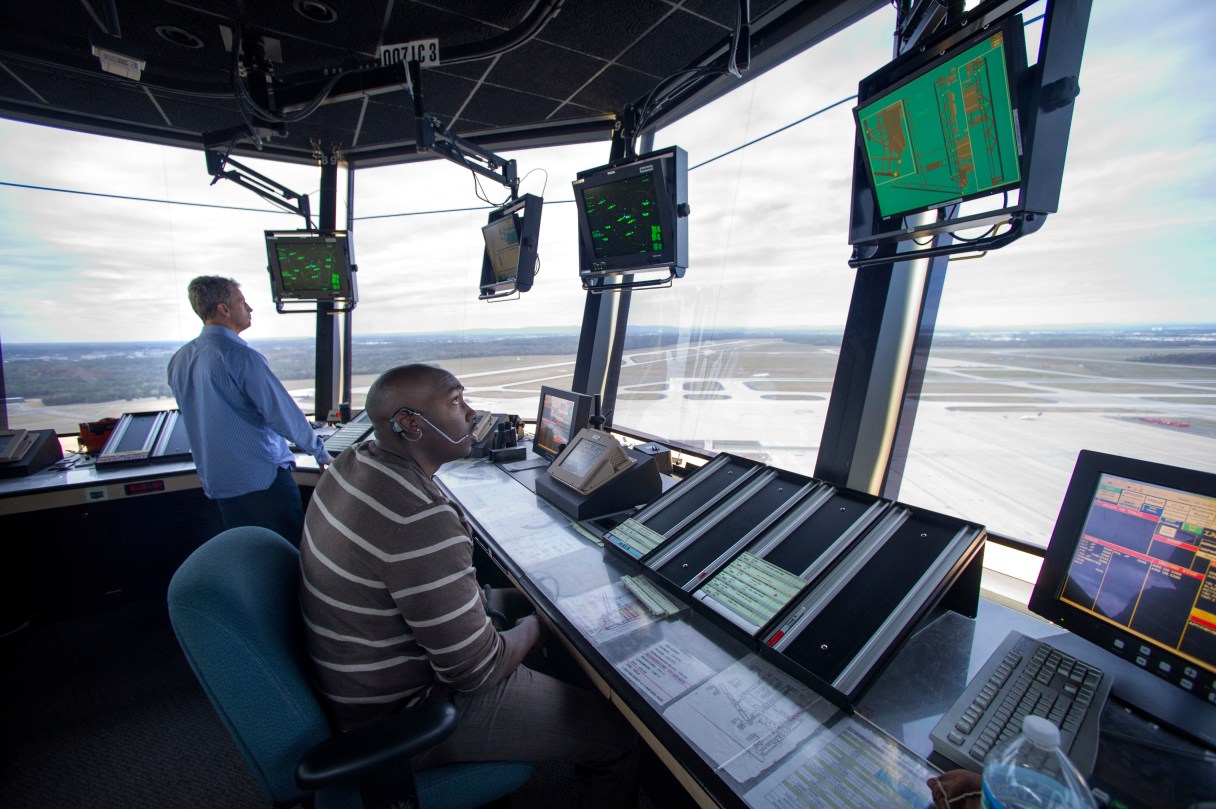
FAA Air Traffic Controllers work in the Dulles International Airport Air Traffic Control Tower in Sterling, Va., Tuesday, Sept. 27, 2016. Data Comm is now operational at the Dulles International Airport and gives air traffic controllers and pilots the ability to transmit flight plans, clearances, instructions, advisories, flight crew requests, and reports via a digital message service. (AP Photo/Cliff Owen)
FAA Air Traffic Controllers work in the Dulles International Airport Air Traffic Control Tower in Sterling, Va., Tuesday, Sept. 27, 2016. Data Comm is now operational at the Dulles International Airport and gives air traffic controllers and pilots the ability to transmit flight plans, clearances, instructions, advisories, flight crew requests, and reports via a digital message service. (AP Photo/Cliff Owen) FAA Air Traffic Controllers work in the Dulles International Airport Air Traffic Control Tower in Sterling, Va., Tuesday, Sept. 27, 2016. Data Comm is now operational at the Dulles International Airport and gives air traffic controllers and pilots the ability to transmit flight plans, clearances, instructions, advisories, flight crew requests, and reports via a digital message service. (AP Photo/Cliff Owen)

CHANTILLY, Va. (AP) – Federal officials say airline pilots and traffic controllers are on schedule to switch to text communications at most of the nation’s busiest airports by year’s end.

The Federal Aviation Administration calls the start of the new Data Comm technology a milestone that holds the potential to reduce delays, prevent errors and save billions of dollars in fuel costs.

Controllers and pilots will still use their radios for quick exchanges like clearance for takeoff and for emergencies and situations where time is critical. But the nation’s air traffic system is gradually shifting to text messages for a majority of flying instructions.

The technology was rolled out at Dulles International Airport in suburban Washington, D.C., three weeks ago, and is now used for about 10 to 20 percent of departures there.