
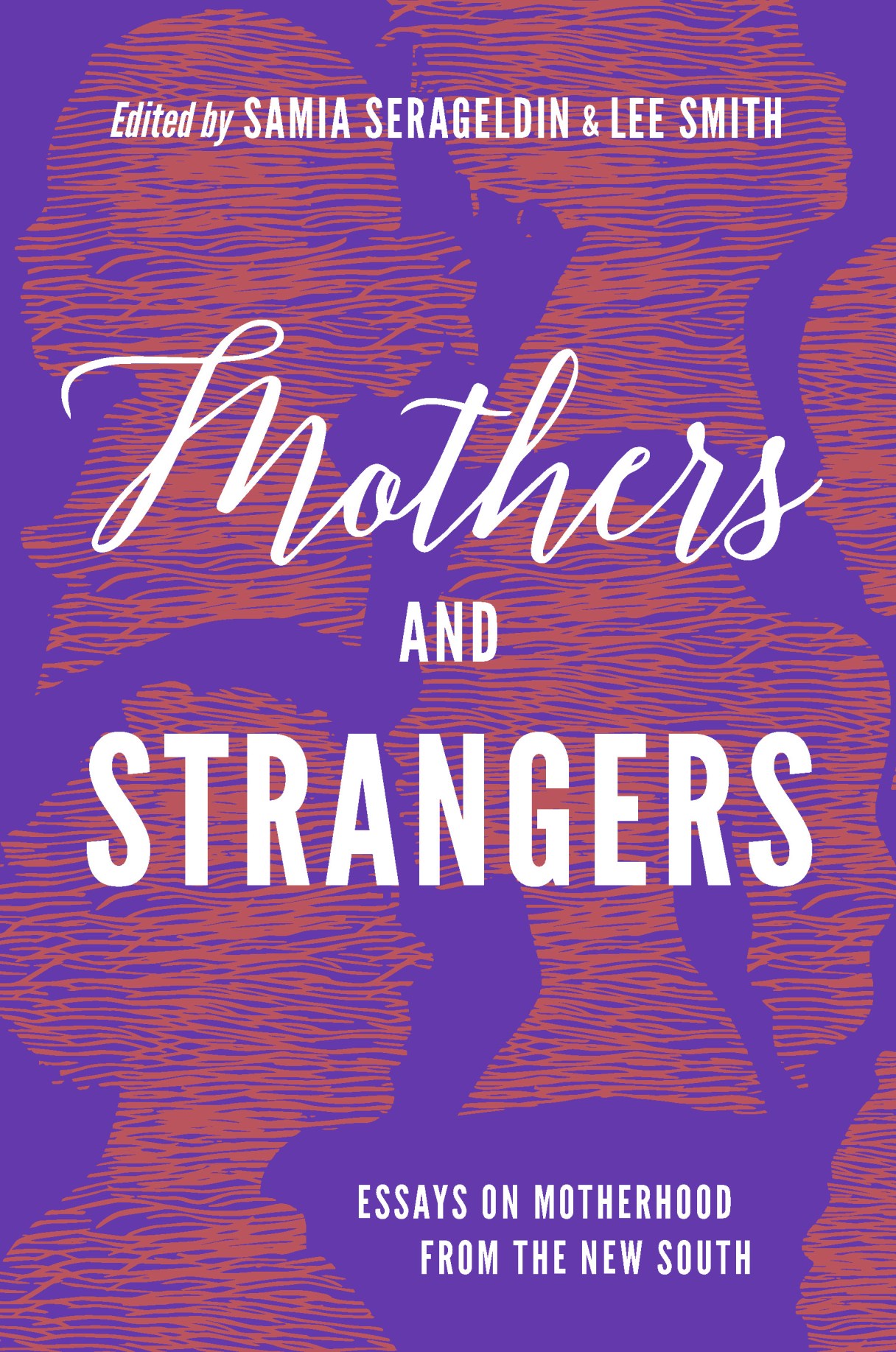
“MOTHERS AND STRANGERS: ESSAYS ON MOTHERHOOD FROM THE NEW SOUTH,” edited by Samia Serageldin and Lee Smith (University of North Carolina Press, 247 pages, $22).
“Mothers and Strangers: Essays on Motherhood From the New South,” a new essay collection edited by Samia Serageldin and Lee Smith, features explorations of what Serageldin calls the “most intimate of strangers, the women who raised us.” The essays’ authors represent both the contemporary Southern canon and a newer generation of writers. They are novelists, poets, critics, professors, singer- songwriters. Together they reflect the South’s regional identity as a thing in flux, one whose very existence is up for debate.
But they also bear in common a loving and openhearted curiosity about those most intimate strangers. Describing the challenge of writing her mother’s obituary, Jacquelyn Dowd Hall reflects that she’s “struck, again, by all I didn’t say or sketched in but in a bare-bones way. How I would love to write something that would really do her justice, but where would I begin?” There’s a sense in these pages that to evoke your mother honestly and thoughtfully, to do her complexity justice, is a deeply honorable challenge and a difficult task, not to be taken up lightly.
The mothers depicted here vary widely in their cultural heritage, socioeconomic conditions and the relationships that shaped their approach to family – which in turn shaped the writers’ identities. Melody Moezzi’s mother, a hardworking pathologist, is one of what Moezzi calls “the Person Mom Mafia,” who “toil in teams, like professional athletes or ant colonies.” Frances Mayes’ widowed mother, known as Frankye, shuns work and struggles to free herself from the traps of drinking and men. But these women are also strikingly similar in being defined by contradictory behaviors and beliefs. Marshall Chapman reflects that her mother, “outspoken and opinionated,” was really two people: “the authentic, adventurous one and the one who toed the line of ‘[w]hite male imperialism.'”
A tendency to resist the suffocating demands of their own elders is another common trait. (Could it be that writers are bent on teasing out even the smallest strain of rebellion in their maternal figures?) James Seay’s mother refused the difficult prospect of churning butter sidesaddle, opting to straddle the churn. Following the death of her domineering husband, Hal Crowther’s mother “rapidly rebranded as a liberal Democrat, a very rare animal in rural north Appalachia where she lived.” Daniel Wallace unpacks a particularly engaging story his mother loved to tell – “her great tale of youthful misadventure” – about a first marriage at age 12 to a 17-year-old boy. Wallace’s essay is a search for the truth behind his mom’s favorite story of herself, and like the best of the work collected here, it delivers his inimitable voice while also revealing something of the people and place he hails from.