
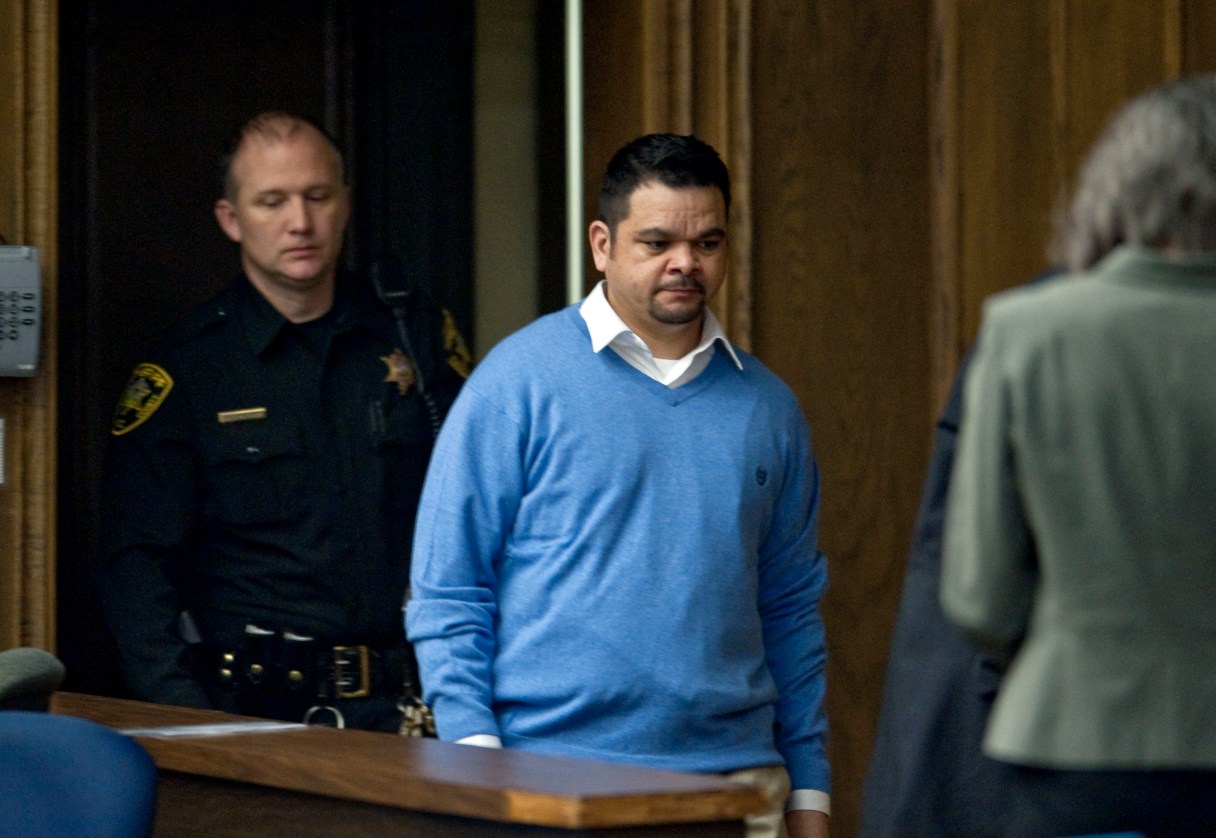
RALEIGH, N.C. (AP) – North Carolina’s highest court is reviewing whether justice means the death penalty for a survivor of El Salvador’s blood-soaked civil war of the 1980s who strangled and then decapitated his estranged wife.
The state’s Supreme Court hears oral arguments Monday on whether the state can execute 41-year-old Juan Carlos Rodriguez of Winston-Salem for the 2010 murder of his wife, Maria. The high court automatically reviews death cases.
North Carolina is rare among southern states in that it hasn’t had an execution in more than a decade because of various legal challenges. While the state has continued to suffer 500 to 600 murders a year, prosecutors have sought the death penalty only a handful of times each year and juries have condemned killers in only a fraction of those cases.
Rodriguez’s children told investigators their father beat and bloodied Maria Rodriguez after she told them she was leaving in November 2010. He tossed the woman’s still-breathing body over his shoulder, placed her in his vehicle, and said he was taking her to a hospital. Maria’s body and severed head were found at different locations three weeks later, after Juan was already jailed for her kidnapping.
Justices are holding hearings in the case for the second time in almost exactly a year. Monday’s hearing comes after the U.S. Supreme Court ruled this spring that states needed to use current medical standards in deciding whether a killer is so mentally disabled he can’t be executed. The U.S. constitution bans “cruel and unusual punishments,” and that has been interpreted to prohibit executing people with severe mental shortcomings.