
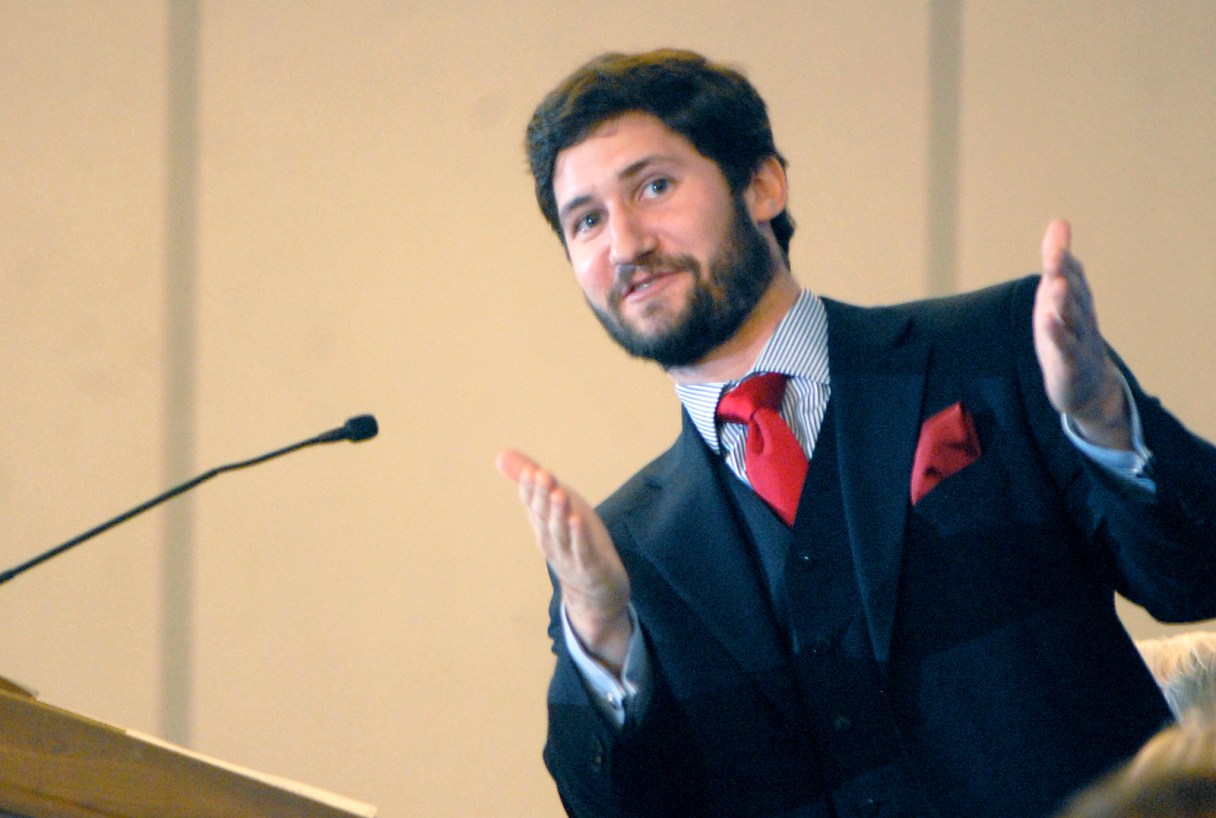
Success in Afghanistan depends on more than killing Taliban fighters or even the number of schools or hospitals the United States builds, a Chattanooga native says.
Andrew Exum, fellow at the Center for a New American Security, described Thursday the complex process of moving ahead in Afghanistan based on his service leading soldiers in the country in 2002 and work with Gen. Stanley McChrystal’s review process in 2009.
“Development is not the same thing as stabilization,” he told an audience of more than 250 at a Rotary Club luncheon. Money for infrastructure and aid must also come with a stable political climate for Afghans to live their lives.
Fighting and killing Taliban leaders, while important, may not improve relations in some provinces or districts as much as brokering land deals or improving drinking water supplies, the McCallie School graduate said.
Mr. Exum applauded President Barack Obama’s serious questioning of policy in the war-torn country, which began in March 2009 and led to a review by Gen. McChrystal.
Though the war has dragged on in various forms for more than eight years, Mr. Exum said the “reality is the Taliban has a losing hand.”
“They’ll never be able to reinstate authority the way they did before (Sept. 11),” he said.

Mickey Robbins, a Rotary member, said after the speech that Mr. Exum shared an “insightful perspective.”
Patsy Hazlewood, Rotary president, said having speakers with direct experience in the “topics of the day” helped members better understand issues in the news.
Showing a long-term U.S. commitment to Afghans means working with both the government and the people, Mr. Exum said.
“They’re not going to accept a loaf of bread if they think the bakery is going to be left unguarded tomorrow,” he said.