
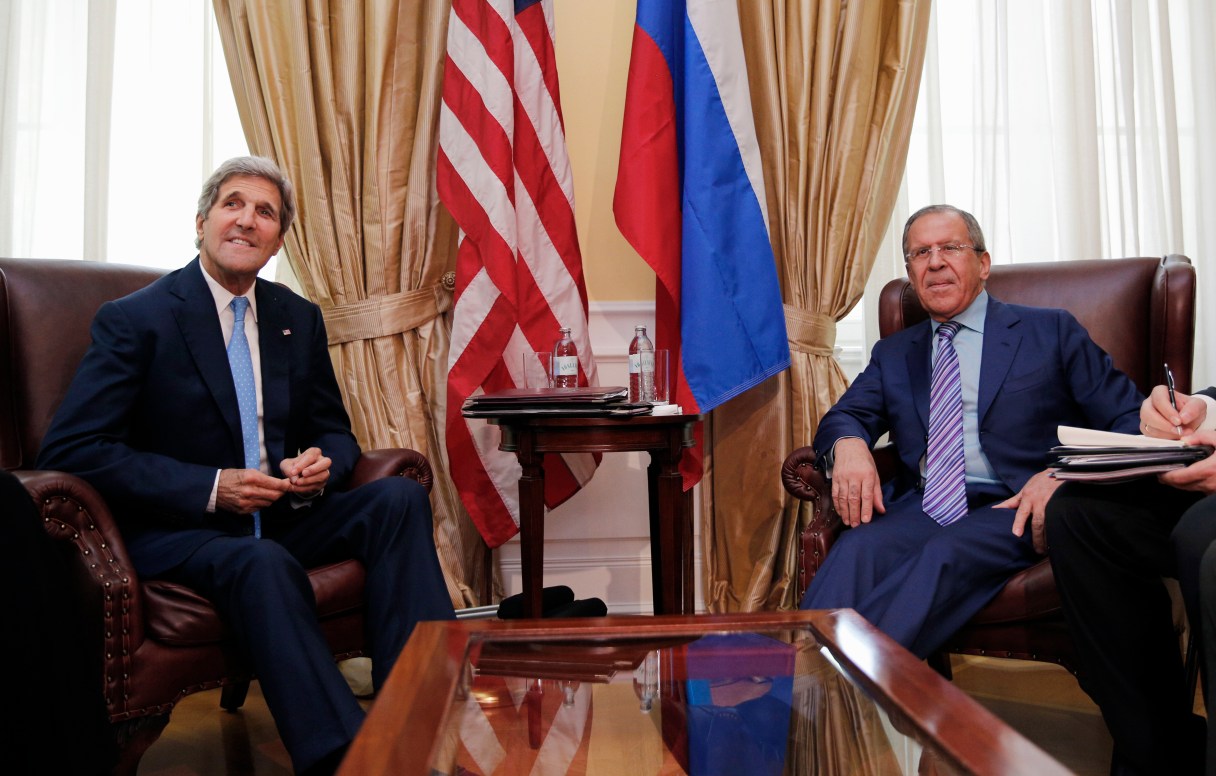
VIENNA — Russia-U.S. relations are at a post-Cold War low just about everywhere, except at the Iran nuclear talks.
Despite a chill over the Ukraine crisis that has spread to almost every element of their relationship, Moscow and Washington continue to find common cause on one of the most pressing issues on the global agenda — a deal to prevent Iran from being able to make nuclear weapons.
Officials on both sides credit the other with pragmatic proposals and good faith that transcends their broader differences.
For the U.S., failure to get an agreement carries the unappealing risk of involvement in a new Mideast conflict, nor does President Barack Obama want to lose out on a key plank of his foreign-policy legacy. The Obama administration has said it could strike Iran’s nuclear facilities militarily should diplomatic attempts to curb its nuclear activities fail. Israel is even more upfront about threatening to launch air attacks, a move that could draw the U.S. into the fray.
The Russians also don’t want a U.S.-Iran war. Gary Samore, a U.S. negotiator at the nuclear talks until 2013, says getting an agreement is in Moscow’s strategic interest as it tries to limit the U.S. presence in the Middle East.