

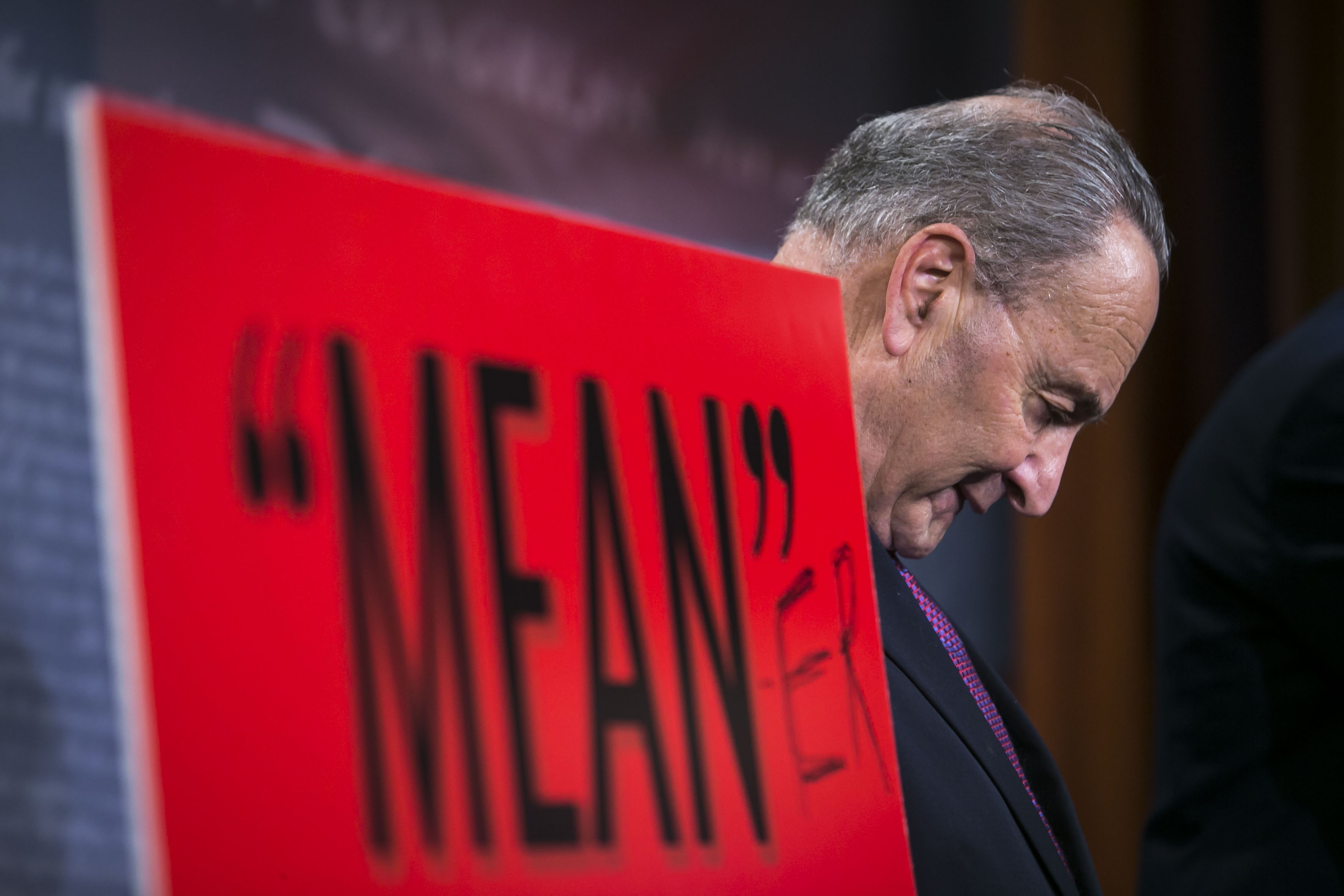
 Senate Minority Leader Chuck Schumer, D-N.Y., edits a quote attributed to President Donald Trump to comment on the release of Senate Republicans’ health care legislation on Capitol Hill in Washington on Thursday. (Al Drago/The New York Times)
The Senate health care bill – like the House health care bill – would rob from the poor and give to the rich.
Like the House bill passed several weeks ago, it’s not a health care bill at all. It’s a tax-cut bill.
And while it may fulfill the ideological dogma that passes for conservatism in the Republican Party these days, it is a far cry from the president’s pledge of better, more affordable health care for all.
It strips coverage for mental illness because it removes the mandates to cover it. It limits access to addiction treatment. It lowers marketplace subsidies for private insurance and at the same time gives states the ability to shrink benefits. It allows insurers to charge older Americans in their 50s and early 60s up to five times what they charge younger people. It removes the requirement that individual plans cover maternity care. It allows states to rescind any cost-free birth control benefit. It partially defunds Planned Parenthood, even for non-abortion services.
It sort of keeps protections for pre-existing conditions. We say “sort of” because it also permits states to allow insurers to slash from their benefits things like insulin. Wouldn’t that basically make insurance useless to folks with the pre-existing condition of diabetes? Nearly 15 percent of Tennesseans and Georgians have diabetes, and more than one in three people have prediabetes with blood glucose levels higher than normal, but not yet high enough to be diagnosed as diabetic.