
Friday, November 13, 2026Nov 13

Kenya set to burn 106 tons of ivory and rhino horn

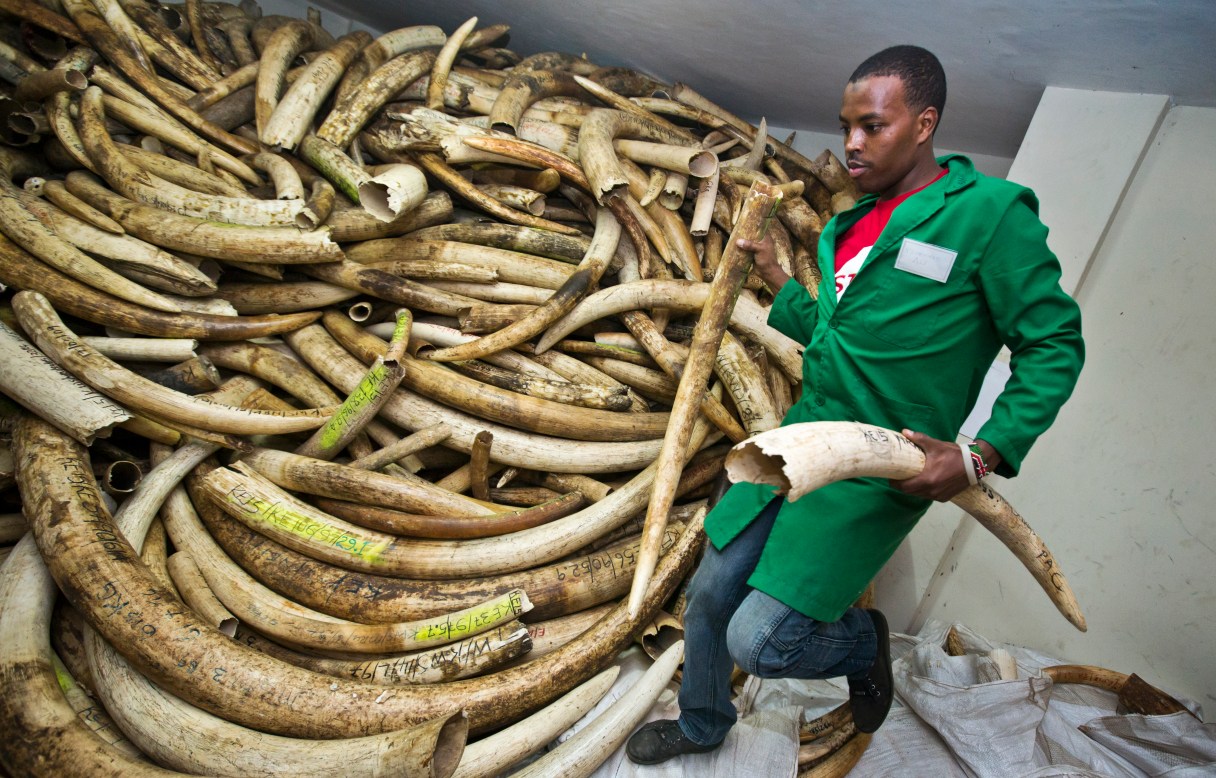
A worker removes elephant tusks from a pile in the secure strongroom, to be logged and carried outside into shipping containers for storage, at the headquarters of the Kenya Wildlife Service (KWS) in Nairobi, Kenya, Monday, April 4, 2016. Around 105 tonnes of ivory are due to be burned later this month, the largest single destruction of ivory in history according to the KWS, to coincide with the Giants Club summit for the protection of elephants which will be held in Kenya April 28-30. (AP Photo/Ben Curtis)
A worker removes elephant tusks from a pile in the secure strongroom, to be logged and carried outside into shipping containers for storage, at the headquarters of the Kenya Wildlife Service (KWS) in Nairobi, Kenya, Monday, April 4, 2016. Around 105 tonnes of ivory are due to be burned later this month, the largest single destruction of ivory in history according to the KWS, to coincide with the Giants Club summit for the protection of elephants which will be held in Kenya April 28-30. (AP Photo/Ben Curtis) A worker removes elephant tusks from a pile in the secure strongroom, to be logged and carried outside into shipping containers for storage, at the headquarters of the Kenya Wildlife Service (KWS) in Nairobi, Kenya, Monday, April 4, 2016. Around 105 tonnes of ivory are due to be burned later this month, the largest single destruction of ivory in history according to the KWS, to coincide with the Giants Club summit for the protection of elephants which will be held in Kenya April 28-30. (AP Photo/Ben Curtis)

NAIROBI, Kenya (AP) – Kenyan wildlife authorities Monday started moving at least 105 tons of ivory and 1 ton of rhino horn in preparation for the torching of the items at the end of the month to discourage ivory and rhino horn trade believed to be fueling poaching of elephants and rhinos.

In a musty basement strongroom behind two sets of heavy steel doors, workers pulled elephant tusks from piles that nearly reach the ceiling. Each one is carefully logged and matched against previous photos of the tusk, pulled up on a computer tablet. The workers carry the ivory outside with the numbers of tusks being counted at each stage by wildlife rangers – a process expected to go on for days.

The stockpile is from elephants and rhinos killed in conflict with humans, from problem-animal control, those that died naturally or were killed by poachers, Kenya Wildlife Service Deputy Director Patrick Omondi.

The mass destruction is timed to coincide with an April 28-30 summit on protection of elephants in Kenya.

A global ban on the ivory trade in 1989 briefly halted the elephants’ demise. But the ban’s initial success was undermined by booming Asian economies and increasing demand for land. Africa had 1.3 million elephants in the 1970s but has only 500,000 today.