
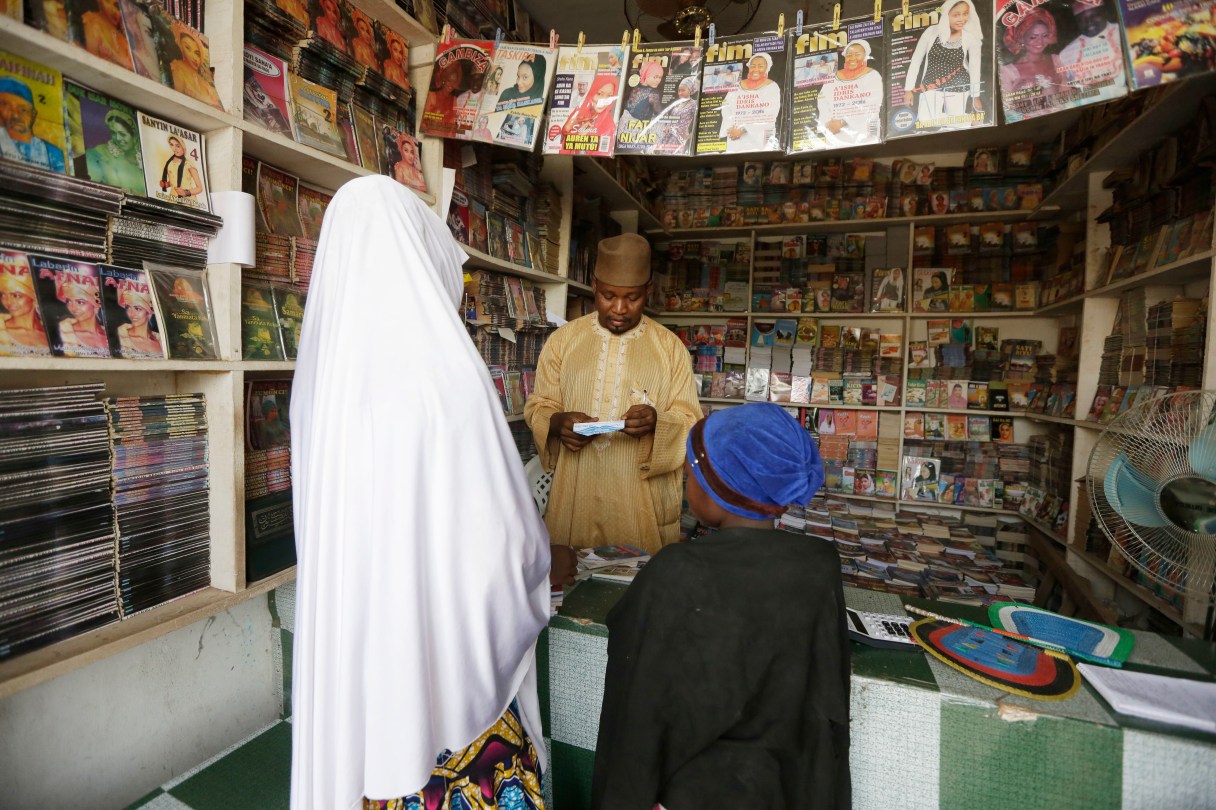
KANO, Nigeria (AP) – Nestled among vegetables, plastic kettles and hand-dyed fabric in market stalls are the signs of a feminist revolution: Piles of poorly printed books by women that advocate forcefully against conservative Muslim traditions such as child marriage and quick divorce.
These books are part of a flourishing literary movement centered in the ancient city of Kano, in northern Nigeria, where dozens of young women are rebelling through romance novels. Hand-written in the Hausa language, the romances now run into thousands of titles. Many rail against a strict interpretation of Islam propagated in Nigeria by the extremist group Boko Haram, which on Sunday posted video showing dozens of the 218 girls militants abducted from a remote school in April 2014.
“We write to educate people, to be popular, to touch others’ lives, to touch on things that are happening in our society,” says author Hadiza Nuhu Gudaji, 38, a veteran of the movement who has gained a recognition unusual for women in her society. For example, Gudaji recounts how, on a radio talk show, she was able to persuade the father of a 15-year-old not to force his daughter into marriage.
The novellas are derogatorily called “littattafan soyayya, meaning “love literature,” Kano market literature or, more kindly, modern Hausa literature. Daily readings on about 20 radio stations make them accessible to the illiterate.
“It’s a quiet revolution,” says Ado Ahmed Gidan Dabino, a male novelist, essayist, actor and head of the Kano branch of the Nigerian Writers’ Association. “Nothing hard-hitting, but small, small, and gradually challenging.”