
The GOP needs a political toxicology consult. I am here to deliver it. I know my prescription is unlikely to be filled.
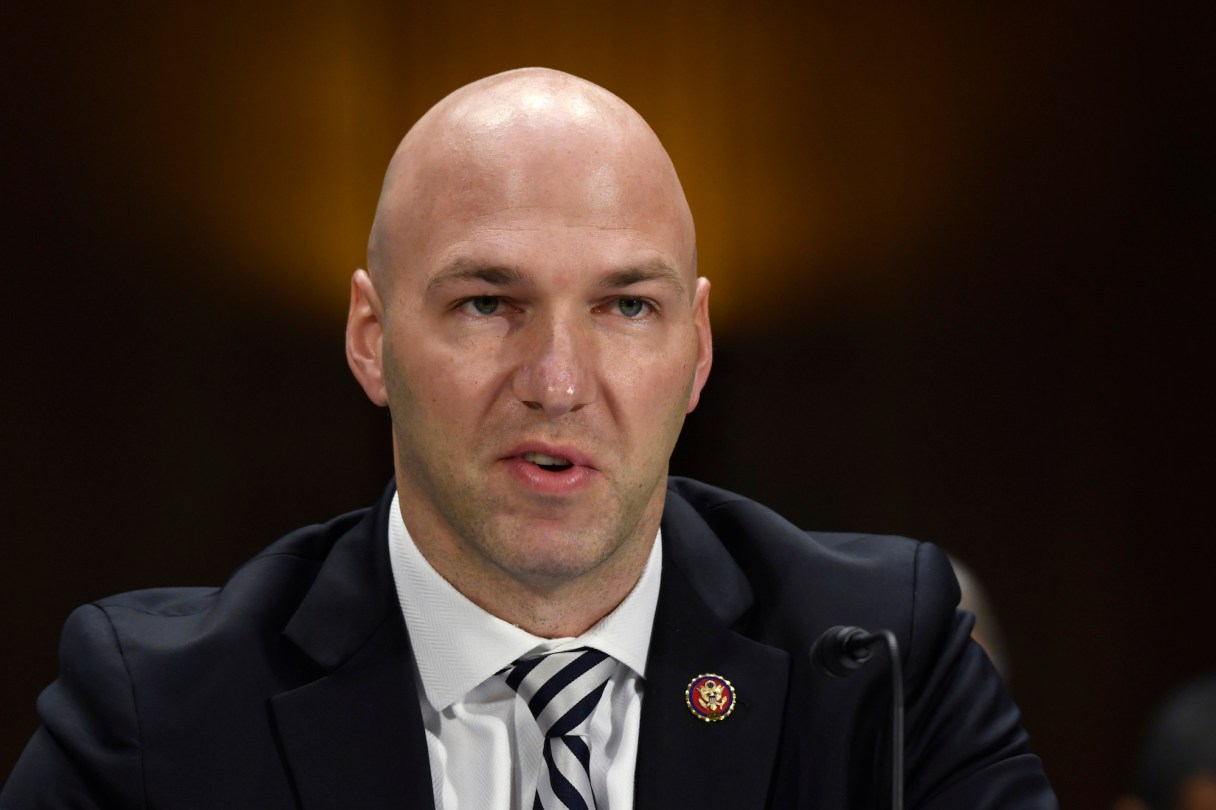
On Sept. 16, 36-year-old U.S. Rep. Anthony Gonzalez, R-Ohio, announced he would not seek re-election in 2022. “While my desire to build a fuller family life is at the heart of my decision, it is also true that the current state of our politics, especially many of the toxic dynamics inside our own party, is a significant factor in my decisions,” Gonzalez stated.
He was once considered a rising star within the Republican Party. He had a consistent conservative voting record. His shining star was shot down once he joined the group of 10 House Republicans who voted to impeach President Donald Trump after the Jan. 6 Capitol riot. Back in May, Ohio’s Republican Party censured Gonzalez for that vote.
Gonzalez is choosing to retire rather than continuing to face death threats and a vicious primary next year. Gonzalez told The New York Times that, since his impeachment vote, he has received numerous threats and now fears for the safety of his family.
Gonzalez called Trump “a cancer for the country,” and said the events of Jan. 6 crossed a line for him. Gonzalez faced a primary challenge from former Trump adviser Max Miller. Trump headlined at a fundraiser for Miller in Ohio and called Gonzalez a “grandstanding RINO.”
In Gonzalez’s statement, he used the phrase “toxic dynamics inside our own party.” The National Cancer Institute’s website defines toxicity as the extent to which something is poisonous or harmful. In medical toxicology, there are broadly two courses of action: an antidote (if one exists for the particular poisoning) or time with supportive care until recovery.
I am creating a new subspecialty: political toxicology. It is the evaluation and treatment of poisoned and envenomated political parties. I do not know if Republican Party members even know their party is sick. They should.
The Republican Party has had multiple opportunities to receive an antidote. They have refused each time. These antidotes include: the “Access Hollywood” tape, impeachment No. 1, Jan. 6, the days following Jan. 6, and impeachment No. 2, just to name a few. I call these antidotes because each instance presented an opportunity for the party to purge itself of its major toxin.
It is not as if Republicans in leadership positions didn’t know the antidote was available. They did. It is their voters who don’t want them to take it. They know of the side effects of such an anti-toxin (that is, their personal risk regarding re-election) and are not willing to endure it for the good of the party’s long-term health.
The Republican Party is playing a waiting game; holding out and allowing the toxin to persist. Party elites who remain silent are complicit in this ongoing malady. There is no guarantee that this waiting out will work and that the party will survive.
The New York Times conducted an analysis of voting records from January 2021. They found that nearly 140,000 Republicans had quit the party in 25 states that had readily available data. Nineteen states, including Missouri, do not have registration by party. Voting experts said the data indicated a stronger-than-usual departure from a political party.
If the GOP had just taken advantage of one of the antidotes, principled conservatives like Gonzalez and the nearly 140,000 voters would not have felt the need to leave. Elected leaders would not fear for their safety and the safety of their families just for calling out the former president. These threats of violence are not healthy for a political party or for the country. America thrives and succeeds when there are two healthy political parties.
“We’ve learned the wrong lesson as a party,” Gonzalez said, “but beyond that, and more importantly, it’s horribly irresponsible and destructive for the country.” Gonzalez would likely agree with my patient prognosis: poor.
St. Louis Post-Dispatch