
JACKSON, Ohio (AP) – The numbers are staggering: An average yearly total of 107 opioid pills per resident were distributed over a seven-year period in this rural Appalachian county.
The newly released federal data is shocking even to people who live here in Jackson County, where nearly everyone seems to have known someone who died from drug-related causes. Five children in one elementary school class were said to have lost a parent to an overdose death this past academic year.
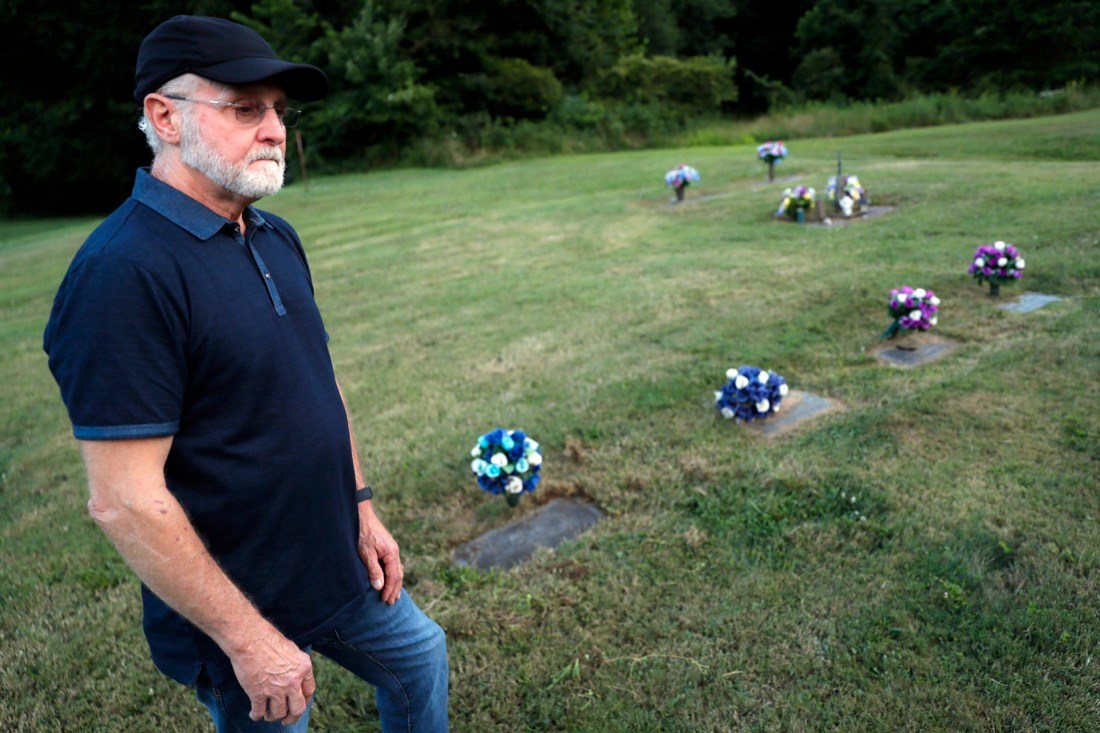
Standing at his son’s grave in Coalton, a village of fewer than 500 people, Eddie Davis remembers vividly his last conversation, in his home nearly 10 years ago, with the son he called Bub, “not knowing that would be the last time I would see him or hear his voice or be able to hug him.”
Soon, Jeremy Edward Davis was dead, at age 33.
“My son was accountable for himself; he did what he did, he chose to do that,” Davis, 67, said Wednesday.