
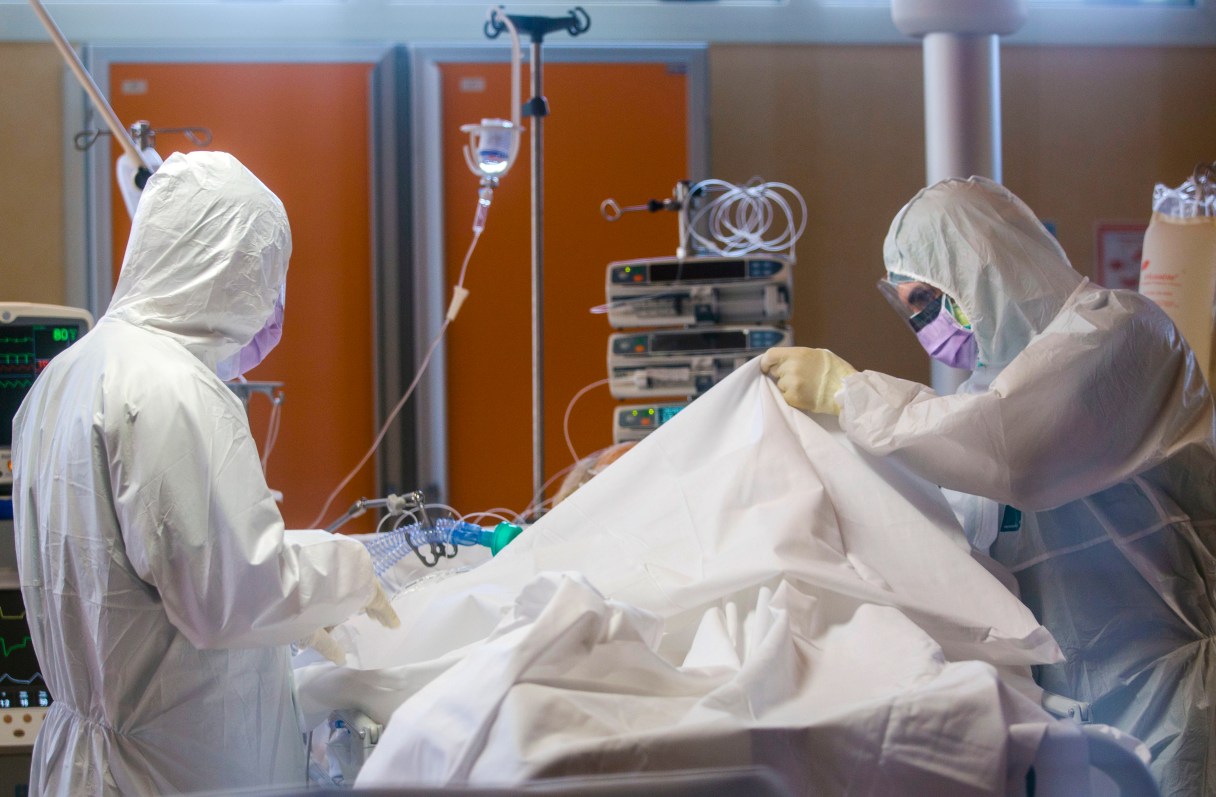
ROME (AP) – Maddalena Ferrari lets herself cry when she takes off the surgical mask she wears even at home to protect her elderly parents from the coronavirus that surrounds her at work in one of Italy’s hardest-hit intensive care units.
In the privacy of her own bedroom, where no one can see, the nursing coordinator peels away the mask that both protects her and hides her, and weeps for all the patients lost that day at Bergamo’s Pope John XXIII Hospital.
“We’re losing an entire generation,” Ferrari said at the end of one of her shifts. “They still had so much to teach us.”
The pressures on hospital ICUs in Italy and Spain may have eased in recent days as new virus cases decline. But the emotional and psychological toll the pandemic has taken on the doctors and nurses working there is only now beginning to emerge.
Already, two nurses in Italy have killed themselves, and psychologists have mobilized therapists and online platforms to provide free consultation for medical personnel. Individual hospitals hold small group therapy sessions to help staff cope with the trauma of seeing so much death among patients who are utterly alone.