
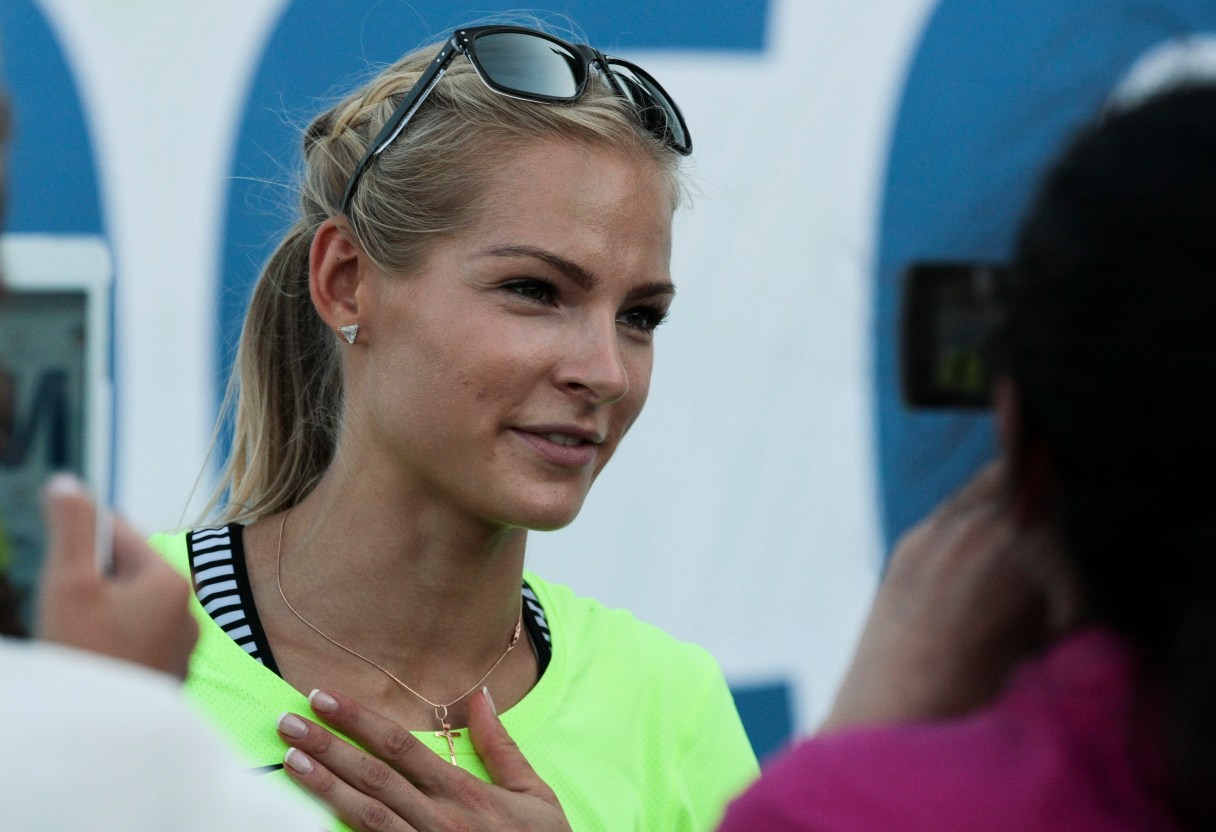
RIO DE JANEIRO (AP) – Darya Klishina, the only Russian athlete at the Rio Olympics for track and field, attended a hearing Sunday to determine whether she can compete, as her country’s sports minister said the allegations against her were part of a campaign to tarnish Russia’s reputation.
Klishina’s lawyer Paul Greene told The Associated Press before the hearing that the long jumper was to testify in person before the Court of Arbitration for Sport at a luxury beachside hotel after track’s world governing body, the IAAF, retracted her eligibility for the Olympics. CAS said it hopes to issue its verdict by Sunday night.
“She plans to say the truth, which is that she’s a clean athlete” who meets IAAF criteria by having trained in the U.S. since 2014 with regular drug testing outside Russia, Greene said. The hearing, two days before Klishina’s event begins, is “not the easiest thing to deal with, but she’s a very strong person,” he added.
Greene said the IAAF case against Klishina relies on confidential evidence from a report on Russian doping by World Anti-Doping Agency investigator Richard McLaren, with a key piece of evidence being scratch marks found on bottles containing drug test samples she gave in Russia.
McLaren wrote in the publicly available version of his preliminary report that Russian security services were able to open supposedly tamper-proof bottles with the intent of swapping tainted samples for clean urine, leaving behind telltale scratches on the glass.