
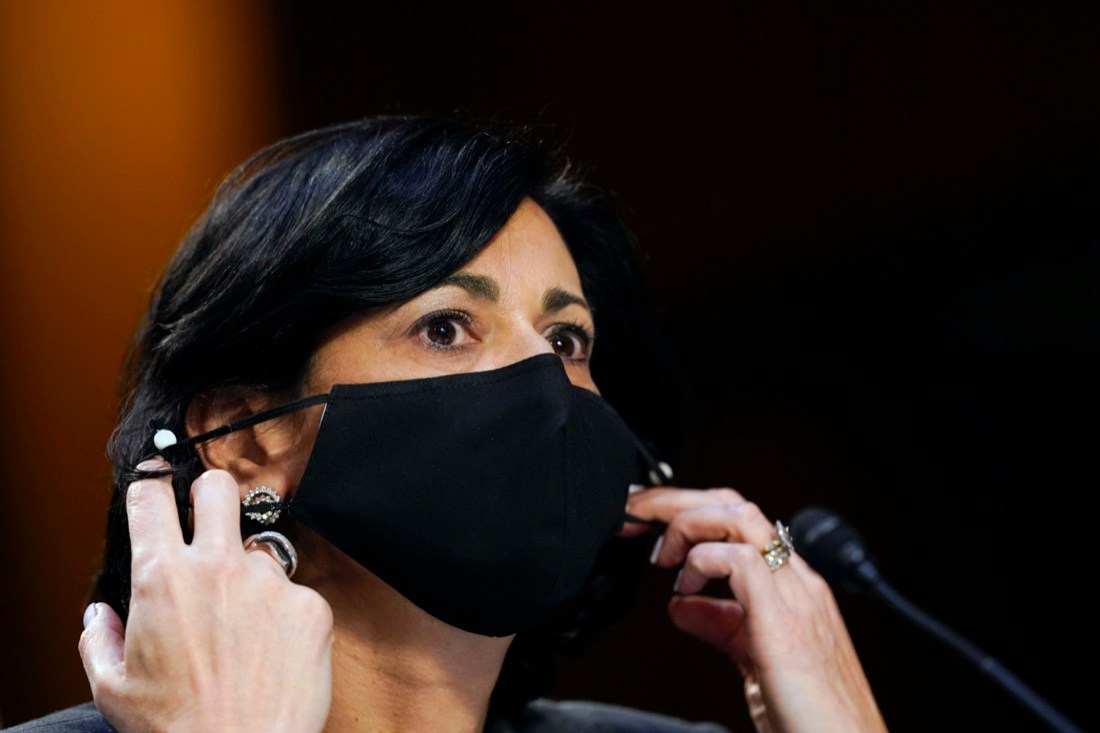
Just two months after the U.S. Centers for Disease Control and Prevention said it was generally safe for those vaccinated against COVID-19 to drop their masks, the agency switched course and now recommends that even the inoculated wear face coverings indoors in areas where the highly transmissible delta variant is spreading rapidly.
The guidance change may provoke some whiplash – and it’s already generated some backlash, if social media is any measure – but it makes sense. Here’s why.
* Spread risk
The biggest reason to encourage wearing masks is to protect others, many of whom are still unvaccinated. The CDC justified its initial rollback with data that suggested vaccinated people were less likely to transmit the virus. But that was before the delta variant emerged. Delta spreads faster because it evades protective antibodies and grows more copies of itself, likely contributing to lower protection against symptomatic infection by even highly effective mRNA vaccines. There isn’t definitive data to confirm it yet, but if vaccines are less effective at wiping out delta and there’s more of it, it’s only logical to expect more transmission. The CDC’s decision was based in part on data suggesting that vaccinated people infected with delta who transmit to others had higher viral loads, according to a Tuesday news conference led by Director Rochelle Walensky. Viral load is key to transmissibility, and it was lower in vaccinated people who contracted other strains. The CDC finding dovetails with a preprint study of breakthrough infections in India, which found that vaccinated people infected with the delta variant had higher respiratory viral loads and were more likely to spread COVID than those infected with other strains. Fortunately, the variant is not any better at getting around physical barriers such as masks, which are especially effective at stopping transmission.
* Personal safety