
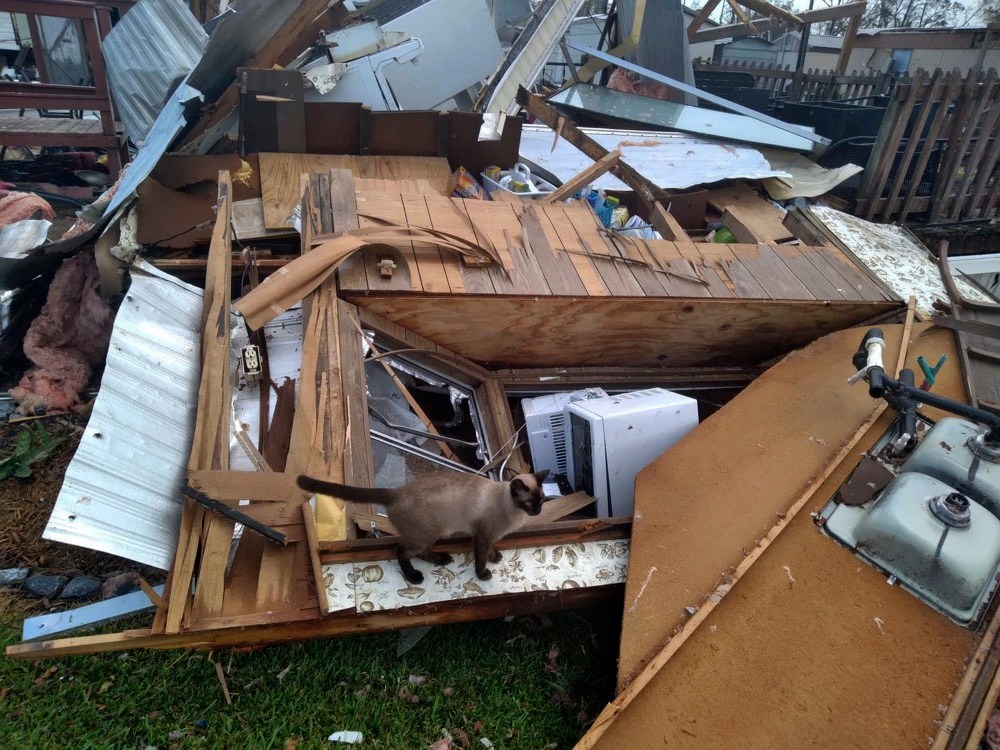
CAMERON PARISH, La. (AP) – Residents in southwestern Louisiana embarked Saturday on the epic task of clearing away felled trees, ripped-off roofs and downed power lines after Hurricane Laura tore through parts of the state.
The U.S. toll from the Category 4 hurricane rose to 16 deaths, with more than half of those killed by carbon monoxide poisoning from the unsafe operation of generators. The latest deaths included an 80-year-old woman and an 84-year-old man who died from just such a poisoning.
President Donald Trump toured the damage from Laura in Louisiana and Texas on Saturday. He and Gov. John Bel Edwards made their way down a street blocked by trees and where houses were battered by the storm, which the governor said was the most powerful hurricane to strike the state. That means it surpassed even Katrina, which was a Category 3 storm when it hit 15 years ago on Saturday, to the day.
Although the storm was not as bad as once feared, authorities were still warning it could leave people with out running water or power for weeks in the stifling late summer heat. It made roads impassable, tore roofs and walls off buildings and strew debris about.
It also led to fires at a chlorine plant in Westlake in the hard-hit Lake Charles area. On Saturday, crews were battling a new blaze, leading authorities to broaden a shelter-in-place order to 1 mile (1.6 kilometers) around the plant, state Department of Environmental Quality spokesman Greg Langley said.