
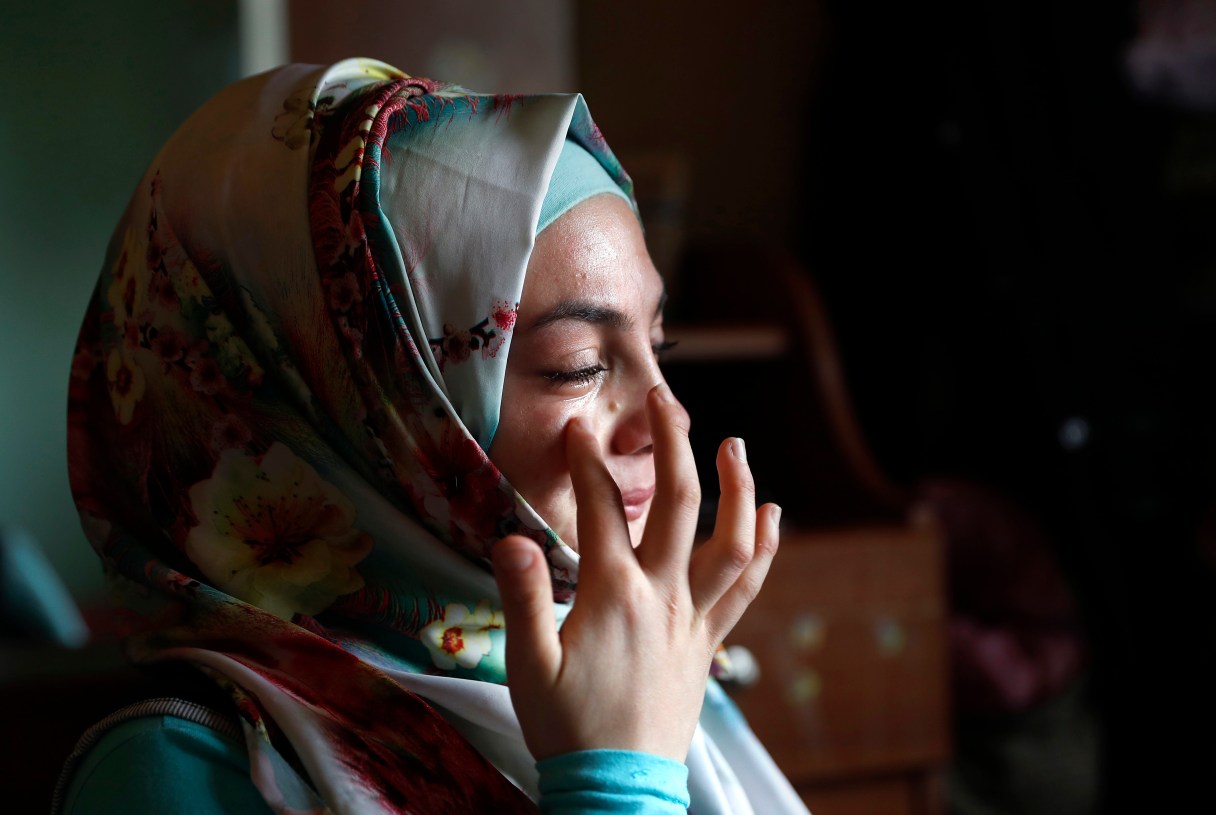
BIBNINE, Lebanon (AP) – Alaa plays the horrifying video she kept on her phone that shows her moments after she was riddled with bullets, her jaw shredded, hand punctured, and chest bleeding. “Did you not see the video?” the Syrian teenager asks visitors, in defiance of its cruelty, to show how far she has come.
It has been a long road. And a missed childhood.
From Alan Kurdi lying dead face down on a Turkish shore, to a dust-covered Omran Daqneesh awaiting help in an Aleppo ambulance, images of Syrian children suffering some of conflict’s worst horrors have become iconic. Countless others still relentlessly flood the media: children pulled from under bombed buildings, or convulsing after inhaling chemical gas or drowning after boats of fleeing families capsize in choppy seas.
Alaa is one of the many victims of Syria’s six-year civil war, which the U.N. children’s agency UNICEF says is getting worse for children.
UNICEF says the war has forced more than 2.3 million children, or nearly 10 percent of the total pre-war population of Syria, to seek refuge in neighboring countries. Save the Children says as of 2016, at least 3 million children are estimated to be living in areas with high exposure to explosive weapons.