
Monday, November 16, 2026Nov 16

Researchers find fossil of ‘Super Salamander’ species

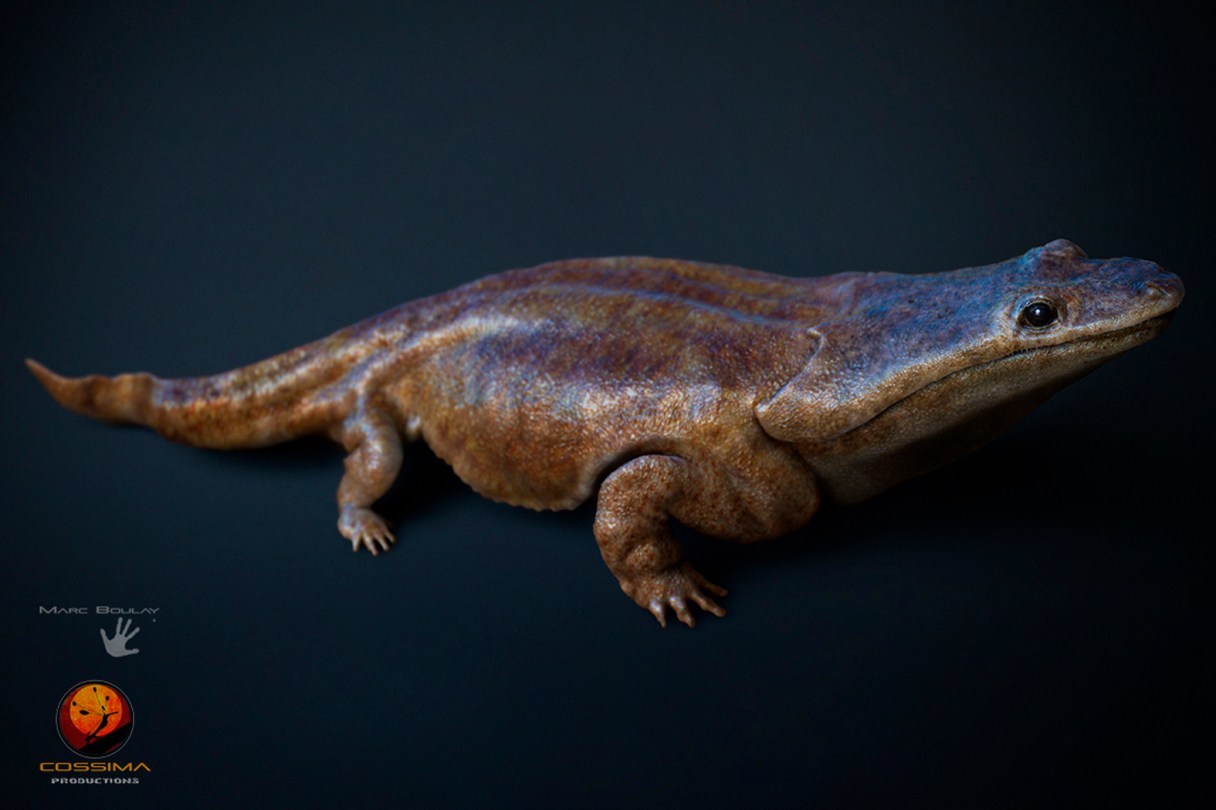
In this image  made available by the University of Edinburgh on Tuesday March 24, 2015 shows  an artist's rendition of a previously unknown species of crocodile-like "super salamander" that roamed the Earth more than 200 million years ago. University of Edinburgh researchers say the species discovered in Portugal was among the Earth's top predators. The team said Tuesday it was part of a wider group of primitive amphibians that were widespread at the time. (AP Photo/University of Edinburgh, Marc Boulay Cossima Productions)
In this image made available by the University of Edinburgh on Tuesday March 24, 2015 shows an artist's rendition of a previously unknown species of crocodile-like "super salamander" that roamed the Earth more than 200 million years ago. University of Edinburgh researchers say the species discovered in Portugal was among the Earth's top predators. The team said Tuesday it was part of a wider group of primitive amphibians that were widespread at the time. (AP Photo/University of Edinburgh, Marc Boulay Cossima Productions)

LONDON (AP) – Fossil remains of a previously unknown species of a crocodile-like “super salamander” that grew as long as a small car and was a top predator more than 200 million years ago have been found in southern Portugal, researchers announced Tuesday.

The species grew up to two meters (six feet) in length and lived in lakes and rivers, University of Edinburgh researchers said.

The team said the species, given the name Metoposaurus algarvensis, was part of a wider group of primitive amphibians that were widespread at the time but became extinct. They are the ancestors of modern amphibians such as frogs, and are believed by paleontologists to have lived at the same time the dinosaurs began their dominance.

Steve Brusatte of the University of Edinburgh’s School of GeoSciences, who led the study, said the new species, which had hundreds of sharp teeth, is “weird compared to anything today.”

It was at the top of the food chain, feeding mainly on fish, but it was also a danger for newly appeared dinosaurs and mammals that strayed too near the water, Brusatte said.