
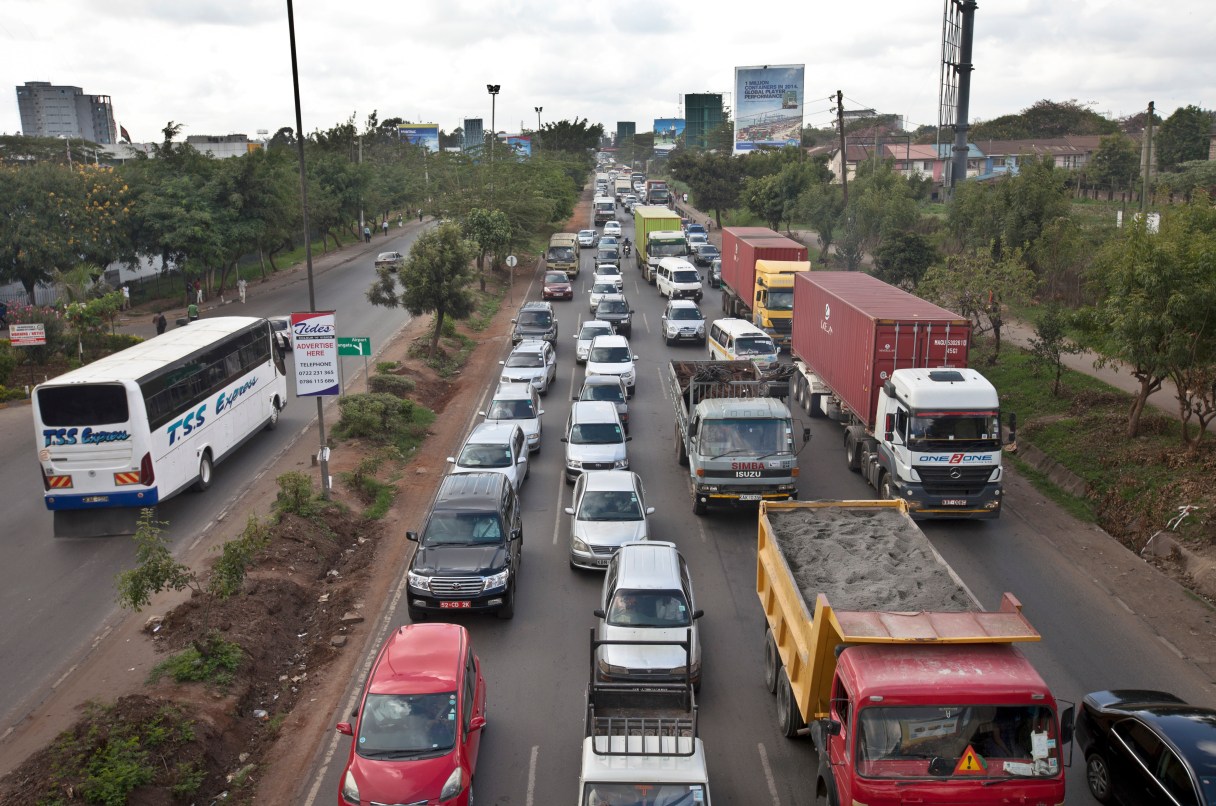
NAIROBI, Kenya (AP) – The nerves of commuters are fraying in Kenya’s capital, where getting from A to B isn’t as easy as it sounds.
A plan launched this month to ease road congestion by replacing key traffic circles with intersections and stoplights has, at least initially, made things worse in some areas. Television newscasts have been filled with cars at a standstill and fuming drivers, some of whom wondered what the gridlock says about leadership and planning in Kenya as a whole.
“No, no, no, no. It’s ridiculous,” one driver raged in an interview with KTN, a Kenyan television station.
U.S. President Barack Obama plans to visit Kenya in July, but authorities are likely to spare him any traffic headaches by clearing roads in advance.
Traffic has been a challenge for years in Nairobi, a city of more than 3 million people that lacks modern mass transit systems using bus or rail and where many rely on “matatus,” the mini-van taxis that dart through the streets. The economic cost of the city’s congestion is $1 billion a year, officials estimate, citing lost productivity when people and goods are stuck in a jam instead of swiftly reaching their destinations.