
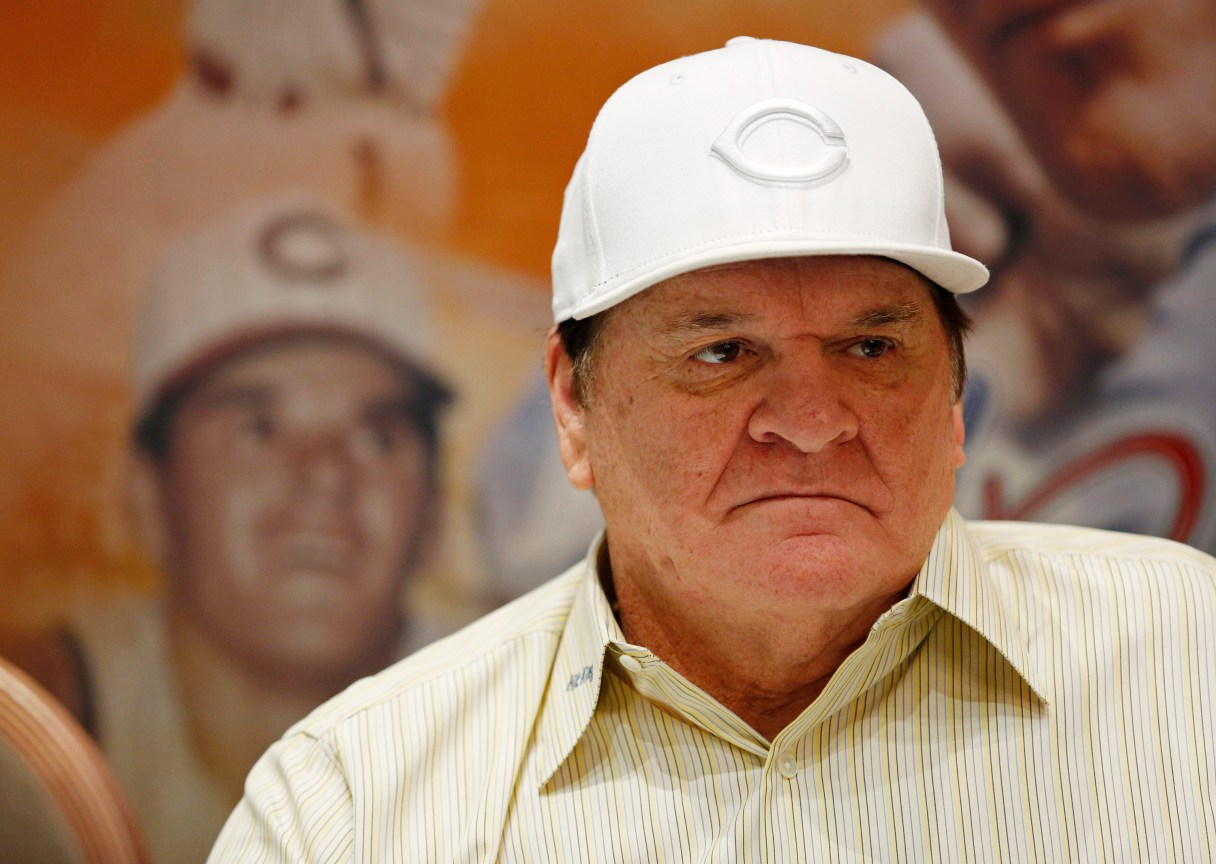

In an era where politicians routinely don’t mean what they say and don’t say what they mean, in a time when college athletes find their way on more arrest lists than All-America lists, in a period where ethics and morality are just two words in a dictionary, it’s refreshing to know that Pete Rose’s lifetime ban from baseball really means a lifetime ban.
Rose, for those who don’t remember, was a star outfielder for the Cincinnati Reds whose nickname was befittingly “Charlie Hustle.” He played for Cincinnati Reds, Philadelphia Phillies and the Montreal Expos from 1963 to 1986, when he embodied a player who accentuated his God-given talent with moxie and extra effort. He was a difference maker.
It was in 1989, though, when he managed his hometown Reds that he came under investigation for betting on baseball, which is prohibited by the sport’s rules. He denied the charges, which included that he bet on games both as a player and manager (even, it was alleged, against his own team), but he eventually agreed to a lifetime ban from the sport by Commissioner A. Bart Giamatti.
Rose, in a 2004 autobiography, finally admitted to the betting and hoped the admission would help his case in one of a myriad pleas for reinstatement to the sport he loved. Earlier this year, present Commissioner Rob Manfred agreed to consider Rose’s case.
On Monday, the commissioner announced his decision that the now-74-year-old “has not presented credible evidence of a reconfigured life.” By that, Manfred evidently is noting how the former star still bets on baseball, legal as it may be if you’re not a part of the game.
People can say, and they’d have a point, that Rose has to stay out of the game while players who “cheated” through the use of performance-enhancing steroids are welcomed by baseball and are at least eligible for the National Baseball Hall of Fame. But while the steroid users knew what they were doing was likely wrong, the lack of a comprehensive steroids policy during the earlier years of their use and the absence of incontrovertible evidence of use by some players made a blanket ban impossible. Rose, though, knew without a doubt he was in violation of baseball rules.
As sad as it is for a former player with certain Hall of Fame credentials, the decision probably slams the door on the onetime National League Rookie of the Year and onetime National League Most Valuable Player’s opportunity to enter the Hall of Fame in Cooperstown, N.Y.
But, in truth, he slammed the door himself.