
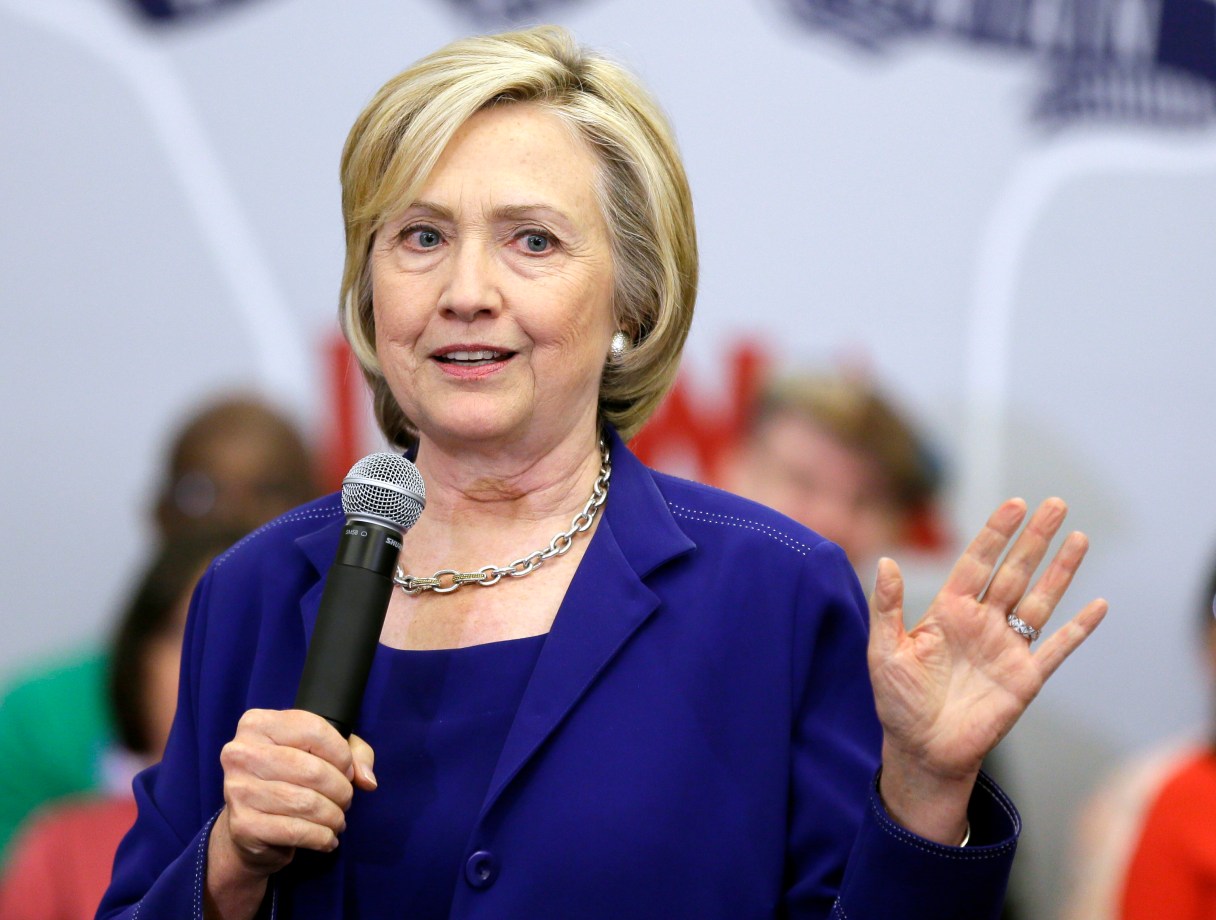
WASHINGTON (AP) – Pointing to the need to boost middle-class wages, Hillary Rodham Clinton is laying out her most concrete vision for the U.S. economy on Monday in a pitch to Democrats who are being wooed by Clinton’s chief rival, Vermont Sen. Bernie Sanders, and a larger electorate assessing the 2016 presidential field.
The Democratic presidential front-runner is outlining the themes of her economic agenda in a speech at The New School in New York, where she will emphasize the need for policies to increase real income of everyday Americans. Clinton is also expected to use the speech to portray a large field of Republicans as beholden to tax cuts and quick fixes that will fail to jumpstart wages.
Clinton’s high-profile economic speech coincides with a courting of labor groups and Hispanic officials by Clinton, Sanders and former Maryland Gov. Martin O’Malley. Clinton received the endorsement of the American Federation of Teachers union on Saturday and both Clinton and Sanders were holding private meetings with labor leaders later in the week.
Sanders, the self-described democratic socialist who has risen in recent Democratic polls, said in an interview with CBS’ “Face the Nation” on Sunday that he planned to address poverty in the coming weeks and reach out to voters in conservative states in the South.
The three Democratic contenders were addressing the National Council of La Raza conference in Kansas City later Monday, appealing to members of the nation’s largest Latino advocacy organization.