
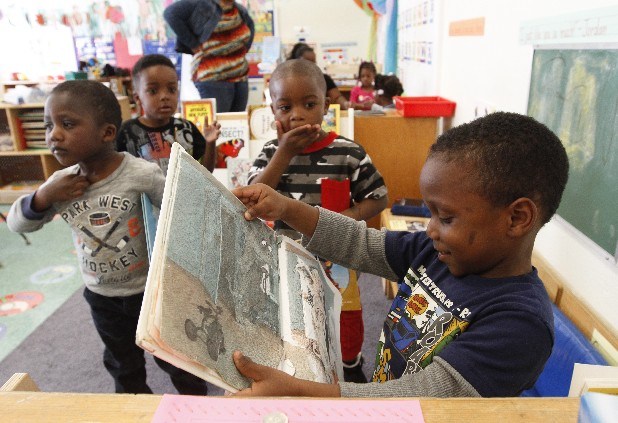
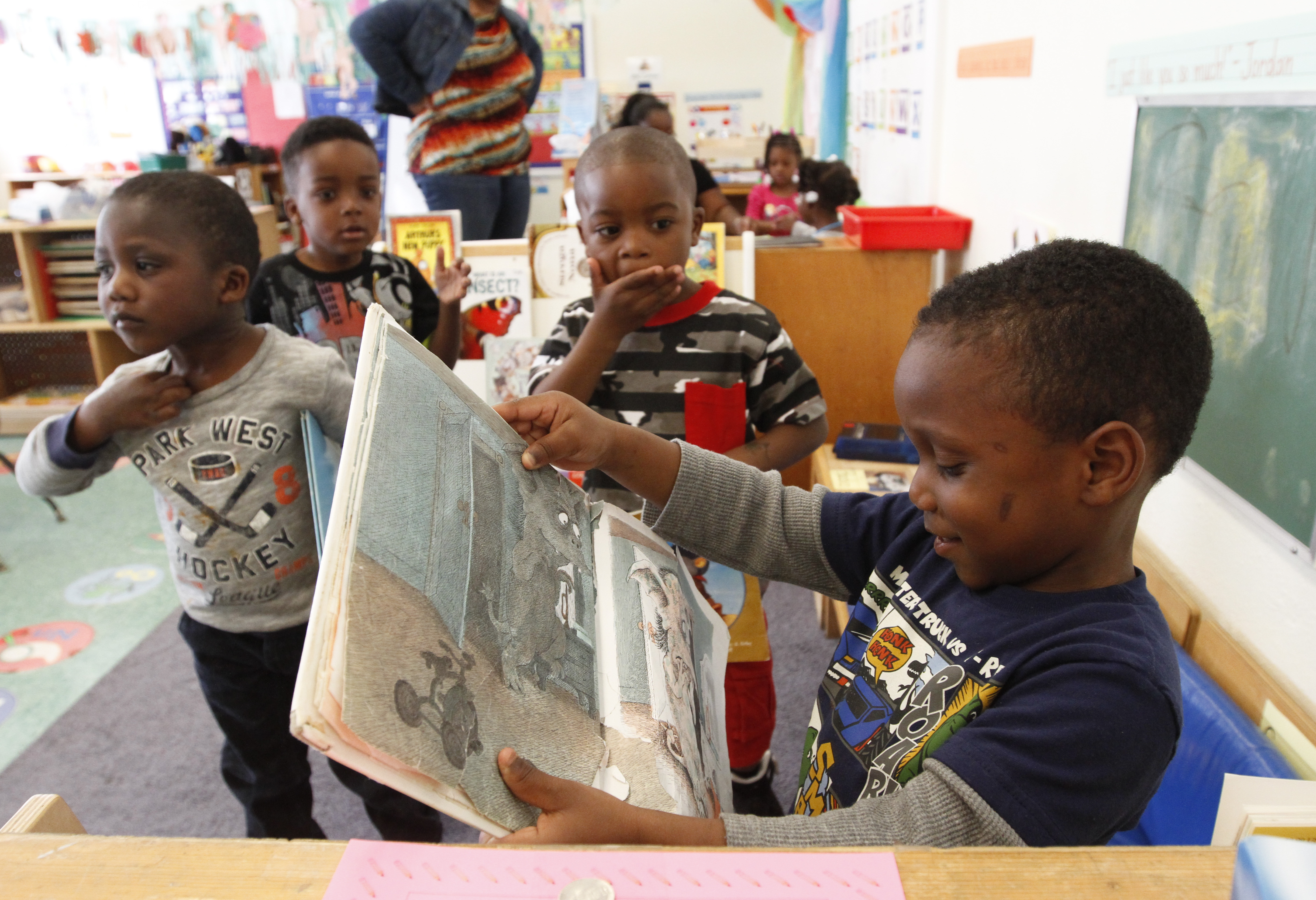
 Vinson Waller Jr., right, looks at illustrations in the book “Where The Wild Things Are” while at the Head Start facility Monday in East Chattanooga. Head Start is a program that aids in early childhood development for low-income families.
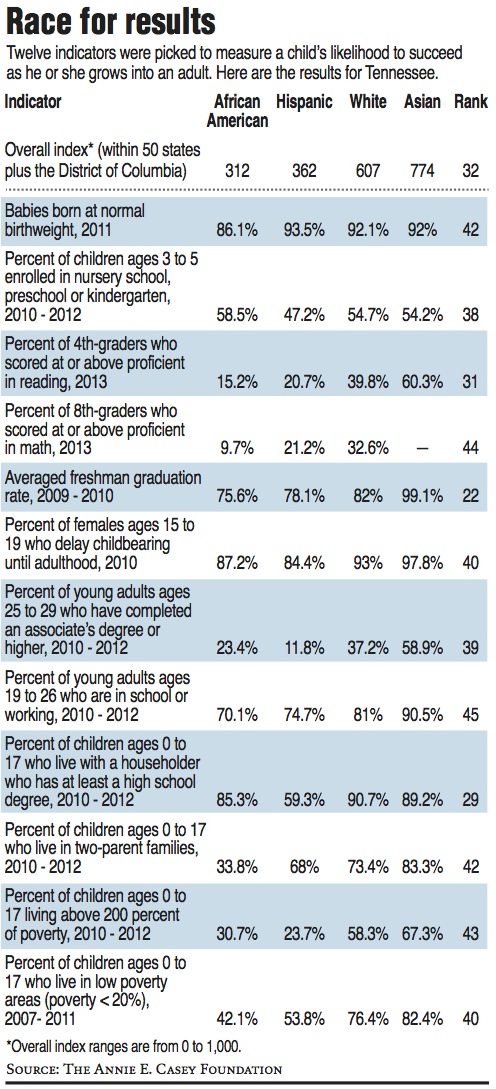 Race for Results index
For the first time last year, the majority of babies born in the U.S. were not white.
By 2018, children of color will make up the majority of American children. And by 2030, the U.S. Census Bureau projects that the majority of the U.S. workforce will be comprised of people of color.
But a national report released today shows that odds for a successful future are “disproportionately stacked” against black and Hispanic children, based on a spectrum of education- and health-related factors.
On virtually all measures, both nationally and in Tennessee, white and Asian children are performing better than black and Hispanic children – in some cases two to three times better.
In Tennessee, which ranked 32nd in the country for overall child welfare, the percentage of fourth-graders proficient in reading was 44 and 51 among white and Asian children, respectively, and among Hispanic and black children it was 15 and 20 percent.