
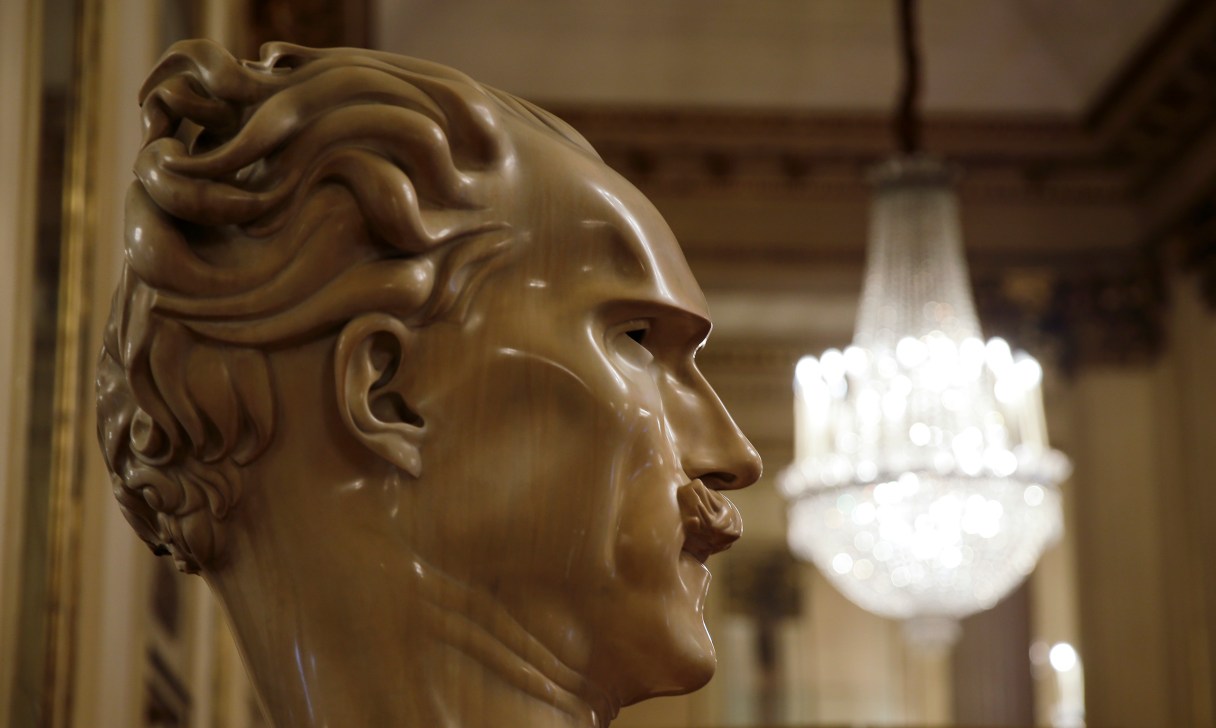
MILAN (AP) – Italian conductor Arturo Toscanini’s legacies included abolishing encores at La Scala. So it was a playful touch when one of the maestro’s musical heirs included a Verdi encore during a tribute at the Milan opera house marking the 150th anniversary of Toscanini’s birth.
The Saturday night concert was part of a series of celebrations and commemorations planned across Italy to honor one of the 20th century’s most enduring conductors, a man who defied Fascist leader Benito Mussolini, brought discipline and decorum to La Scala and popularized symphonic orchestral music in the United States.
Unlike composers whose works can be played and reinterpreted over time, the contribution of conductors “is written in water in a certain sense,” said Harvey Sachs, a Toscanini biographer who helped curate an exhibit on the conductor at La Scala’s museum that runs through June 4.
But Toscanini’s fame has endured due to the musical rigor he imposed on orchestras and the fact that he was one of the first major conductors whose work was both recorded and broadcast live, Sachs said.
During his lifetime, Toscanini enjoyed renown around the world but particularly in his native Italy, where his focus was opera, and in the United States, the second home where he devoted his career to broadcasting symphonic music.