
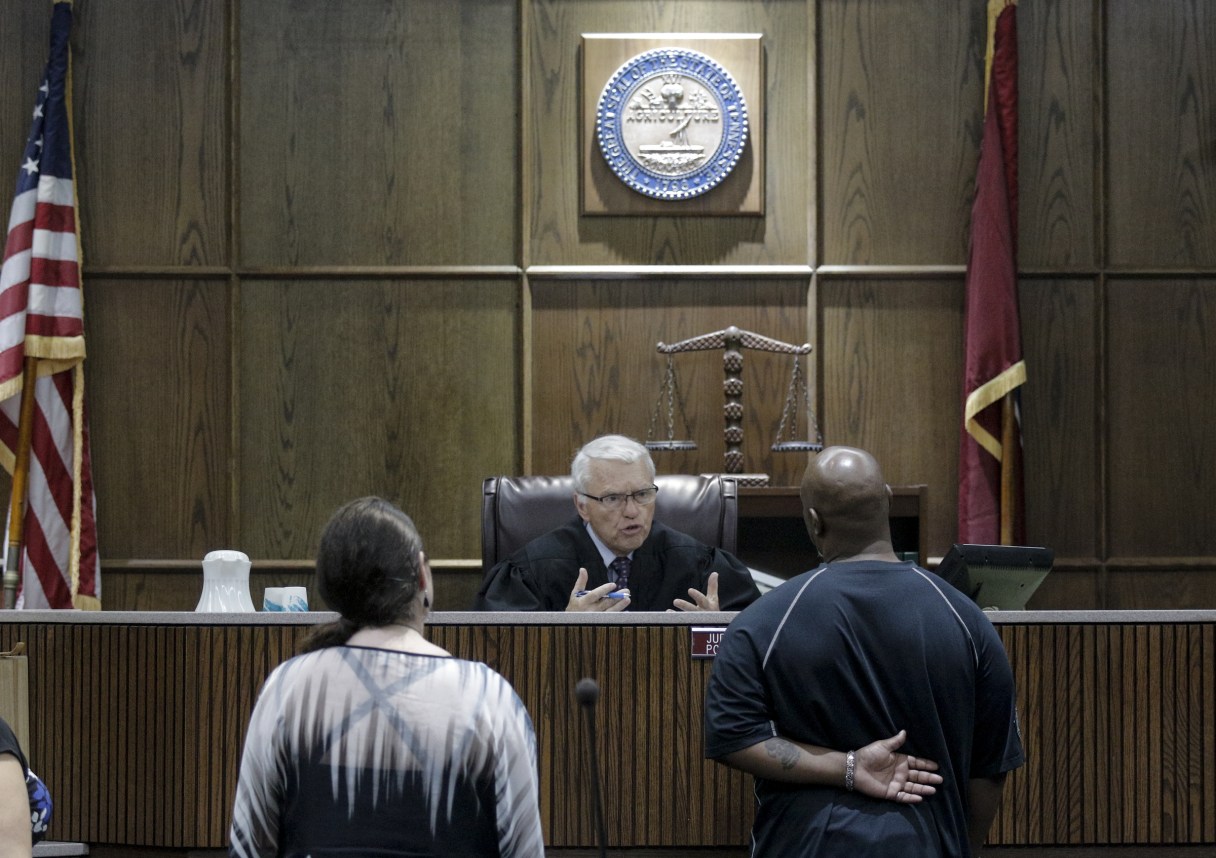
Finally we have a mental health court.
Hamilton County Mental Health Court officially launched Thursday to provide mentally ill offenders an opportunity to receive alternative sentencing in exchange for increased accountability and mandatory treatment. The court begins with four offenders and should be able to accommodate 50 to 100 participants within the first year, according to Samantha Bayles, sentencing advocate for the public defender’s office.
Supporters hope the program will get repeat offenders much-needed treatment, and at the same time save taxpayer dollars.
The Hamilton County Jail and its sister facility at Silverdale have been called default mental health institutions, with 40 percent of the roughly 1,500 people incarcerated on some kind of psychotropic medication. The county spent $68,800 on such drugs in 2013 alone.
A group of judges, attorneys, mental health advocates and law enforcement officers designed the program using models like a well-established mental health court in Nashville. There recidivism among mentally ill offenders has plunged from 77 percent to 10 percent, while there has been a 51 percent reduction in arrests. The Davidson program so far has saved $500,000.