
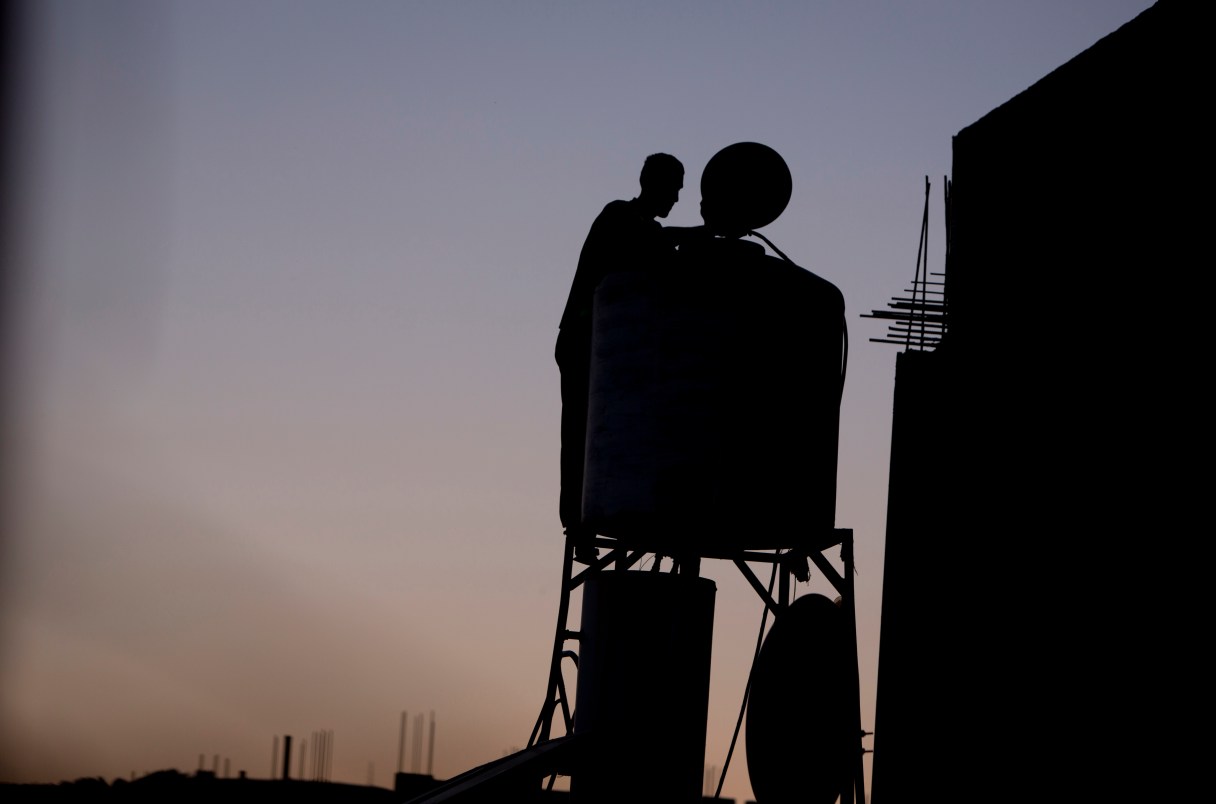
SALEM, West Bank (AP) – As Palestinians in the West Bank fast from dawn to dusk in scorching heat during the Muslim holy month of Ramadan, tens of thousands of people have been affected by a drought that has greatly reduced the flow to their taps.
Israel admits it’s been forced to cut water supplies to the parched area, saying that nearby Jewish settlements have also been affected. But Palestinian areas appear to have been hit much harder, and both sides are blaming each other for the painful situation.
The water shortage has harmed farmers, forced people to bathe less and created a booming business for tanker trucks that travel from house to house delivering water.
Israel blames it on the unusually early summer heat and the Palestinians’ refusal to cooperate with Israel on renovating their leaky pipe system. Palestinians say the shortage is evidence of the uneven distribution of the water that runs beneath their feet in an underground aquifer – a distribution that was enshrined in an outdated peace agreement.
Ironically, the shortages come as Israel has made great strides toward water independence through a fast-growing desalinization program. Today, desalinated water provides about 30 percent of Israel’s water and has reduced the semi-arid country’s dependency on meek rivers and sparse rainfall.