
Monday, November 16, 2026Nov 16

Giant helium-filled airship Airlander takes off for 1st time

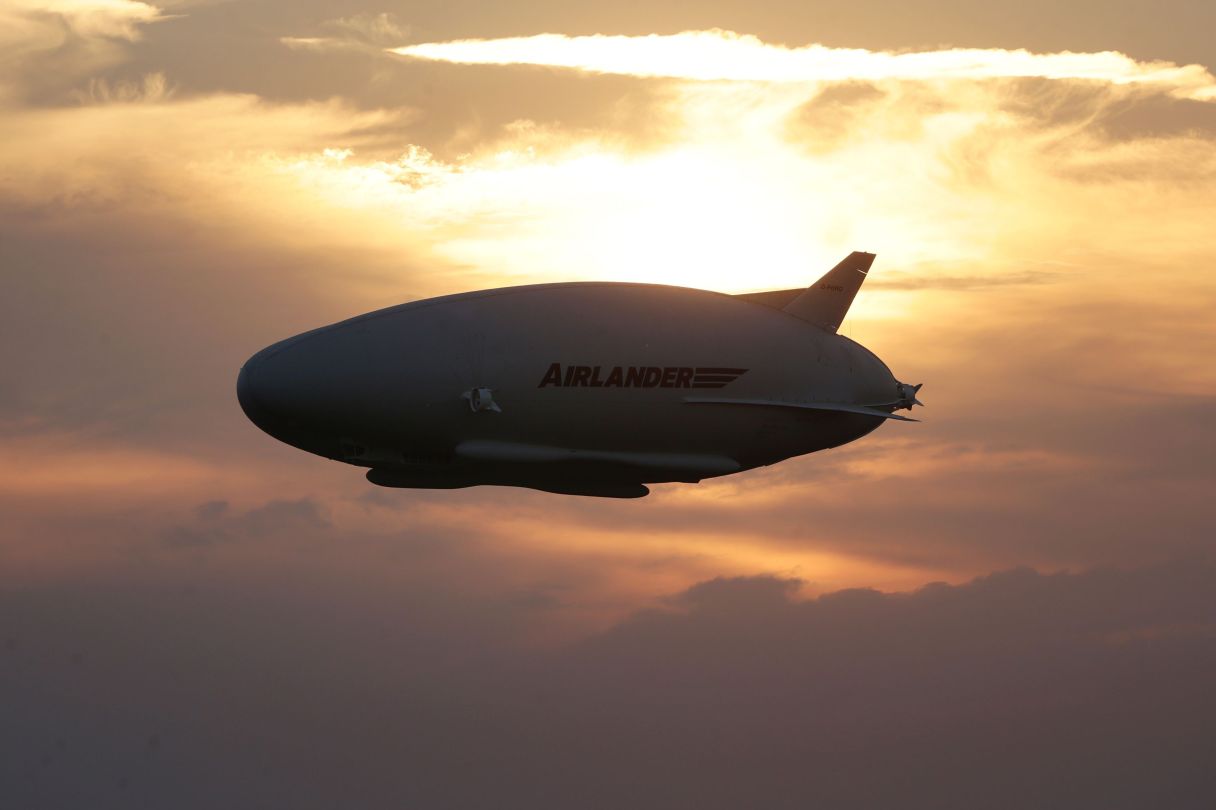
The Airlander 10 in flight, after taking off from Cardington airfield in Bedfordshire, England, Wednesday Aug. 17, 2016. A blimp-shaped airship billed as the world's largest aircraft has taken off for the first time, days after an earlier attempt was scuttled by a last-minute technical hitch. The 302-foot (92-meter) Airlander 10 — nicknamed the "flying bum" because of its bulbous front end — rose slowly into the air Wednesday from an airfield 45 miles (73 kilometers) north of London. (Yui Mok/PA via AP)

LONDON (AP) – A blimp-shaped airship billed as the world’s largest aircraft flew for the first time Wednesday with a short but historic jaunt over an airfield in central England.

Engines roaring, the 302-foot (92-meter) Airlander 10 rose slowly into the air from Cardington airfield, 45 miles (73 kilometers) north of London.

A hybrid of blimp, helicopter and airplane, it can stay aloft for days at a time and has been nicknamed the “flying bum” because of its bulbous front end.

The stately aircraft performed a circuit of the area – watched by hundreds of local people who had parked their cars around the perimeter of the airfield – before touching down about half an hour later as dusk fell.

The Airlander is designed to use less fuel than a plane, but carry heavier loads than conventional airships. Its developer, Hybrid Air Vehicles, says it can reach 16,000 feet (4,900 meters), travel at up to 90 mph (148 kph) and stay aloft for up to two weeks.