
Sunday, November 15, 2026Nov 15

Over 7,000 migrants rescued off Italy since Friday, EU says

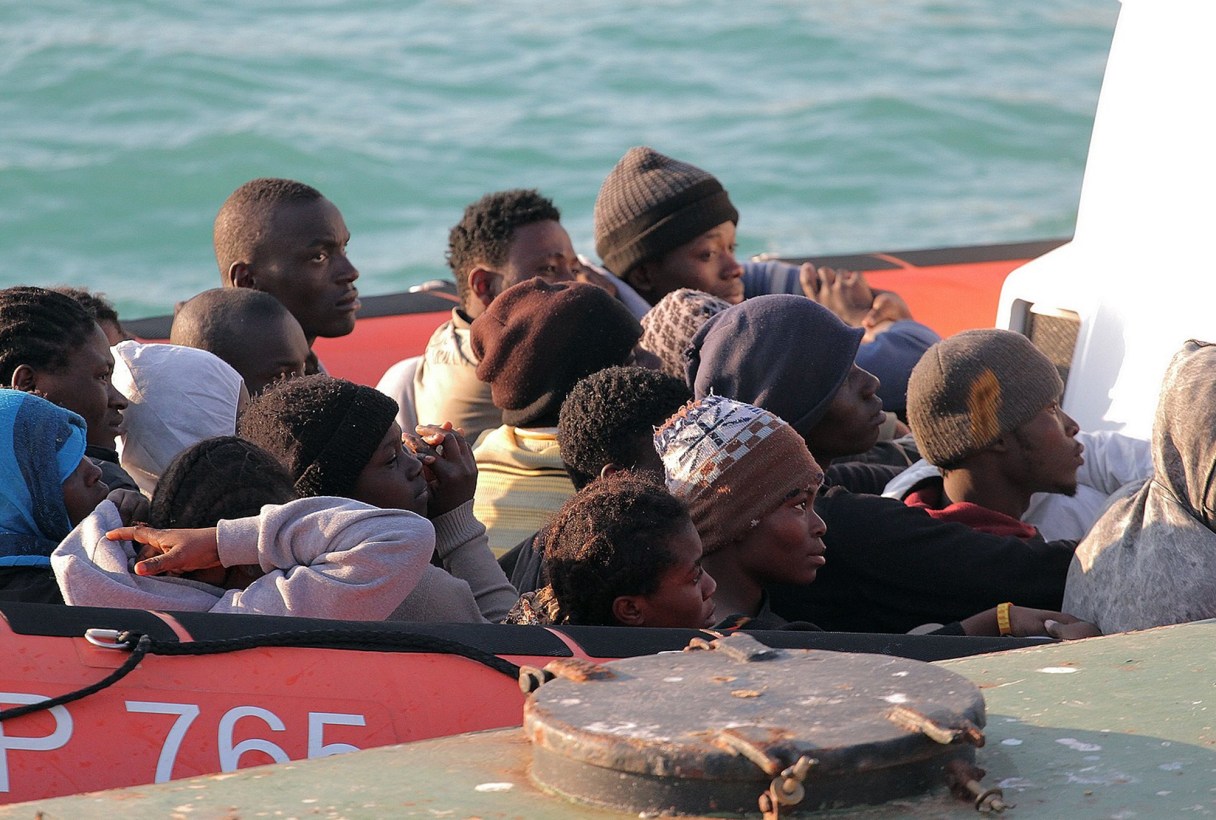
Migrants on a Coast Guard dinghy boat arrive at the Sicilian Porto Empedocle harbor, Italy, Monday, April 13, 2015. Italy's Coast Guard helped save 144 migrants Monday from a capsized boat in the waters off Libya and spotted nine bodies. It was the most dramatic of numerous rescue operations that brought thousands to safety in recent days, as good weather has encouraged the desperate to set out on smugglers' vessels. The overturned boat was spotted 80 miles north of Libya, Coast Guard Cmdr. Filippo Marini told The Associated Press in a telephone interview. (AP Photo/Calogero Montanalampo)

BRUSSELS (AP) – The European Union says that more than 7,000 migrants have been plucked from the Mediterranean since Friday as an unprecedented wave of people flee conflict and poverty seeking better lives in Europe.

Of those 7,000 EU migration spokeswoman Natasha Bertaud said Tuesday that “over 3,500 are still on board rescue vessels and being taken to Italy and so far, 11 bodies were recovered.”

More than 280,000 people entered the European Union illegally last year. Many came from Syria, Eritrea and Somalia and made the perilous sea journey from conflict-torn Libya.

European coast guards have been overwhelmed by the numbers.

The EU’s top migration official Dimitris Avramopoulos told EU lawmakers Tuesday that the influx “is unfortunately the new norm and we will need to adjust our responses accordingly.”