
LOS ANGELES (AP) – ESPN, the sports network that drives Disney’s profit engine, has hit a soft patch. Subscribers have fallen by about 7.2 million over the last three years, according to Nielsen, and it’s coming off a round of layoffs. As more people cut the cord to watch programming online, its perch on top of the pay TV empire is looking unsteady at best.
The network’s troubles are a bellwether for one of TV’s biggest challenges: the ever-increasing cost of sports rights and whether consumers want to keep footing the bill.
The conundrum was reflected in Disney’s quarterly earnings Tuesday. Even though “Star Wars: The Force Awakens” helped Disney’s earnings soar 32 percent to a record $2.9 billion, its television profits slumped by 6 percent, in part due to increases in the cost of sports-broadcast rights. It was Disney’s second profit decline in the TV segment in the last four quarters. Shares fell 4 percent to $88.40 in after-hours trading, the lowest level in more than a year.
Major media companies have invested $130 billion in sports rights over the next several years, Morgan Stanley analyst Benjamin Swinburne said in a recent investor presentation. But the cost of those rights is increasing faster than the revenue those companies reap.
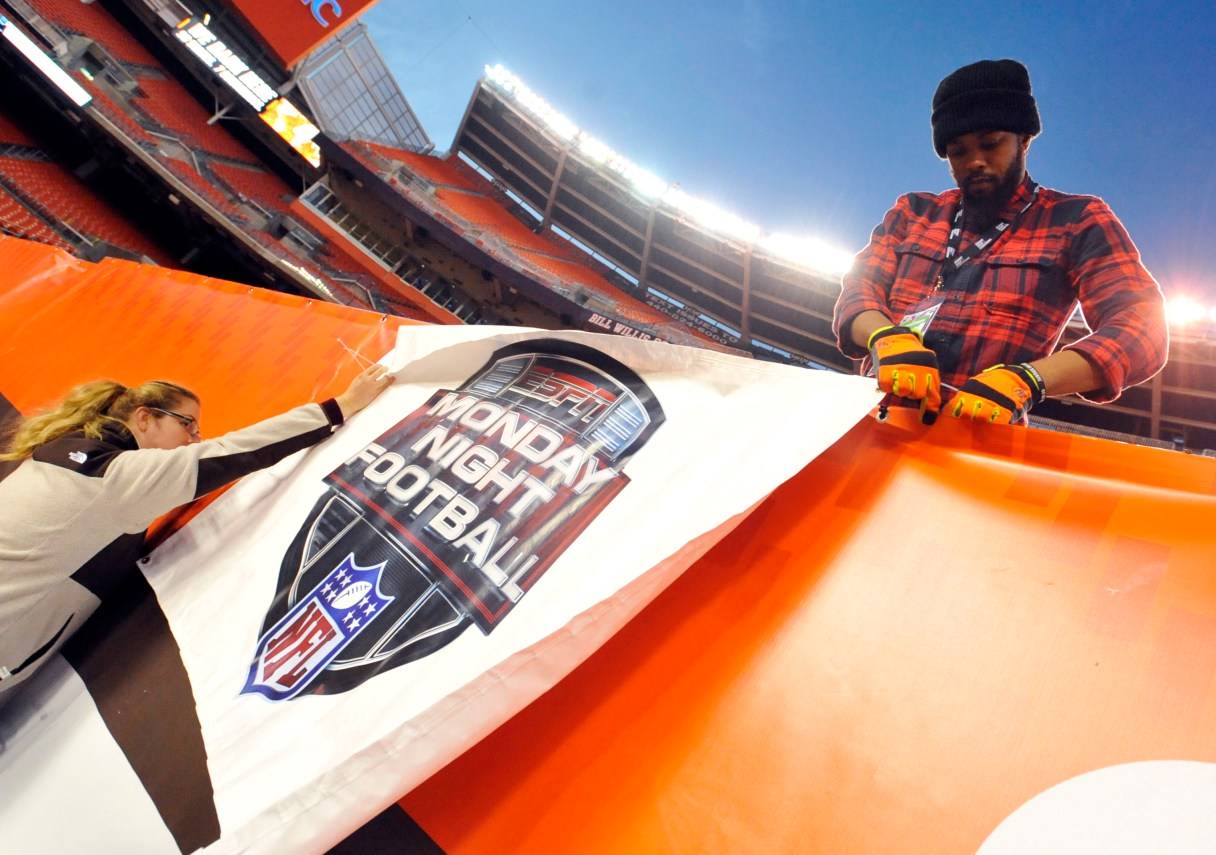
Leading the pack of big spenders: Disney and its ESPN juggernaut, which accounts for an estimated 29 percent of those long-term contract rights, from “Monday Night Football” to the NBA playoffs. Should the ad market falter and the pay TV audience decline even faster than its current 1 percent a year – the “bear case” – Disney’s overall profit growth rate for the next four years could be nearly halved, Swinburne said.