
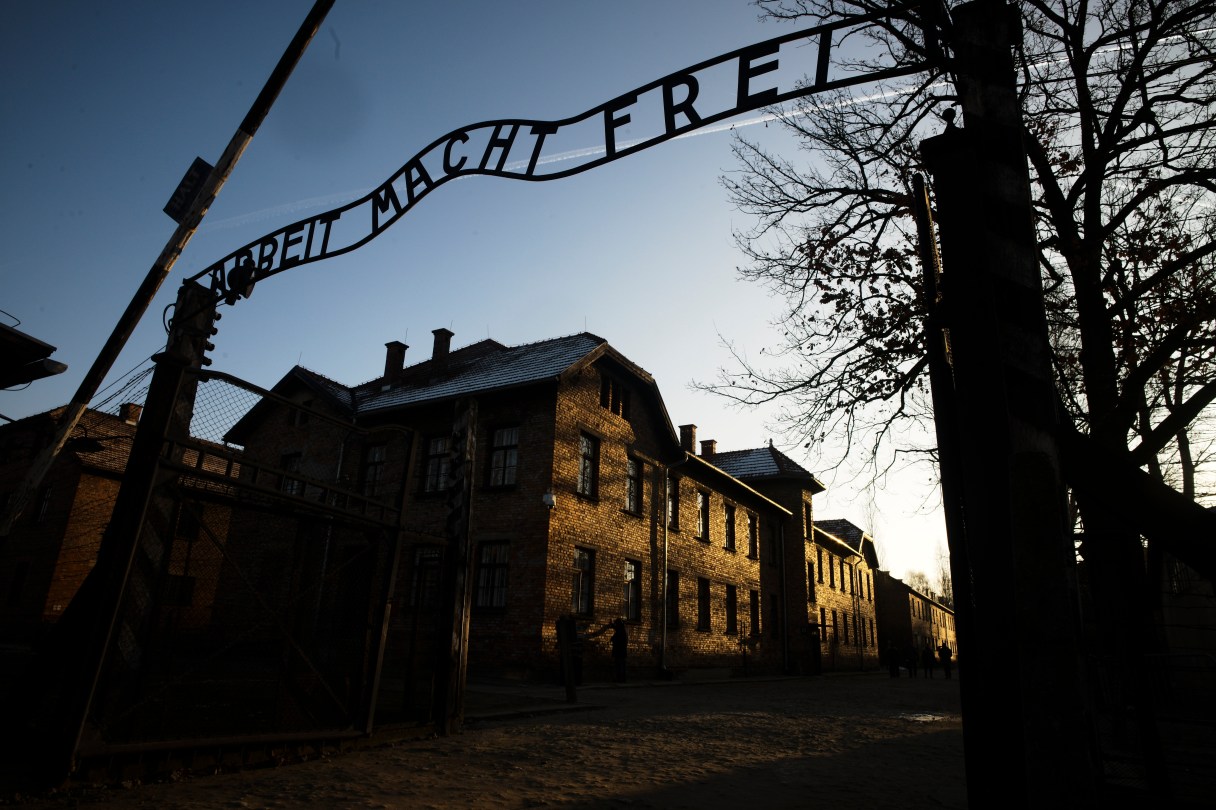
WARSAW, Poland (AP) – Over the next several days, world leaders will gather twice to mark the 75th anniversary of the liberation of Auschwitz-Birkenau, the most notorious of Nazi Germany’s death camps.
That there will be two competing ceremonies – one in Jerusalem on Thursday and the other at the Auschwitz site in southern Poland on Monday – underlines how politically charged World War II remains as nationalist governments in Russia and Poland seek to use their own interpretation of the past for contemporary political gain.
Leaders at both sites, joined by elderly survivors, will pay tribute to the 6 million Jews killed in the Holocaust. Yet the commemorations risk being overshadowed by a bitter dispute between Poland – where Nazi German occupiers operated Auschwitz and other infamous camps – and Russia, the successor state to the Soviet Union.
“I am afraid this will not help the commemoration of the Holocaust,” said Dariusz Stola, a Polish historian and former director of the POLIN Museum of the History of Polish Jews.
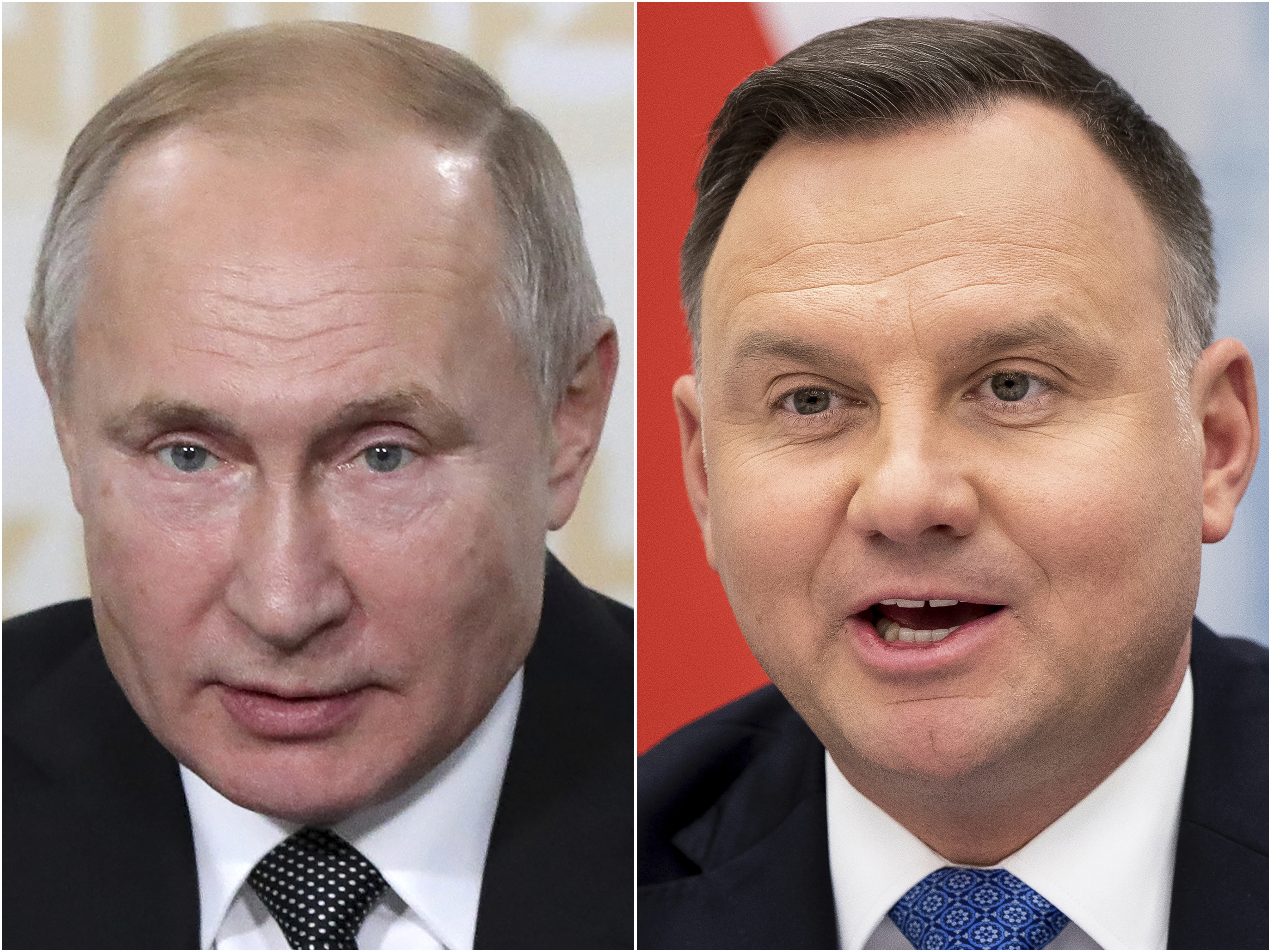 This combination of photos shows Russian President Vladimir Putin, left, on Nov. 27, 2019, in St. Petersburg, Russia, and Poland’s President Andrzej Duda in Vilnius, Lithuania, on Nov. 21, 2019. World leaders will gather twice to mark the 75th anniversary of the liberation of the Auschwitz-Birkenau concentration camp _ once on Thursday, Jan. 23, 2020, in Jerusalem and again on Jan. 27 at the Auschwitz site in southern Poland. The competing commemorations underline how politically charged World War II remains as nationalist governments in Russia and Poland seek to make some political gains from their bitter history. (AP Photo)
Such commemorations, he said, should ideally be a moment “for the present to serve the past.”