
Monday, November 9, 2026Nov 9

New wave of coronavirus infections threatens to collapse hospitals in Japan

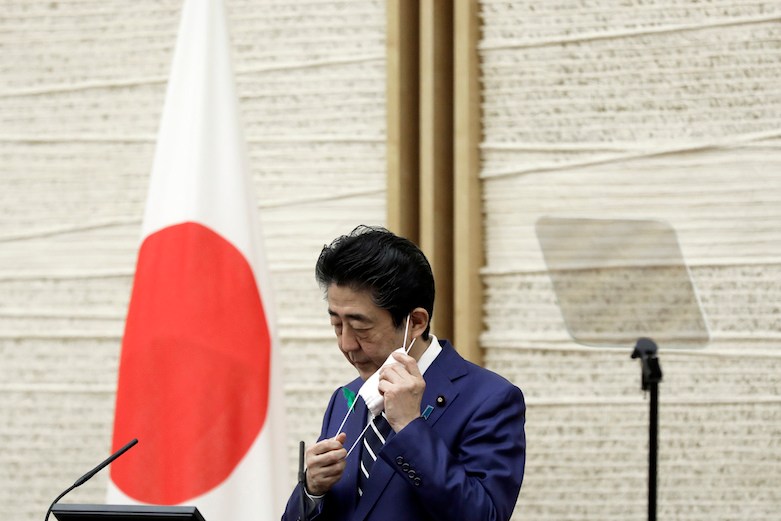
Japanese Prime Minister Shinzo Abe removes a face mask during a news conference at the prime minister's official residence in Tokyo, Friday, April 17, 2020. Abe expanded Thursday the state of emergency to step up measures ahead of a major holiday week coming up in early May so that people won't travel around and possibly spread the virus. The ongoing state of emergency runs through May 6. (Kiyoshi Ota/Pool Photo via AP)
Japanese Prime Minister Shinzo Abe removes a face mask during a news conference at the prime minister's official residence in Tokyo, Friday, April 17, 2020. Abe expanded Thursday the state of emergency to step up measures ahead of a major holiday week coming up in early May so that people won't travel around and possibly spread the virus. The ongoing state of emergency runs through May 6. (Kiyoshi Ota/Pool Photo via AP) Japanese Prime Minister Shinzo Abe removes a face mask during a news conference at the prime minister's official residence in Tokyo, Friday, April 17, 2020. Abe expanded Thursday the state of emergency to step up measures ahead of a major holiday week coming up in early May so that people won't travel around and possibly spread the virus. The ongoing state of emergency runs through May 6. (Kiyoshi Ota/Pool Photo via AP)

TOKYO (AP) – Hospitals in Japan are increasingly turning away sick people as the country struggles with surging coronavirus infections and its emergency medical system collapses.

In one recent case, an ambulance carrying a man with a fever and difficulty breathing was rejected by 80 hospitals and forced to search for hours for a hospital in downtown Tokyo that would treat him. Another feverish man finally reached a hospital after paramedics unsuccessfully contacted 40 clinics.

The Japanese Association for Acute Medicine and the Japanese Society for Emergency Medicine say many hospital emergency rooms are refusing to treat people including those suffering strokes, heart attacks and external injuries.

Japan initially seemed to have controlled the outbreak by going after clusters of infections in specific places, usually enclosed spaces such as clubs, gyms and meeting venues. But the spread of virus outpaced this approach and most new cases are untraceable.

The outbreak has highlighted underlying weaknesses in medical care in Japan, which has long been praised for its high quality insurance system and reasonable costs. Apart from a general unwillingness to embrace social distancing, experts fault government incompetence and a widespread shortage of the protective gear and equipment medical workers need to do their jobs.