
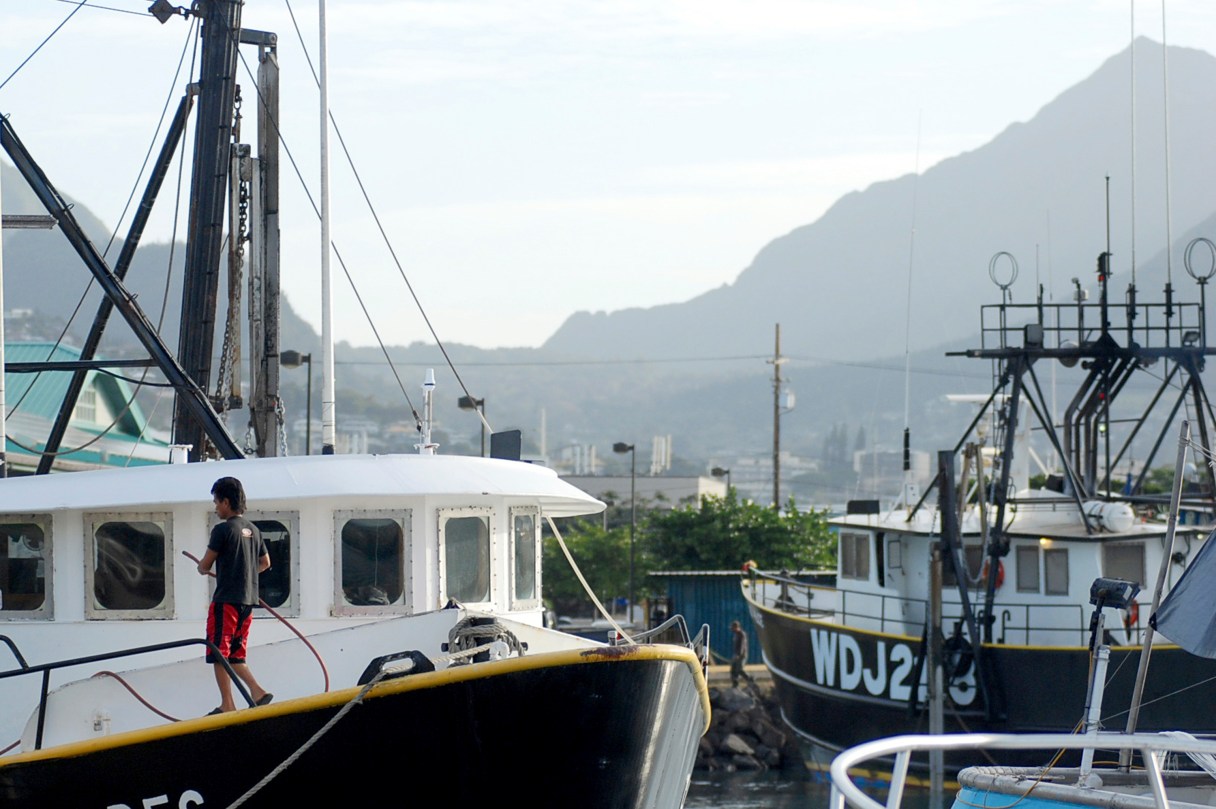
HONOLULU (AP) – A Hawaii bill that sought to change the way commercial fishing licenses are granted died after industry representatives told lawmakers it would wreck the business.
The bill sought more oversight of the fishing industry, but that’s the role of the federal government, not the state, said state Sen. Brian Tanighuchi, chairman of the Senate Committee on International Affairs and the Arts.
Two committees including Taniguchi’s deferred the bill indefinitely Wednesday, killing it for the legislative session.
The bill sought to restrict commercial fishing licenses to people who are legally allowed to enter the U.S., a redundant move because that already is codified. But despite what’s currently in the law, the state issues fishing licenses to the men.
The bill also would have required fishing license applicants to appear in person, creating a logistical barrier because most of Hawaii’s foreign fishermen are confined to their boats. Supporters said that interaction would give foreign fishermen a chance to tell state officials if they were victims of human trafficking or having problems such as withheld wages.