
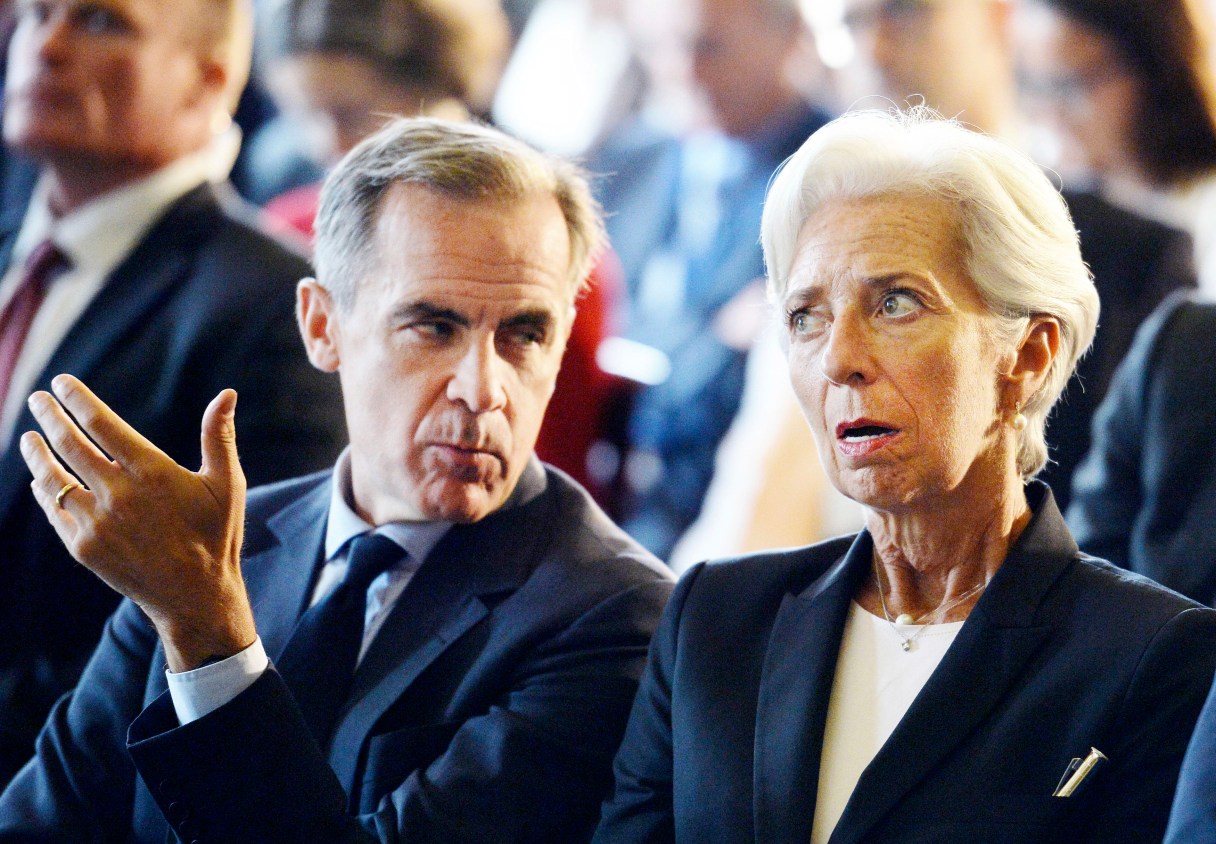
LONDON (AP) – Christine Lagarde, the head of the International Monetary Fund, has a message for the world’s central bankers: Don’t be Luddites.
Addressing a conference in London on Friday, Lagarde said virtual currencies, which are created and exchanged without the involvement of banks or government, could in time be embraced by countries with unstable currencies or weak domestic institutions.
“In many ways, virtual currencies might just give existing currencies and monetary policy a run for their money,” she said. “The best response by central bankers is to continue running effective monetary policy, while being open to fresh ideas and new demands, as economies evolve.”
The most high-profile of these digital currencies is bitcoin, which like others can be converted to cash when deposited into accounts at prices set in online trading. Its price has been volatile, soaring over recent years but falling sharply earlier this month on reports that China will order all bitcoin exchanges to close and one of the world’s most high-profile investment bankers said bitcoin was a fraud.
For now, Lagarde said, digital currencies are unlikely to replace traditional ones, as they are “too volatile, too risky, too energy intensive and because the underlying technologies are not yet scalable.”