
Monday, November 16, 2026Nov 16

Researchers find abundant life in Hawaii’s twilight zone

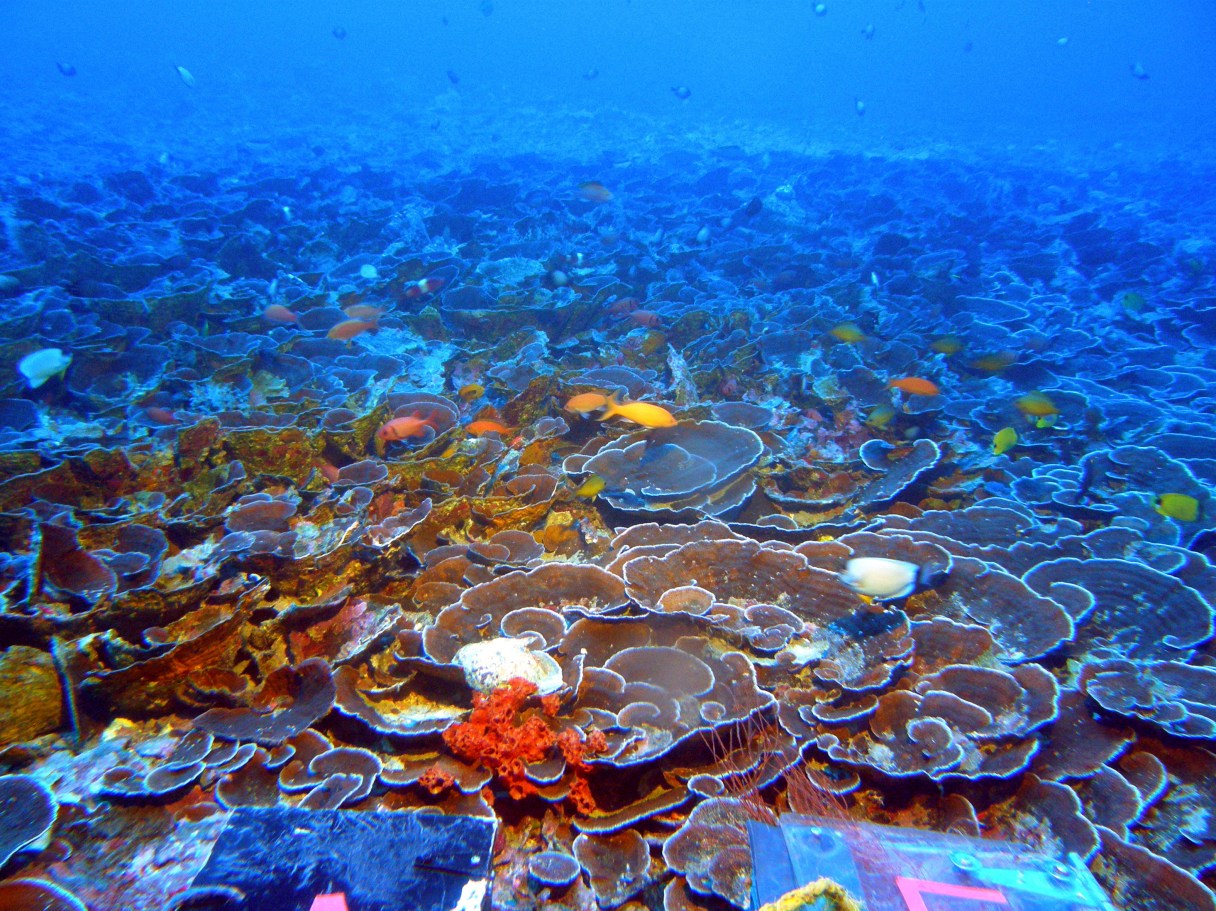
In this 2009 photo provided by NOAA and the Hawaii Undersea Research Laboratory, fish swim in a mesophotic coral ecosystem about 230 feet deep in the in Au'au Channel off Maui, Hawaii. Coral reefs in Hawaii’s oceanic twilight zone, the deep area of ocean where light still penetrates and photosynthesis occurs, are abundant and home to a wide variety of regionally unique fish species. A paper published Tuesday, Oct. 4, 2016 said that some of the reefs off the archipelago are the most extensive deep-water reef ecosystem ever recorded. (NOAA and Hawaii Undersea Research Laboratory via AP)

HONOLULU (AP) – Coral reefs in Hawaii’s oceanic twilight zone, where light still penetrates and photosynthesis occurs, are abundant and host a wide variety of life, a new study shows.

A paper published Tuesday in the journal PeerJ revealed that some of these ecosystems off the Hawaiian archipelago, particularly an area off Maui, are the most extensive deep-water reefs ever recorded.

The ecosystems, found in waters from 100 to 500 feet deep, host more than twice the amount of unique Hawaiian fish species as their shallow-water counterparts, and they are much more extensive than previously known.

“What is unique about this study is how vast and dense the coral cover is,” Richard Pyle, a Bishop Museum researcher and lead author of the publication, told The Associated Press.

Researchers surveyed much of the twilight zone, technically known as the mesophotic coral ecosystem, around the state and found a few hotspots that were particularly productive.