
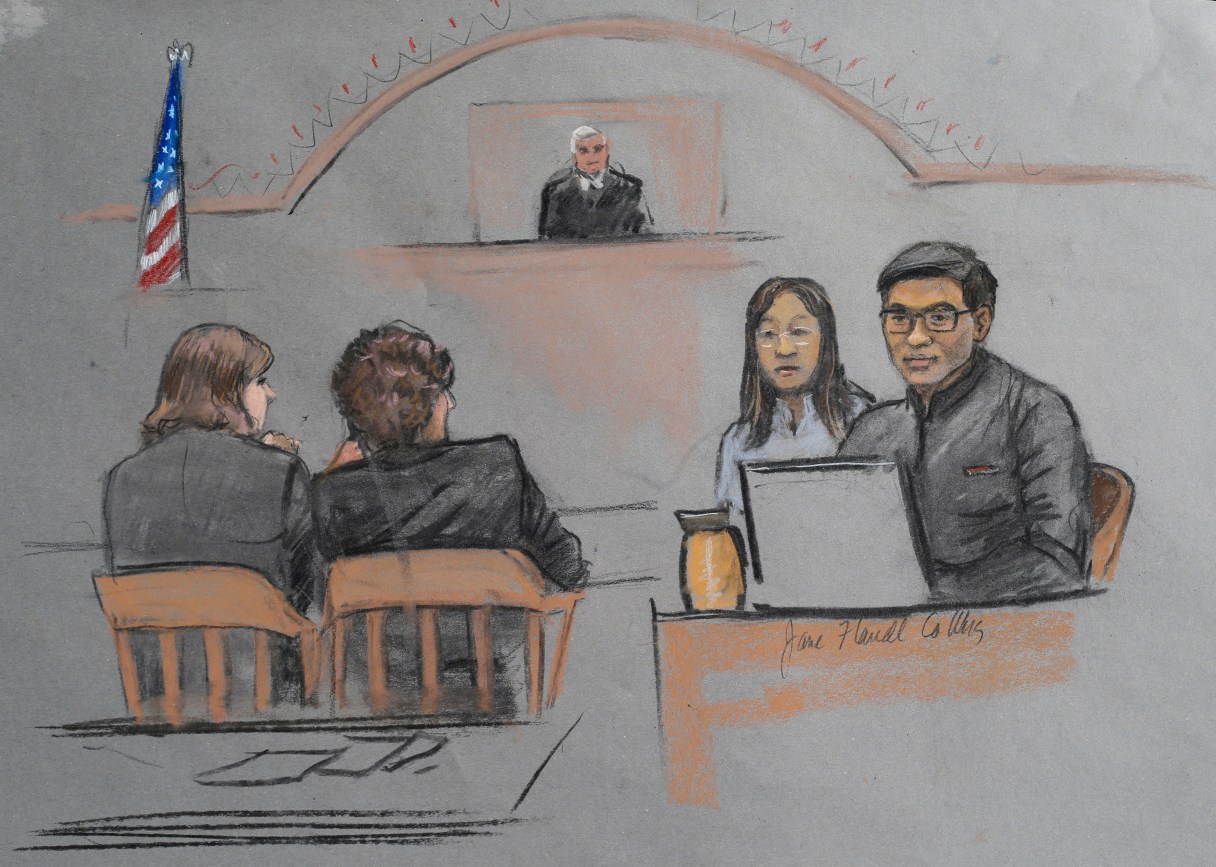
BOSTON (AP) – The first two weeks of the Boston Marathon bombing trial focused on the injuries and deaths from the 2013 attack: survivors recounted losing limbs and loved ones as federal prosecutors told of the killing of a Massachusetts Institute of Technology police officer.
Now, the trial of Dzhokhar Tsarnaev is entering its third week. It had been expected to last three to four months, but is moving faster than anticipated, largely because the defense has not cross-examined many witnesses.
On Thursday, Dun Meng, a Chinese national who moved to the U.S. in 2009 to attend Boston’s Northeastern University, described being carjacked at gunpoint by Tsarnaev’s older brother, Tamerlan, on the night of April 18, 2013, three days after the bombing.
Meng said after he and Tamerlan drove around for 20 or 30 minutes, they pulled over on a street in Watertown and Dzhokhar drove up in another car. The brothers then took Meng in his car to a bank machine and Dzhokhar used his pin number to withdraw money from his account.
When Tamerlan pulled into a gas station and Dzhokhar went inside to pay, Meng bolted from the car and ran into another gas station for help. He described the encounter with the brothers as “terrifying.”
Tamerlan died following a shootout with police early the morning of April 19. Dzhokhar was captured hiding inside a boat that night.
Tsarnaev’s lawyer admitted during opening statements that he participated in the bombings and the later crimes, but said his brother was the mastermind who recruited the then 19-year-old Dzhokhar to help him.
Prosecutors say Tsarnaev was a full and willing participant. Now 21, he faces the possibility of the death penalty if convicted.
The same jury that decides guilt will decide whether he receives life in prison or the death penalty. Three people were killed and more than 260 injured in the attack.
Testimony is scheduled to resume Monday.