
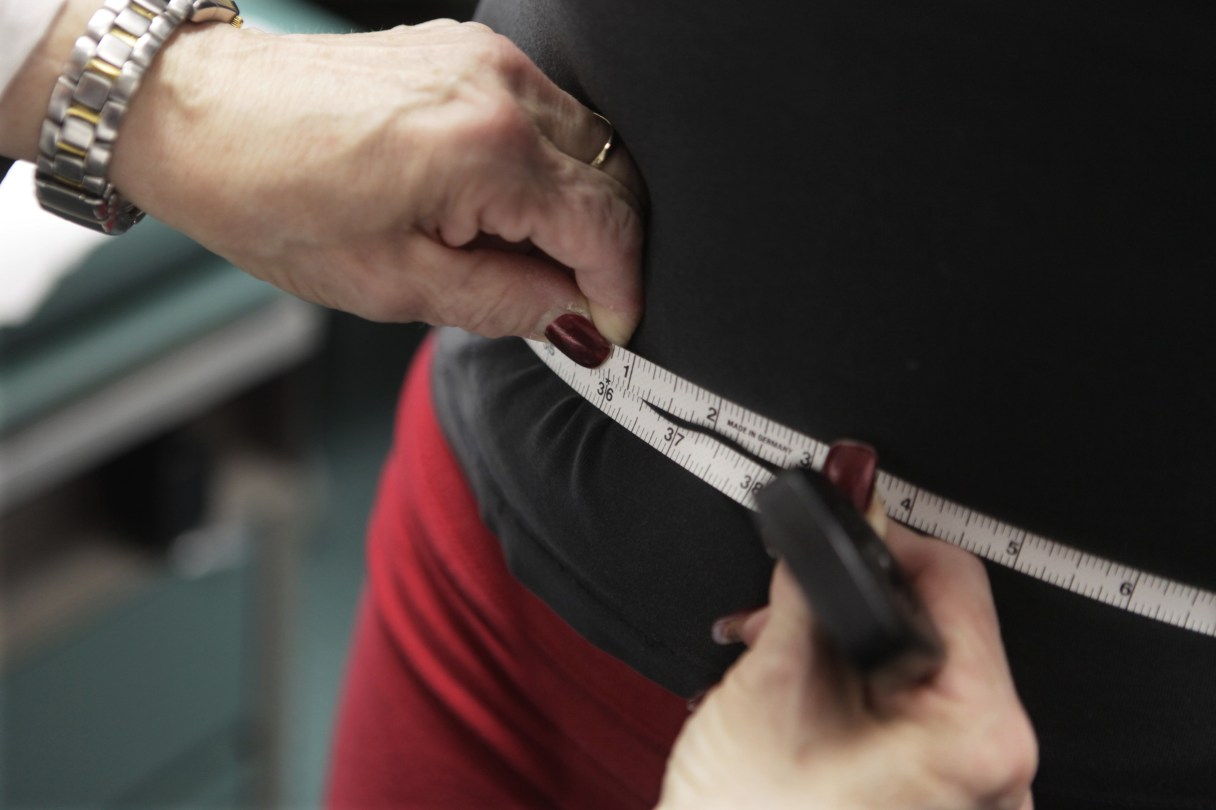
WASHINGTON (AP) – The bathroom scale may show a good number but how much of that weight is fat, not muscle? New studies are adding to the evidence that the scale doesn’t always tell the whole story when it comes to weight-related health risks.
Keeping body fat low is more important for healthy aging than a low overall weight, researchers reported Monday in the journal Annals of Internal Medicine. A separate study found young people who aren’t physically fit are at greater risk of developing Type 2 diabetes later in life even if their weight is healthy.
Here are some things to know:
ISN’T BMI IMPORTANT?
Yes. Body mass index, or BMI, is a measure of a person’s weight compared to their height. For many people, that’s plenty of evidence to tell if they’re overweight or obese and thus at increased risk of heart disease, diabetes and premature death. Generally, a BMI of 25 and above indicates overweight, while 30 and above indicates obesity. Someone who is 5 feet, 9 inches would hit that obesity threshold at 203 pounds.