
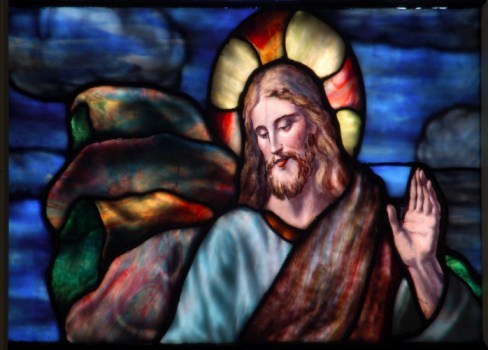
“And it came to pass in those days, that there went out a decree from Caesar Augustus, that all the world should be taxed. (And this taxing was first made when Cyrenius was governor of Syria.) And all went to be taxed, every one into his own city. And Joseph also went up from Galilee, out of the city of Nazareth, into Judaea, unto the city of David, which is called Bethlehem; (because he was of the house and lineage of David:) To be taxed with Mary his espoused wife, being great with child. And so it was, that, while they were there, the days were accomplished that she should be delivered. And she brought forth her firstborn son, and wrapped him in swaddling clothes, and laid him in a manger; because there was no room for them in the inn.” – Luke 2:1-7
 Pastor Bo Wagner
The story of Jesus in flesh, as recorded in Luke 2, begins with one Caius Caesar Octavianus Augustus, who was proclaimed emperor of Rome in the 29th year before our Lord and died A.D. 14. He was the nephew of Julius Caesar, and he thought very highly of himself. In fact he is the one that gave himself the last name Augustus. That word means honorable. Caesar Augustus was a man who thought very highly of Caesar Augustus.
Mary and Joseph lived in little town called Nazareth. Nazareth was way up north in the land of Israel, some 20 miles to the west of the Sea of Galilee, and there is no indication that they intended to pick up stakes and move. But Caesar Augustus at one point during his reign decided to tax the world. This would require everyone being enrolled in a census so the government would know how many people there were and who the people were and where they were.
The normal Roman methodology of doing all of this was to have everyone register according to where they lived. This was a simple, easy, logical way of doing things; it was very efficient. The Jewish methodology for doing this type of thing, though, was to have everyone register in and according to where their family was originally from. This, while a show of great respect and honor to their forefathers, was also a very complicated way of doing things. It required a great many people moving from one area to another all at the same time.
Nonetheless, to keep peace in the realm, Caesar Augustus had people pick up stakes and go back to their hometowns for all of this. He had no idea whatsoever that he was acting as the hand of God in a rather important matter.