
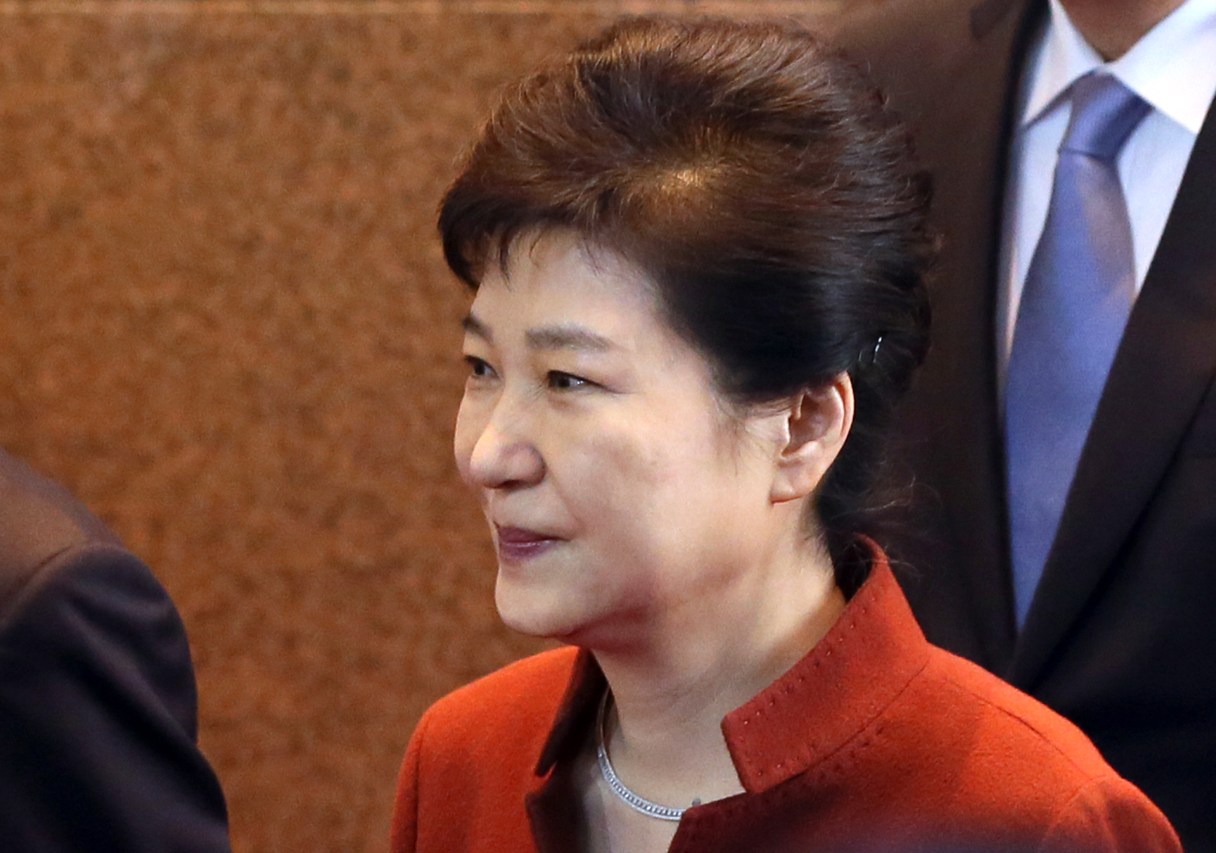
SEOUL, South Korea (AP) – Scrambling to defuse a massive scandal, South Korean President Park Geun-hye on Tuesday conceded to lawmakers the power to name her new prime minister, a move that could seriously hurt, or even destroy, her ability to govern.
Park, who has faced tens of thousands of protesters and an investigation into whether a mysterious confidante manipulated government decisions, made the move during a meeting with National Assembly Speaker Chung Sye-kyun.
Just being forced to work with a deputy named by opposition lawmakers – previously a decision left up to the president – would weaken her ability to make basic decisions and influence power in parliament.
But lawmakers, who must still settle on a prime minister nominee, are demanding even more. Some opposition members want the president to divorce herself from all domestic affairs and focus only on foreign matters, while others want her to stay out of government completely.
These scenarios would destroy Park’s authority as president during her last 15 months in office, forcing her to voluntarily yield large parts, or maybe even all, of her presidential powers to a prime minister named by an opposition-controlled parliament.