
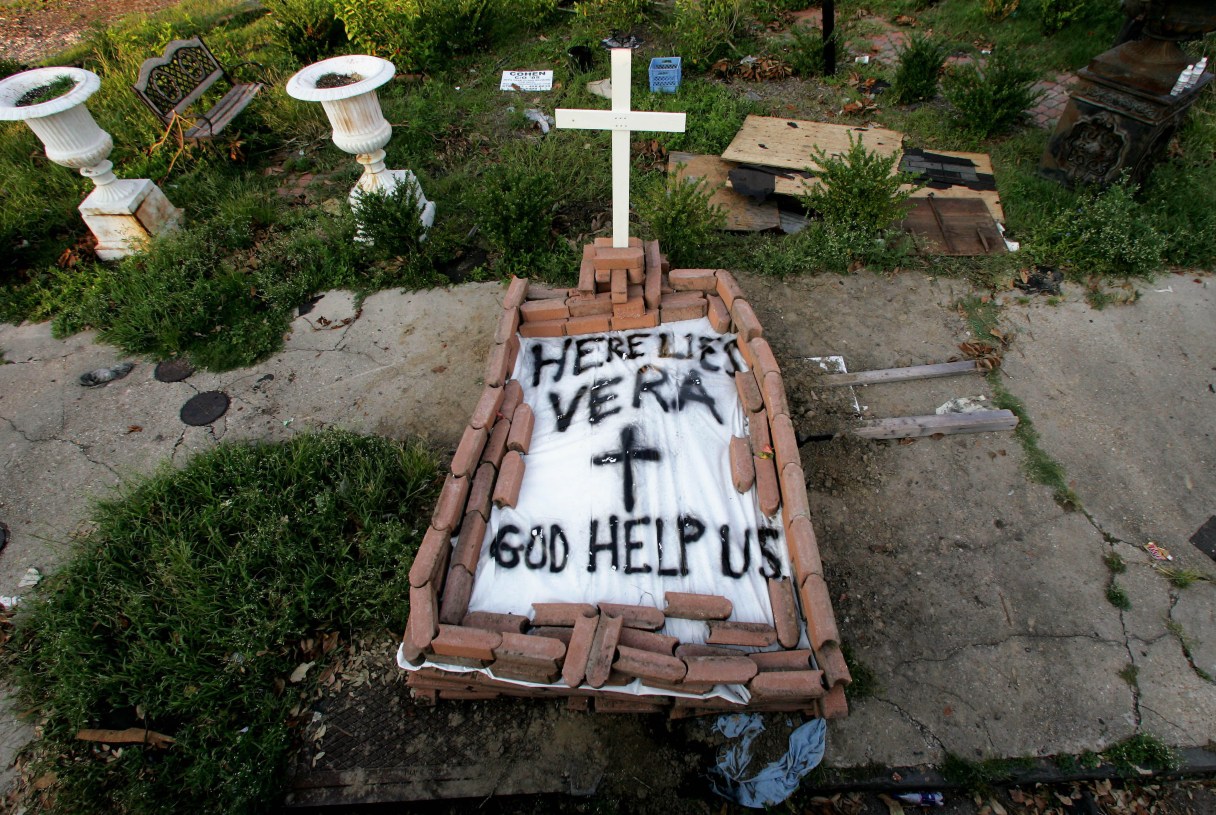
NEW ORLEANS (AP) – Amid the chaos after Hurricane Katrina swamped New Orleans, Vera Smith’s body decayed for four days on a sidewalk until her horrified neighbors covered her with dirt, a makeshift plastic shroud and a bleak epitaph: “Here lies Vera. God help us.”
Broadcast to the world, the stark image came to stand for what seemed like the complete breakdown of a great American city.
Although her cremated remains were later buried on a family plot in Texas and the place where she died of unknown causes has sprung back since Katrina, Vera Smith remains part of her neighborhood.
A colorful memorial by local artist Simon Hardeveld stands beside an upscale restaurant built near the site of her death, and her all-too-public demise was recounted in a book written by a man who helped erect her temporary sidewalk tomb.
Ten years later, friends – as well as neighbors who never even met Elvia Briones Smith, her full name – sense that she could have been any of them, a tragic victim of a natural disaster compounded by human mistakes.