
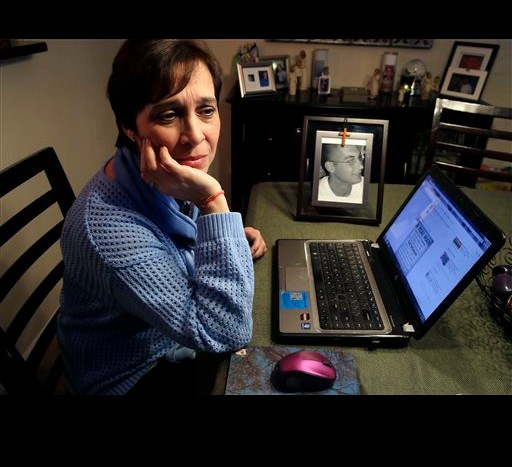
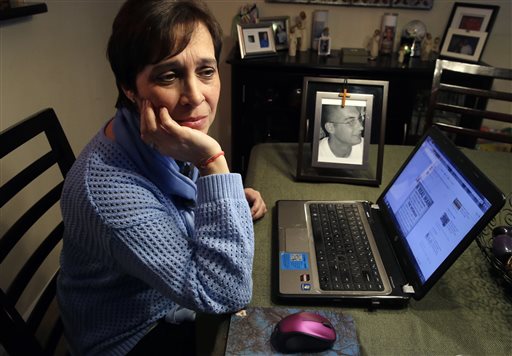
 Patty DiRenzo pauses as she uses a computer at her home in Blackwood, N.J., to look online for people seeking help for drug addiction in this March 17, 2014 photo. Her son, Salvatore Marchese, was found dead of a heroin overdose in her car, a needle and a bag of heroin on the center console.
NEW YORK – As the ranks of heroin users rise, increasing numbers of addicts are looking for help but are failing to find it – because there are no beds in packed facilities, treatment is hugely expensive and insurance companies won’t pay for inpatient rehab.
Some users overcome their addictions in spite of the obstacles. But many, like Salvatore Marchese, struggle and fail.
In the course of Marchese’s five-year battle with heroin, the Blackwood, N.J., man was repeatedly denied admission to treatment facilities, often because his insurance company wouldn’t cover the cost. Then one night in June 2010, a strung-out Marchese went to the emergency room seeking help. The doctors shook their heads: Heroin withdrawal is not life-threatening, they said, and we can’t admit you. They gave him an IV flush, and sent him home.
Marchese, then 26, and his sister called multiple inpatient clinics only to be told: We have no beds. Eventually, Marchese found space at a facility but was released 17 days later when his public funding ran out. Less than three months later, Marchese was found dead of an overdose in his mother’s car.
“Heroin is life-threatening,” said his mother, Patty DiRenzo. “We’re losing kids every day from it.”