
Monday, November 16, 2026Nov 16

Report: Police departments need mental health programs

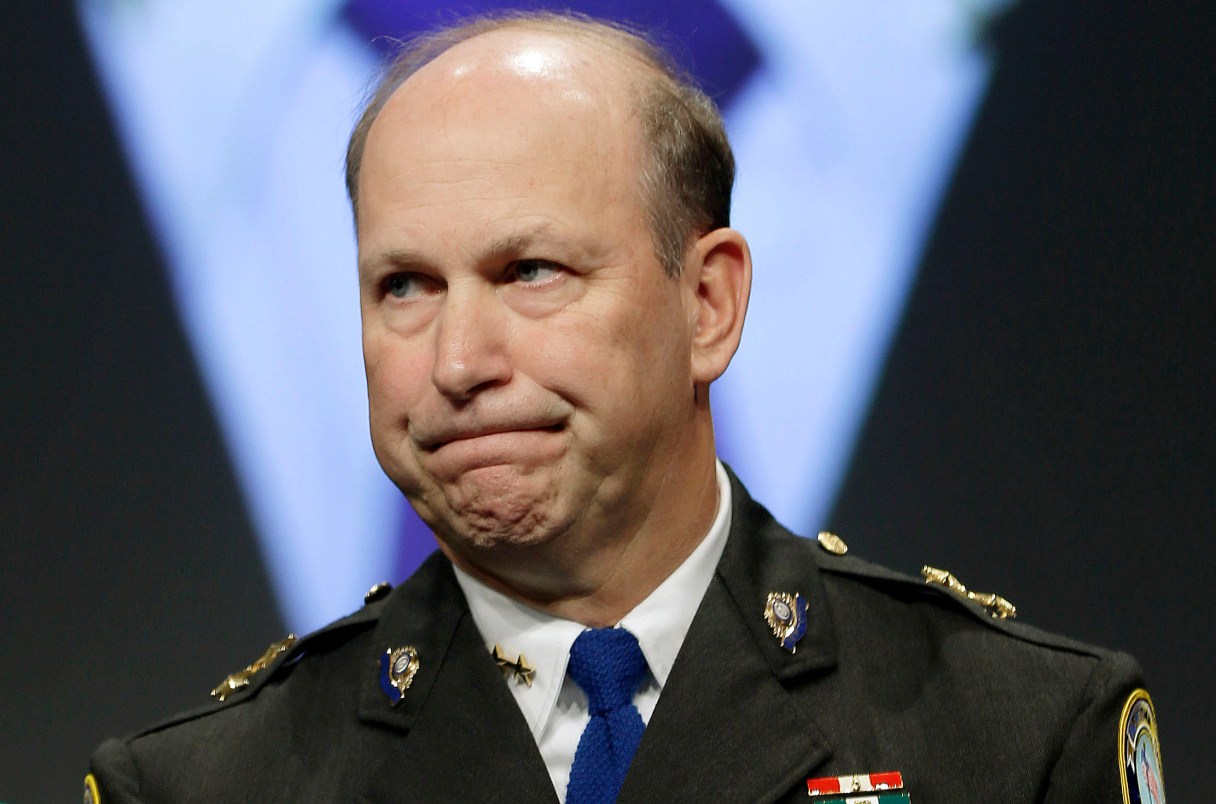
FILE - In this Oct. 21, 2013 file photo, Chief of Police Michael Kehoe, of Newtown, Conn., listens as he is acknowledged during the Annual International Association of Chiefs of Police Conference at the Pennsylvania Convention Center in Philadelphia. Kehoe led the response to the Sandy Hook Elementary School killings in 2012. In a report released Wednesday, May 25, 2016, by the U.S. Department of Justice Department and the National Alliance on Mental Illness, Kehoe said that many police chiefs are not prepared to deal effectively with the aftermath of such events, and many are unaware of the impact those events will have on their communities and officers. (AP Photo/Matt Rourke, File)

HARTFORD, Conn. (AP) – A new federal report says police chiefs and sheriffs across the country should put mental health programs in place for their officers as soon as possible to prepare for the psychological aftermath of mass shootings and other traumatic events.

The report released Wednesday by the U.S. Department of Justice and National Alliance on Mental Illness was prompted by the 2012 massacre at Sandy Hook Elementary School in Connecticut, where 20 first-graders and six educators were shot to death.

The 140-page report says that although most police agencies have prepared how to respond to mass shootings, few have prepared their officers for the psychological fallout.

It recommends that police chiefs choose mental health service providers, consider wellness and education programs for officers, create officer peer support programs and designate mental health incident commanders.