
Friday, November 13, 2026Nov 13

Animals at Gaza’s zoos die of hunger, diseases

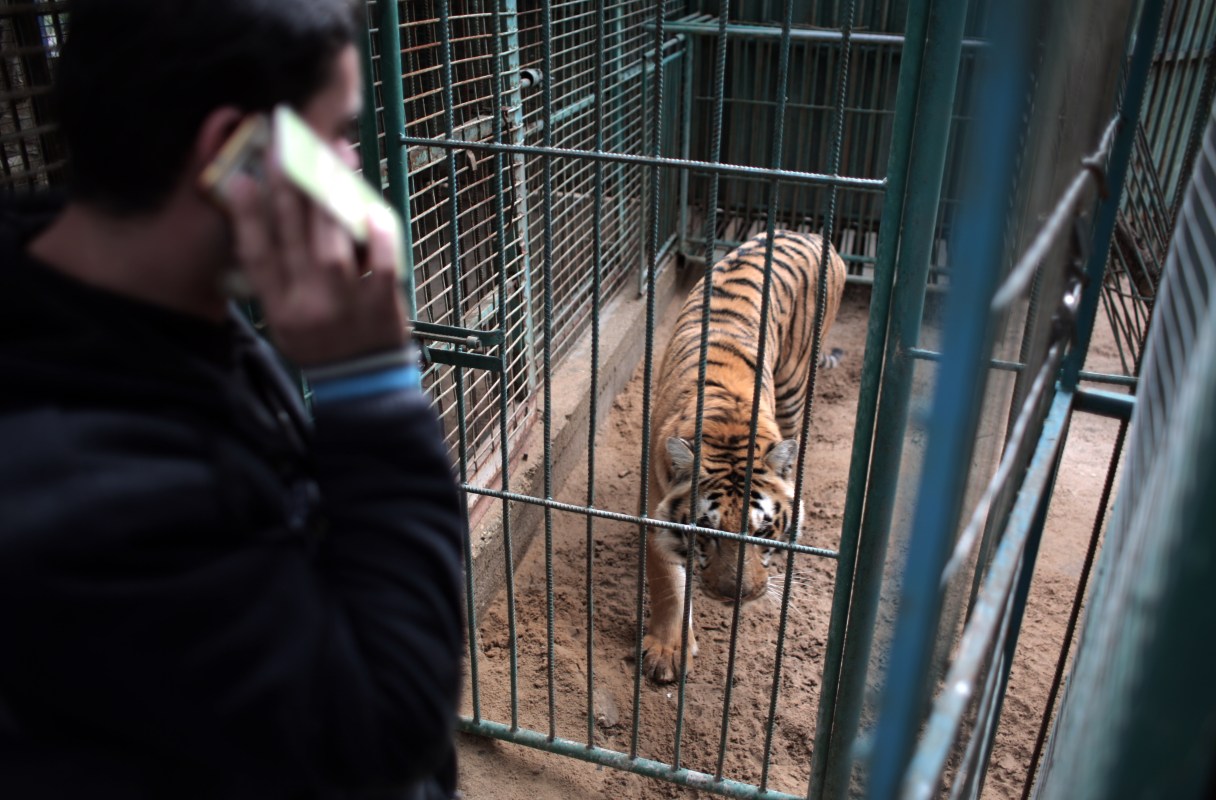
In this Sunday, Jan 10, 2016 photo, Palestinian owner of the South Jungle Zoo, Mohammed Ouida, stands in front of the cage of the African tiger, in Rafah, southern Gaza Strip. The African tiger at the zoo in southern Gaza Strip was emaciated, its belly shrunken and its striped coat loose. Inside its cage, it rumbled and strode nervously back and forth. “I swear to God the tiger has not eaten for four or five days,” said Ouida. “It needs 100 shekels (about $20) of food a day.” (AP Photo/ Khalil Hamra)
In this Sunday, Jan 10, 2016 photo, Palestinian owner of the South Jungle Zoo, Mohammed Ouida, stands in front of the cage of the African tiger, in Rafah, southern Gaza Strip. The African tiger at the zoo in southern Gaza Strip was emaciated, its belly shrunken and its striped coat loose. Inside its cage, it rumbled and strode nervously back and forth. “I swear to God the tiger has not eaten for four or five days,” said Ouida. “It needs 100 shekels (about $20) of food a day.” (AP Photo/ Khalil Hamra) In this Sunday, Jan 10, 2016 photo, Palestinian owner of the South Jungle Zoo, Mohammed Ouida, stands in front of the cage of the African tiger, in Rafah, southern Gaza Strip. The African tiger at the zoo in southern Gaza Strip was emaciated, its belly shrunken and its striped coat loose. Inside its cage, it rumbled and strode nervously back and forth. “I swear to God the tiger has not eaten for four or five days,” said Ouida. “It needs 100 shekels (about $20) of food a day.” (AP Photo/ Khalil Hamra)

RAFAH, Gaza Strip (AP) – The African tiger at the zoo in southern Gaza Strip was emaciated, its belly shrunken and its striped coat hanging loose. It strode nervously up and down its cage.

“I swear to God the tiger has not eaten for four or five days,” said Mohammed Ouida, the owner of South Jungle Zoo. “It needs 100 shekels (about $20) of food a day.”

Once bustling with families bringing their children to see lions, monkeys, crocodiles and ostriches, the zoo is mostly empty now, and Ouida can’t generate enough cash to feed his animals.

The same story is playing out across Gaza’s six makeshift zoos. Years of conflict, cold winters, longstanding negligence and outbreaks of disease have killed many animals in captivity.

Even in better times, there has often been little awareness of animal welfare in Gaza. In 2013, for instance, two lion cubs died shortly after birth because zoo workers in northern Gaza did not know how to care for them. In another renowned scene captured on film, Gazans used a crane to lift a camel over the border fence from Egypt into Gaza as the animal twitched in the air in agony. South Jungle has even turned to taxidermy to keep its deceased animals on exhibit.