
Friday, November 13, 2026Nov 13

UK coronavirus vaccine prompts immune response in early test

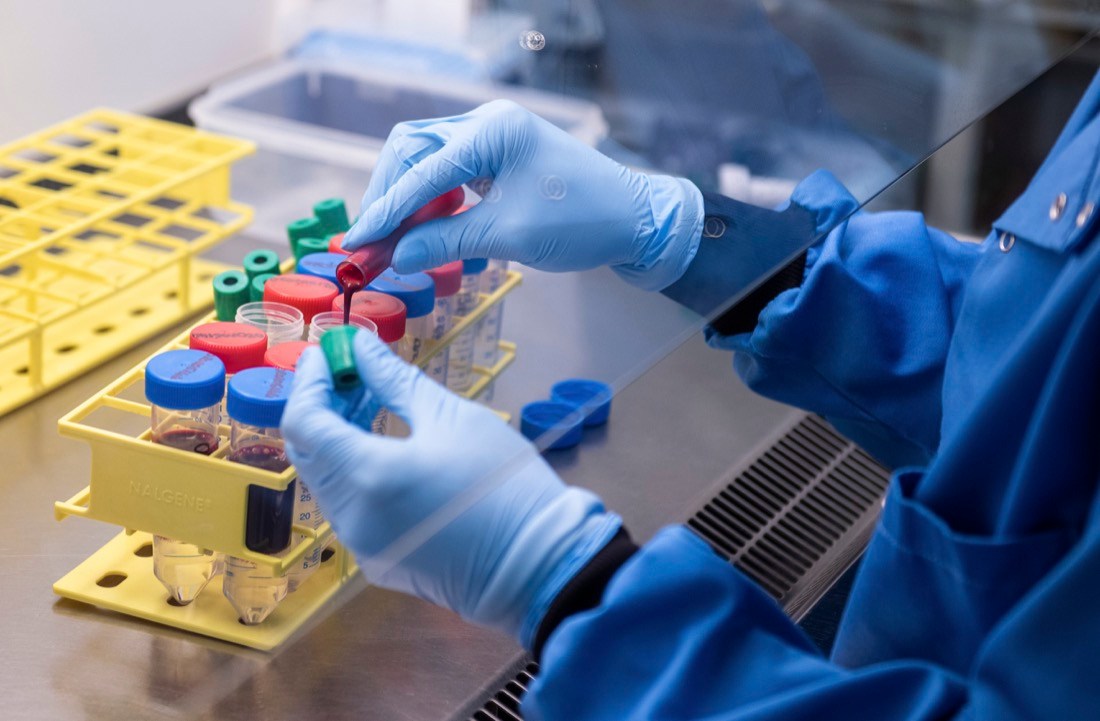
In this handout photo released by the University of Oxford blood samples from coronavirus vaccine trials are handled inside the Jenner Institute in Oxford, England Thursday June 25, 2020. Scientists at Oxford University say their experimental coronavirus vaccine has been shown in an early trial to prompt a protective immune response in hundreds of people who got the shot. In research published Monday July 20, 2020 in the journal Lancet, scientists said that they found their experimental COVID-19 vaccine produced a dual immune response in people aged 18 to 55. (John Cairns, University of Oxford via AP)

LONDON (AP) – Scientists at Oxford University say their experimental coronavirus vaccine has been shown in an early trial to prompt a protective immune response in hundreds of people who got the shot.

British researchers first began testing the vaccine in April in about 1,000 people, half of whom got the experimental vaccine. Such early trials are designed to evaluate safety and see what kind of immune response was provoked, but can’t tell if the vaccine truly protects.

In research published Monday in the journal Lancet, scientists said that they found their experimental COVID-19 vaccine produced a dual immune response in people aged 18 to 55 that lasted at least two months after they were immunized.

“We are seeing good immune response in almost everybody,” said Dr. Adrian Hill, director of the Jenner Institute at Oxford University. “What this vaccine does particularly well is trigger both arms of the immune system,” he said.

Hill said that neutralizing antibodies are produced – molecules which are key to blocking infection. In addition, the vaccine also causes a reaction in the body’s T-cells, which help by destroying cells that have been taken over by the virus.