
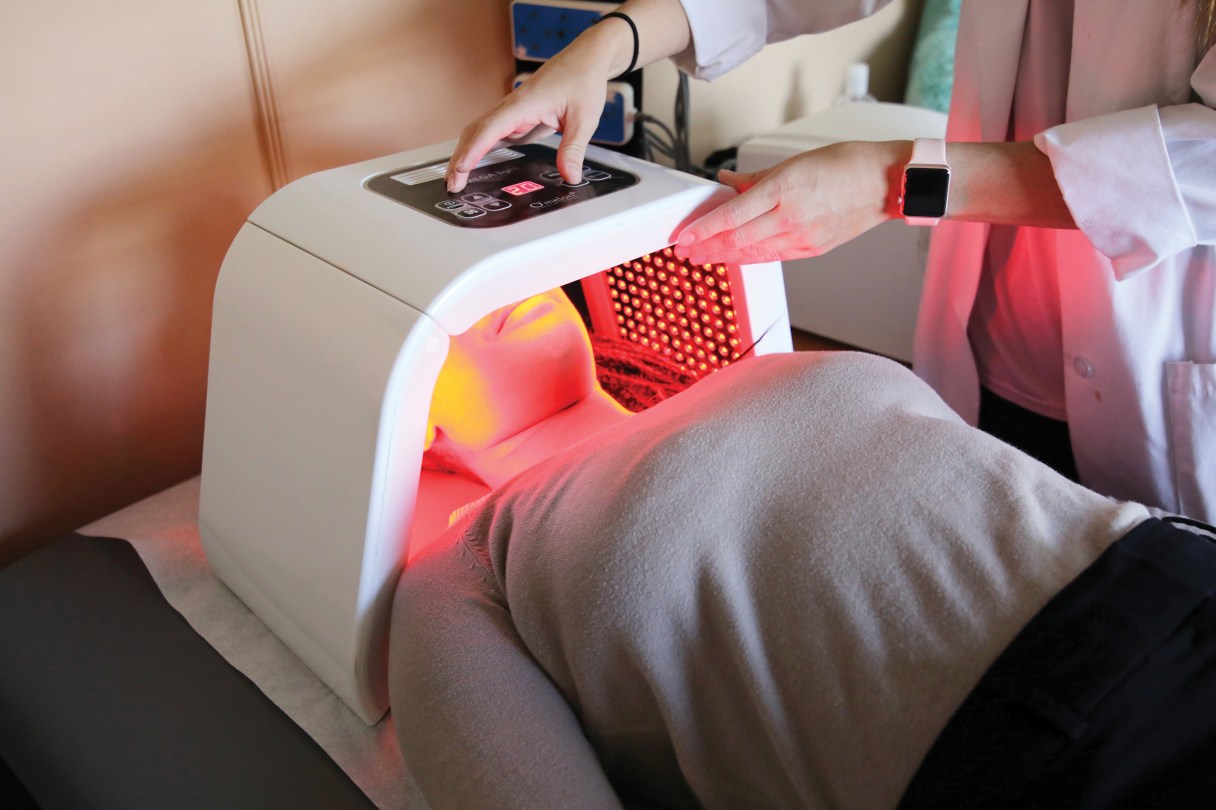
Want to try it?
Red light therapy is offered at Chattanooga Wellness Natural Health Center by Dr. Shawn Jones. Visit chattanoogachiropractic.com or call 423-643-2277 to learn more.
Google “red light therapy” and you’ll see images of light setups that look like they’re part of a space mission, and glowing, atmospheric tanning bed lookalikes. You’ll also see before-and-after pictures touting drastic wrinkle reduction and skin rejuvenation, and wounds transformed in record time.
Peppered among the images and host of headlines proclaiming “the benefits of red light therapy” are skeptical queries on whether the trending procedure really works.
Red light therapy purports to increase one’s energy on the micro level to affect macro repair and healing, using low-level red light transmitted through lasers or LED lights. Among the issues RLT is said to address are weight loss, collagen production, scar treatment, wound healing, joint pain and muscle repair. RLT is also used to improve sleep, increase circulation, promote hair growth and boost antioxidant production, making it one of the most versatile treatments on the alternative health care market.
Having been explored only since the mid-1990s, a fair number of questions remain as to its effectiveness and the medical field is still very much divided on whether they believe RLT truly produces the host of advantages that it claims to. RLT lacks the extensive research needed to back up its claims, so the treatment is largely considered experimental. Some of its proposed uses have little to no support behind them at all.